
Introduction: Why Plants Have Two Names
A rose by any other name might smell as sweet, but it would be hard to find in a plant catalogue. Common names vary by region, language, and even neighbourhood. One plant can have several common names, and one common name can refer to several different plants. That confusion is why botanists use scientific names.
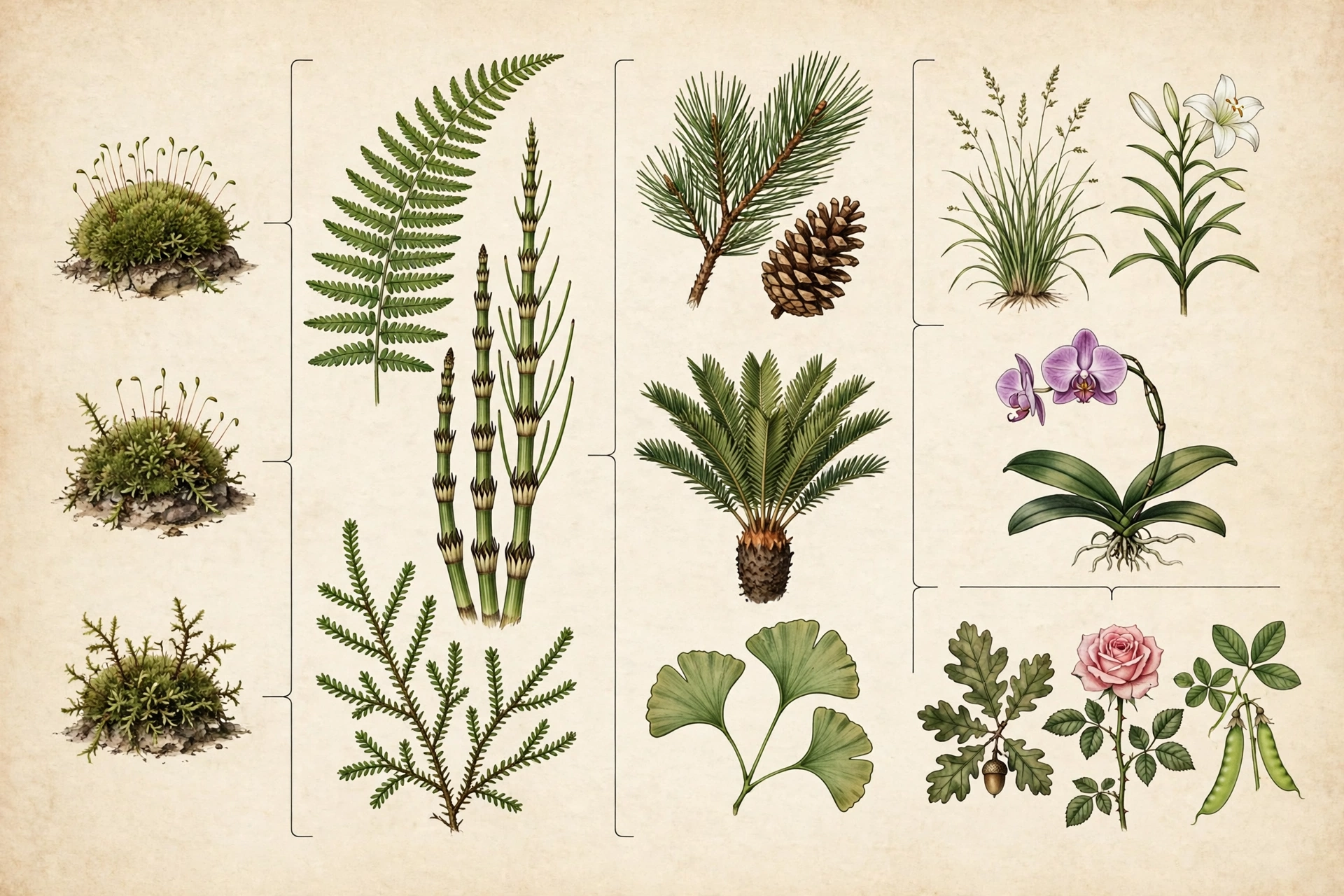
Plant taxonomy is the system that organises plants into groups based on shared features and evolutionary relationships. Once you understand the basic levels — family, genus, and species — plant labels, seed packets, and gardening books become much easier to read, and you can make better choices about care, companions, and pest risks.
The Main Levels of Plant Classification
Taxonomy is a hierarchy, from broad groups to very specific ones. The levels most gardeners need are family, genus, and species, with a few levels above and below them for context.
How to Read a Plant Label Like a Botanist
A plant label is a small piece of taxonomy, and once you can read it, it tells you a great deal. The first word is the genus, the second is the species, and together they form the scientific name, usually printed in italics, such as Quercus robur for the English oak. A third word in single quotes is a cultivar, a named variety selected by growers, such as Quercus robur 'Fastigiata', the upright form. The symbol x between names marks a hybrid, a cross between two species, and abbreviations such as subsp. or var. mark a subspecies or variety found in the wild.
The family name is often the most useful part for a gardener, because plants in one family tend to share needs and problems. The rose family, Rosaceae, includes apples, pears, roses, and raspberries, which all prefer similar soils and are attacked by similar pests. The mint family, Lamiaceae, includes rosemary, sage, and lavender, which mostly like sun and sharp drainage. The legume family, Fabaceae, includes peas, beans, and clovers, which fix nitrogen from the air and improve the soil. Learning a handful of family names is like learning a handful of surnames: suddenly, unfamiliar plants become recognisable relatives.
Family: Plants That Share a Pattern
A plant family groups genera that share distinctive flower, fruit, or leaf patterns. Learning a few common families helps you recognise unfamiliar plants quickly.
For example, the rose family, Rosaceae, includes roses, apples, pears, cherries, strawberries, and raspberries. Many have flowers with five petals and similar fruit structures. The mint family, Lamiaceae, includes mint, basil, rosemary, lavender, and sage, often with square stems, opposite leaves, and aromatic oils. The daisy family, Asteraceae, includes daisies, sunflowers, lettuce, and dandelions, with flower heads made of many tiny florets.
Genus and Species: The Scientific Name
A plant's scientific name has two parts, written in Latin and usually in italics: the genus, with a capital letter, followed by the species, in lower case. For example, Quercus robur is the English oak: Quercus is the genus for oaks, and robur identifies this particular oak species.
Why Taxonomy Changes
Taxonomy is not fixed forever. As scientists learn more from DNA, flower structure, and fossils, they sometimes move a plant to a different genus or family, or split one species into two. That can be frustrating when a familiar name changes, but it reflects better evidence about how plants are related.
How to Use Taxonomy in Your Garden: Step by Step
1. Identify the plant accurately. Use the Plant Identifier on aitreeidentier.site, then confirm the suggested scientific name with a trusted guide or nursery label. 2. Note the family. Look up the family and learn its typical traits. This helps you guess light, soil, and watering needs for an unfamiliar relative. 3. Check the genus for relatives. Plants in the same genus often need similar care and share pests, so what works for one oak or one lavender often works for another. 4. Use the full species name when buying seeds or plants. This avoids mix-ups between similar common names, especially for herbs, vegetables, and wildflowers. 5. Record the scientific name in your garden notes. Keep it alongside the common name, planting date, and location. It makes future research much faster. 6. Learn a few families by their flowers. Start with Rosaceae, Lamiaceae, Asteraceae, and Fabaceae, the legume family. Recognising these four covers a large share of garden plants. 7. Use taxonomy to plan rotations and companions. Avoid planting close relatives in the same spot year after year, as they often share soil pests and diseases.
Common Mistakes
Relying only on common names. "Bluebell," "cedar," and "laurel" each refer to different plants in different places. Always check the scientific name for important decisions.
Confusing genus and species. The genus is the first word and is shared by relatives. The species is the second word and is specific. Writing only one part can cause confusion.
Assuming same family means identical care. Relatives share tendencies, not identical needs. A family clue is a starting point, not a substitute for checking the species.
Ignoring cultivar names. Two cultivars of the same species can differ greatly in size, colour, disease resistance, and flowering time. Keep the cultivar name when it matters.
Common Name Traps: Same Name, Different Plant
Common names are the biggest trap in plant identification, because the same name can mean different plants in different places. Bluebell in England is a delicate woodland flower, while bluebell in Scotland is the harebell, a different species, and in Texas it is a wildflower of yet another genus. Cedar can mean a true cedar, a western red cedar, which is not a cedar at all, or a juniper sold as cedar in America. Laurel is used for bay laurel, cherry laurel, and mountain laurel, which belong to three different families and differ greatly in toxicity.
The scientific name exists precisely to cut through this confusion. There is only one Hyacinthoides non-scripta, the English bluebell, wherever you are in the world. This matters most when a plant will be eaten, used as medicine, or planted near children or pets: a mistake with a common name can be harmless, or it can be dangerous. When buying plants, always check the Latin name on the label, and if a seller cannot provide it, treat the identification as uncertain.
Frequently Asked Questions
Why are scientific names in Latin?
Latin was once the shared language of science in Europe, and it is no longer a living everyday language, so its meanings stay stable. Using Latin avoids favouring one modern language over another.
What is the difference between a species and a variety?
A species is a naturally distinct group that can usually reproduce with its own kind. A variety is a naturally occurring form within a species, while a cultivar is a form selected and maintained by people.
Do I need to learn taxonomy to enjoy gardening?
No, but a little helps a lot. Even learning five families and how to read a scientific name will make plant labels, seed packets, and advice much clearer.
What does 'sp.' mean after a genus name?
The abbreviation sp. means a single unidentified species in that genus, while spp. means several species. You will see it when a plant is known only to genus level, for example Quercus sp. for an oak that has not been identified to species. It is a botanist's way of being honest about what is not yet known.
Why do some plants have three-part names?
A third part usually names a subspecies or variety, such as Betula pendula subsp. mandshurica. These are natural populations that differ consistently in some feature, such as leaf shape or range, but not enough to be called separate species. Cultivar names in single quotes serve a similar role for garden-selected forms.
Conclusion
Plant taxonomy is a practical filing system, not just academic labelling. Family tells you the broad pattern, genus tells you the close relatives, and species tells you the exact plant. Together, they remove the confusion of common names and help you choose, plant, and care for plants with confidence. Learn a few families, record scientific names in your notes, and use identification tools to check what you are growing. Over time, the Latin names that once looked intimidating will become familiar shortcuts to better gardening.
Try it: Try the free Tree Researcher on aitreeidentier.site — identify a tree from a photo and learn more about the science behind it.
Safety note: This guide is for general learning only. Never eat or use a plant based on AI identification alone, and consult a local expert before using any plant for food or medicine.