
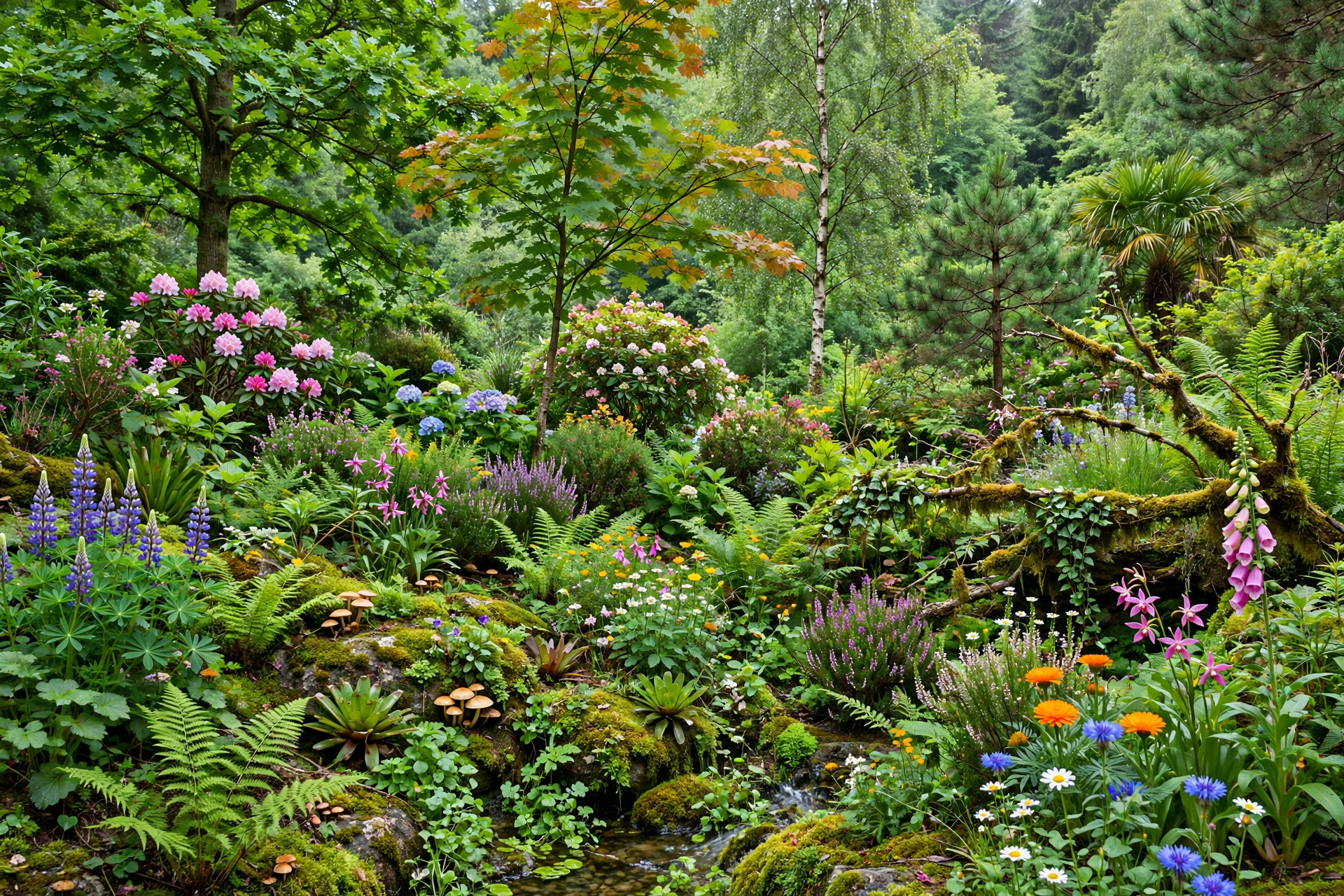
Introduction: Diversity Is Not a Luxury
Plant diversity — the variety of plant species, varieties, and genes in a place — is the foundation of life on Earth. Plants produce oxygen, build soil, store carbon, feed animals, and provide food, timber, fibre, and medicine for people. When diversity is lost, ecosystems become less resilient, food becomes less secure, and future medicines may disappear before they are discovered.
This guide explains what plant diversity is, why it matters for ecosystems, food, and medicine, what threatens it, and what gardeners, land managers, and communities can do to protect it.
What Is Plant Diversity?
Plant diversity, or plant biodiversity, has three levels. Species diversity is the number of different plant species in an area. Genetic diversity is the variation within a species, such as different varieties of wheat or apples, which helps a species adapt to disease, drought, and climate change. Ecosystem diversity is the variety of habitats, such as forests, grasslands, wetlands, and deserts, each with its own plant communities.
Genetic Diversity Within a Species Matters Too
Diversity is not only about having many species; it is also about variation within a single species. When a crop is grown from genetically identical plants, a single disease can destroy the whole crop, because no individual carries resistance. The Irish potato famine of the 1840s is the classic example: the potatoes grown across Ireland were almost all the same variety, and when late blight arrived, there was no resistant plant to fall back on. A similar risk hangs over the Cavendish banana, the variety that dominates world trade, which is threatened by Panama disease, a fungus that attacks its roots.
Traditional landraces and heirloom varieties carry the insurance policy against such disasters. These are varieties selected over generations by farmers in particular places, and they hold a wide range of genes for drought tolerance, disease resistance, and flavour that modern uniform varieties have lost. Seed banks preserve this diversity, but living diversity matters too: every gardener who grows an unusual variety, saves its seed, and shares it keeps those genes in circulation. Protecting diversity within species is less visible than saving a rare orchid, but it is just as important for the future of food.
Why Diversity Matters for Ecosystems
Why Diversity Matters for Food
Our food system depends on a narrow set of crops, but those crops depend on wild relatives and genetic diversity for their future. Wild relatives of wheat, rice, potatoes, and tomatoes carry genes for disease resistance, drought tolerance, and heat tolerance that breeders use to improve crops. If those wild plants disappear, we lose the genetic library for future breeding.
Why Diversity Matters for Medicine
What Threatens Plant Diversity?
How to Support Plant Diversity: Step by Step
1. Learn your local plants. Use the Tree Researcher on aitreeidentier.site to learn about local tree species, and use plant guides to learn wildflowers, grasses, and shrubs in your area. 2. Grow a diversity of plants. In your garden, grow a mix of natives, herbs, vegetables, fruit, and flowers, with different flowering times, heights, and root depths. 3. Choose native plants where possible. Natives are adapted to local soil and climate, and support local insects and wildlife that evolved with them. Mix natives with well-chosen non-natives, rather than planting only one type. 4. Leave wild areas. Let part of your garden grow wild, leave leaf litter, log piles, and a patch of long grass. These provide habitat for plants, insects, and soil life. 5. Save and share seeds responsibly. Grow heirloom varieties, save seed where it is legal and safe to do so, and share with local seed libraries or gardening groups. 6. Support seed banks and botanical gardens. Visit, donate, or volunteer if you can. Seed banks preserve genetic diversity for the future, and botanical gardens conserve rare plants and educate visitors. 7. Avoid invasive species. Check local invasive lists before planting, and do not plant known invasives, even if they are attractive. Remove invasives carefully where you are able to do so. 8. Reduce chemical use. Use compost, mulch, and biological control where possible, and avoid broad-spectrum pesticides that harm pollinators and soil life.
Common Mistakes
Planting only one species. A hedge of a single species, or a lawn with no flowers, supports far less wildlife than a mixed planting. Diversity starts with choice.
Choosing plants for looks alone. A plant that looks good but needs constant water, feeding, and spraying is less sustainable than a diverse, locally adapted planting.
Collecting wild plants without permission. Wildflower picking, bulb digging, and seed collecting can harm populations and may be illegal. Photograph, do not pick, in protected areas.
Assuming a garden cannot help. Even a small garden, balcony, or windowsill can support pollinators, grow food, and preserve varieties. Many small gardens together make a large habitat network.
Forgetting genetic diversity. Planting the same variety everywhere is risky. Grow several varieties of the same crop, and try new varieties each year.
Building a Diverse Garden in a Small Space
You do not need acres to support diversity. A small garden can hold many layers: tall shrubs and small trees above, perennials and herbs in the middle, and ground-cover plants below, each layer hosting different insects and birds. Planting in drifts of three or five, rather than single specimens, gives pollinators enough to feed on, and choosing plants that flower in sequence from early spring to late autumn ensures there is always food available.
Mixing natives with well-behaved non-natives is usually the best approach: natives support local wildlife best, but some non-natives extend the flowering season and fill gaps. Avoid planting a single species as a hedge or lawn across the whole garden, since a monoculture is vulnerable to pests and offers little to wildlife. Even a balcony can help, with a pot of lavender, a pot of herbs, and a small water dish for insects. Seed swaps and community gardens are good ways to find unusual varieties and to share what works in your area.
Frequently Asked Questions
Can one garden make a difference?
Yes. Gardens cover a large area in total, and diverse gardens provide food, shelter, and corridors for wildlife, especially in towns and cities. A network of diverse gardens is a real habitat.
What is a seed bank?
A seed bank stores seeds from many species and varieties under cool, dry conditions, so they can be grown in the future if wild populations are lost. The Svalbard Global Seed Vault is one famous example, but many national and local seed banks exist too.
Should I only plant native plants?
Natives are important, but a mix is often best. Natives support local wildlife, while some non-natives provide food, flowers, or crops. Avoid invasive non-natives, and prioritise natives for habitat planting.
What is the difference between native and invasive plants?
A native plant is one that evolved in your region and fits into the local web of pollinators, herbivores, and soil life. An invasive plant is a non-native that spreads aggressively, outcompeting natives and reducing diversity. Not all non-natives are invasive: many garden plants stay where they are planted and cause no harm.
Are wildflower seed mixes a good idea?
They can be, if the mix matches your region and soil. Cheap generic mixes often contain non-native species and plants that will not survive your conditions, so they flower briefly and then vanish. Look for mixes of locally native species, sow them on poor, bare soil rather than rich lawn, and be patient, since a good meadow takes two or three years to establish.
Conclusion
Plant diversity is not just about having many pretty flowers. It is about resilient ecosystems, secure food, future medicines, healthy soil, clean water, and a stable climate. Every species, variety, and gene is part of a system that supports us, often in ways we do not see until it is gone. You can help by learning local plants, growing a diverse garden, choosing natives, leaving wild areas, saving seeds, and supporting conservation. Diversity begins at home, in a pot, a bed, or a whole landscape, and it grows, quite literally, from the ground up.
Try it: Try the free Tree Researcher on aitreeidentier.site — identify a tree from a photo and learn more about the science behind it.
Safety disclaimer: Never eat or use a plant based on AI identification alone. Some plants can be toxic, and some are protected by law. Consult a local expert before using any plant for food or medicine, and do not collect wild plants without permission.