
Introduction: A Seed Is a Survival Capsule
A seed is one of nature's most efficient inventions. It is a plant embryo, a food store, and a protective coat, all in a package that can wait for months or years, travel long distances, and then grow into a new plant when conditions are right. Seeds feed the world: wheat, rice, maize, beans, and many other crops are seeds, and forests depend on seeds to regenerate.
This guide explains how seeds work, why they stay dormant, how they disperse, and how to germinate them successfully at home, whether they are vegetable seeds, wildflower seeds, or tree seeds.
Inside a Seed
A typical seed has three parts: the embryo, which will become the new plant, with a root, shoot, and first leaves; the food store, either in the seed leaves, called cotyledons, or in a tissue called endosperm, which feeds the seedling until it can photosynthesize; and the seed coat, which protects the embryo from drying, damage, and microbes.
Seed Longevity: How Long Seeds Stay Alive
A seed is alive but barely breathing, and how long it survives depends on how it is built and stored. Most garden seeds are orthodox seeds, meaning they can be dried to low moisture and stored cool, which slows their metabolism almost to a standstill. Kept dry, dark, and cool, many vegetable seeds stay viable for three to five years, and some, such as tomato and cucumber, can last far longer. Parsnip and onion seeds are famously short-lived, often failing after a single year, so they are best bought fresh each season.
A smaller group, the recalcitrant seeds, cannot be dried at all. Acorns, chestnuts, and many tropical seeds die if they lose moisture, which is why they must be sown fresh or stored damp and cool. This difference explains the work of seed banks: the world's largest, the Svalbard Global Seed Vault, stores dried orthodox seeds at minus 18 degrees Celsius, where they may survive for decades or even centuries. Before sowing old seed, test a sample on damp kitchen paper: if fewer than half germinate, sow thickly or buy fresh.
Germination: Waking Up
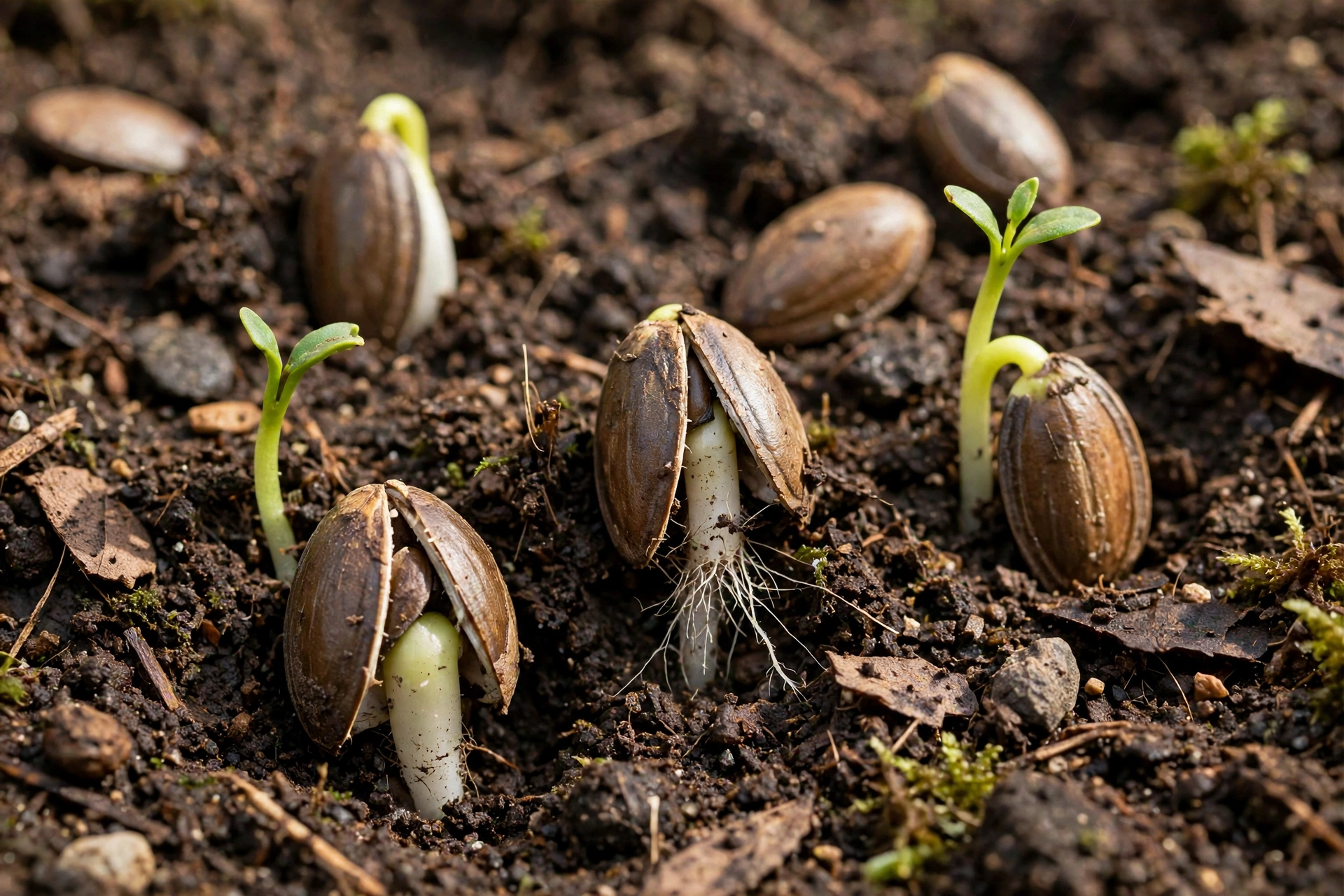
Germination begins when a seed takes up water, a process called imbibition. Water activates enzymes that break down stored food, the embryo grows, and the root, called the radicle, emerges first, followed by the shoot. The seedling then uses stored food until its leaves open and photosynthesis begins.
Dormancy: Why Seeds Wait
Dormancy is a state in which a seed will not germinate even when water, oxygen, and temperature seem suitable. It is a survival strategy that prevents germination at the wrong time, such as before winter or during a dry spell.
Dispersal: How Seeds Travel
- Wind: Light seeds with wings, parachutes, or fluffy hairs, such as dandelion, sycamore, and pine, can travel long distances on the breeze.
- Water: Seeds that float, such as coconut and some wetland plants, can travel by rivers and sea.
- Animals: Some seeds are eaten and excreted elsewhere, some stick to fur or clothing, and some are buried by squirrels and jays and forgotten, which helps them germinate.
- Explosive: Some pods burst open and fling seeds several metres, as in gorse and some vetches.
- Gravity: Heavy seeds simply fall near the parent, which works if the parent is in a good spot, but limits spread.
How to Sow Seeds Successfully: Step by Step
1. Identify the seed. Use the Tree Seed Identifier on aitreeidentier.site for tree seeds, or check the packet and a reliable guide for other seeds, so you know its dormancy, sowing depth, and temperature needs. 3. Prepare for dormancy. If the seed needs cold, place it in damp compost in a sealed bag in a fridge for the recommended weeks. If it needs scarification, nick the coat carefully or soak it in warm water. 4. Use fresh, free-draining compost. Fill pots or trays with seed compost, water it before sowing, and sow at the depth on the packet, usually about twice the seed's diameter. 5. Label everything. Write the species, variety, and sowing date on each pot. Many seedlings look alike, and labels prevent mix-ups. 6. Provide warmth, light, and moisture. Keep compost moist, not soggy, and provide light once seedlings emerge. Use a propagator lid or plastic cover to retain humidity, but ventilate daily to prevent mould. 7. Thin and transplant carefully. Thin seedlings to the strongest one per cell, or transplant when they have two true leaves, handling by a leaf, not the stem. Harden off young plants gradually before planting outside.
Common Mistakes
Keeping seeds too wet. Soggy compost causes seeds to rot and seedlings to damp off, a fungal disease that kills them at soil level. Water from below where possible, and allow the surface to dry slightly between waterings.
Skipping dormancy treatment. Many tree and wildflower seeds need cold stratification. Sowing them without it leads to poor or no germination, even if they are viable.
Direct Sowing vs Starting Indoors: Choosing the Right Method
Some seeds are best sown where they will grow, and others benefit from a head start indoors. Direct sowing suits plants with long taproots that dislike transplanting, such as carrots, parsnips, and beans, and plants that germinate quickly in warm soil, such as squash and sweetcorn. Sow them only when the soil has warmed, since cold, wet soil rots seed before it can germinate, and protect the seedlings from slugs and birds, which can destroy a row overnight.
Starting indoors suits tender plants that need a long season, such as tomatoes, chillies, and aubergines, and slow growers such as celery and onions. The trade-off is that indoor seedlings must be hardened off, moved outside for increasing periods over a week or two, so they are not shocked by sun, wind, and cold nights. A common mistake is starting seeds too early: a leggy, root-bound seedling sown in February often performs worse than a sturdy one sown in March. Match the method to the plant, and let the seed packet's dates guide you rather than impatience.
Frequently Asked Questions
Why did my seeds not germinate?
Common reasons are old or dead seed, wrong temperature, too much or too little water, sowing too deep, or unmet dormancy needs. Check each factor, test viability, and try again with fresh seed if needed.
Can I grow a tree from seed?
Yes, for many species, but it takes patience. Trees grown from seed may differ from the parent, take years to flower or fruit, and need the right dormancy treatment. It is a rewarding long-term project, not a quick result.
How deep should I sow a seed?
As a guide, sow at about twice the seed's diameter. Small seeds need a shallow sowing, while large seeds can be sown deeper.
Do seeds expire?
Seeds do not expire on a fixed date, but their germination rate falls over time as the embryo slowly uses up its stored energy. Kept cool, dry, and dark, most seeds last several years, but old seed germinates more slowly and less evenly. Test a sample before sowing, and sow extra seed to compensate for lower viability.
What is scarification?
Scarification means weakening a hard seed coat so water can enter and germination can begin. It mimics what happens in nature when seeds pass through an animal's gut or are scratched by soil. Gardeners do it by nicking the coat with a file, rubbing it with sandpaper, or soaking the seed in warm water overnight, and it is essential for hard-coated seeds such as sweet peas and lupins.
Conclusion
Seeds are small, tough, and clever: they wait for the right conditions, travel by wind, water, animals, or explosion, and then grow into plants that can live for centuries. Understanding germination, dormancy, and dispersal turns sowing from guesswork into a skill. Identify the seed, meet its dormancy needs, sow at the right depth and temperature, keep it moist but not soggy, and give seedlings light and protection. With patience and notes, you will see more seeds germinate, more seedlings survive, and more plants thrive — whether they are vegetables for dinner, wildflowers for pollinators, or trees for the future.
Try it: Try the free Tree Researcher on aitreeidentier.site — identify a tree from a photo and learn more about the science behind it.
Safety note: This guide is for general learning only. Never eat or use a plant based on AI identification alone, and consult a local expert before using any plant for food or medicine. Check local rules before collecting or moving seeds, especially for protected or invasive species.