
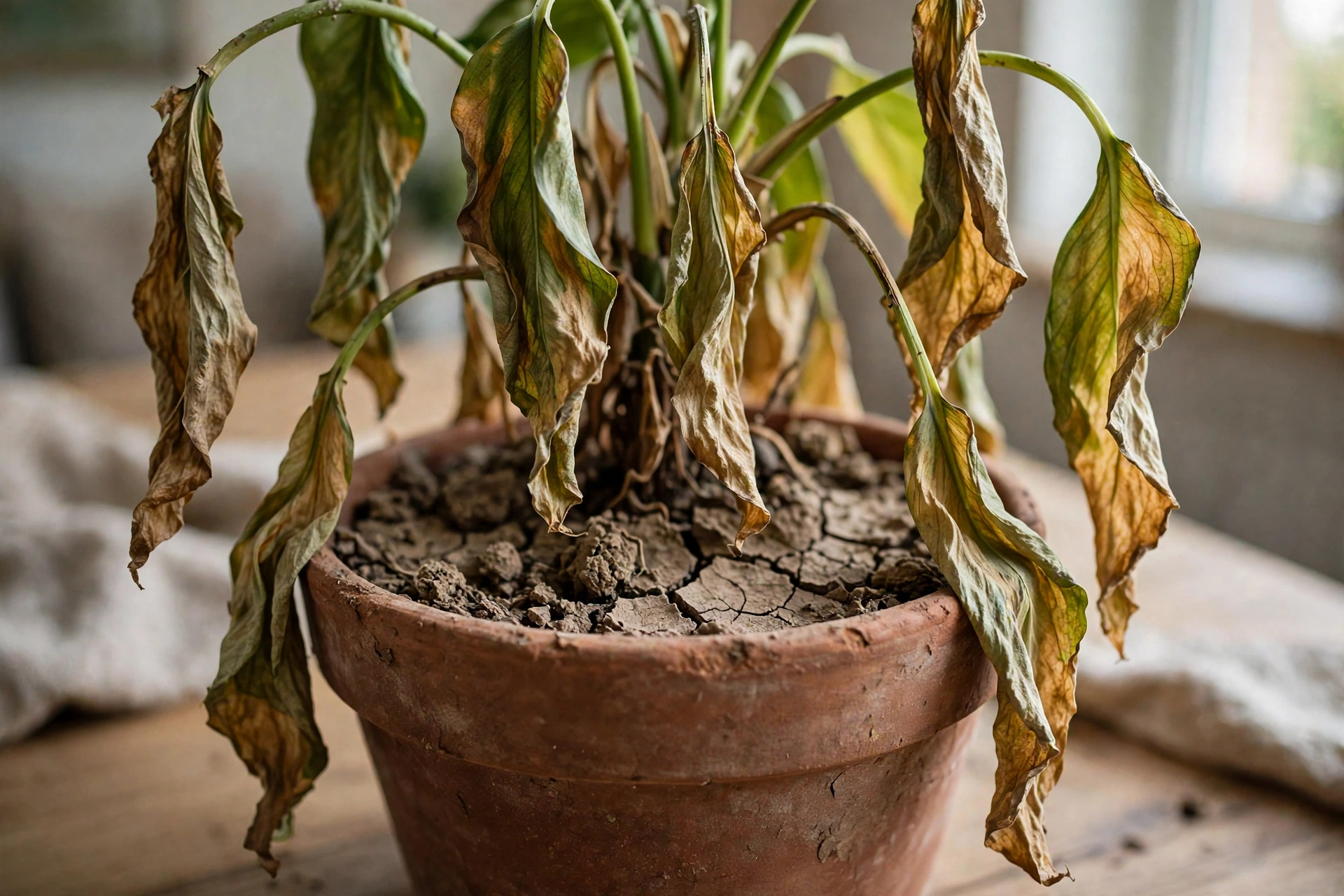
Wilting is a plant's way of saying "I cannot get enough water to my leaves" — but it does not tell you why. It could be simple drought, or overwatering and root rot, or a vascular disease blocking water flow, or root damage from transplanting, pests, or construction. Watering a wilting plant that is already drowning will make it worse; ignoring a wilting plant that is simply thirsty will kill it.
Learning to tell the three main causes apart — water stress, root damage, and disease — will help you act correctly in the first hour, when it matters most. This guide walks you through the checks, in order, so you can diagnose wilting quickly and revive your plant safely.
Why Plants Wilt
Plants stay upright because water pressure inside their cells — turgor pressure — holds them firm. When water loss from leaves exceeds water uptake from roots, pressure drops and leaves and stems droop. That can happen because there is not enough water in the soil, because roots are damaged and cannot absorb water, or because a disease blocks the vessels that carry water upward.
The key is to find which link in the chain is broken: the soil, the roots, or the vessels in between.
Step-by-Step Diagnosis
Step 1: Check the soil first
Push a finger two to three centimetres into the soil, or use a moisture meter. If the soil is dry and the pot feels light, drought is likely. If the soil is wet and the plant still wilts, the problem is not lack of water — it is roots or disease. This one check prevents the most common mistake in wilting care.
Step 2: Check the timing
Does the plant wilt in the heat of the day and recover in the evening? That suggests heat and water stress, especially in sun or wind. Does it wilt and stay wilted, even in cool weather and after watering? That points to root damage or vascular disease.
Step 3: Look at the leaves
Drought wilting often comes with dry, crispy leaf edges and dull, pale leaves. Overwatering and root rot often come with yellow, soft leaves that drop easily. Vascular wilts, such as Fusarium or Verticillium wilt, often cause yellowing and wilting on one side of the plant first, or on lower leaves, with brown discoloration inside the stem if cut open.
Step 4: Check the roots
For a potted plant, gently tip it out and look at the roots. Healthy roots are firm and pale. Dark, soft, mushy, smelly roots mean rot. Few roots, or roots that are dry and brittle, suggest drought or transplant damage. For outdoor plants, check whether the soil is waterlogged, compacted, or recently disturbed.
Common Causes and Fixes
- Underwatering: Water deeply until it drains from the bottom, mulch to retain moisture, and water in the morning. Trim fully dead leaves, but leave limp leaves that may recover.
- Overwatering and root rot: Let soil dry, improve drainage, repot in fresh mix if roots are rotted, and trim mushy roots back to healthy tissue.
- Root pests and damage: Check roots for larvae or gnawing, remove pests, and protect roots from digging and compaction.
Common Mistakes
- Watering a wilting plant without checking the soil. Wet soil plus more water equals root rot.
- Feeding a wilting plant. Fertiliser on stressed or damaged roots can burn them. Wait until the plant is recovering.
- Pruning heavily at the first sign of wilt. Removing leaves reduces water loss, but heavy pruning also stresses the plant. Remove only dead material at first.
- Moving a large outdoor plant in hot weather. Transplanting in heat increases wilting. Move plants in cool, cloudy weather where possible.
- Ignoring one-sided wilting. Wilting on one side only is a classic sign of vascular disease or root damage on that side, and deserves prompt investigation.
Vascular Wilts: Fusarium and Verticillium
Two of the most important vascular wilts are Fusarium wilt and Verticillium wilt, and both are hard to treat once they are inside the plant. They are soil-borne fungi that enter through the roots and colonise the water-carrying vessels, blocking them from the inside. The classic sign is wilting and yellowing on one side of the plant first, or on lower leaves, while the rest of the plant still looks healthy. If you cut a stem open, you may see brown streaks in the wood — the blocked vessels. Tomatoes, potatoes, strawberries, maples, and many other plants are affected. There is no cure for an infected plant: the best response is to remove and bin it, avoid planting susceptible species in the same soil for several years, and choose resistant varieties next time. Solarising the soil — covering it with clear plastic in hot sun — can reduce the fungi in some climates, but seek local advice before trying it.
Reviving a Wilted Plant: A Practical Recovery Plan
Once you have found the cause, give the plant a calm recovery plan rather than a flurry of treatments. If drought was the cause, water deeply, mulch the soil, shade the plant for a day or two, and trim only fully dead leaves — limp leaves often recover within hours. If overwatering was the cause, let the soil dry, improve drainage, and repot a container plant in fresh mix if the roots are rotted. If root damage was the cause, keep the plant in shade and out of wind for a few days, water lightly but regularly, and avoid fertiliser until new growth appears. In all cases, do not feed a stressed plant: fertiliser salts can burn damaged roots and make wilting worse. Recovery is usually visible within a week for drought, and within a few weeks for root damage, if new growth is firm and green. If the plant keeps wilting despite correct care, the cause may be a vascular disease, and removing the plant to protect its neighbours is the sensible choice.
FAQ
Why is my plant wilting even though I watered it? Because the roots cannot take up water — they may be rotted, damaged, or blocked by disease. Check the soil: if it is wet, stop watering and inspect the roots.
Can a wilted plant recover? Many can, if the cause is drought or temporary heat stress and the roots are healthy. Plants with severe root rot or vascular wilt are harder to save, but early action improves the odds.
Should I water a wilting plant in the middle of the day? Watering in the morning is best, but if a plant is severely wilted in dry soil, water it right away and shade it. Avoid wetting leaves in strong sun.
Why does my plant wilt every afternoon but recover at night? That is usually heat and water stress: the plant loses water faster than its roots can supply it in the hot afternoon, then catches up overnight. Water in the morning, mulch the soil, and give the plant some shade in the hottest part of the day.
Can transplant shock cause wilting? Yes. Moving a plant damages fine roots, so it cannot take up enough water for a few days. Water well before and after moving, transplant in cool, cloudy weather, and shade the plant for a few days until it settles.
Conclusion
Wilting is a symptom, not a diagnosis. Check the soil first, note the timing and pattern, look at the leaves and roots, and act according to what you find — water deeply if dry, stop watering and improve drainage if wet, and seek advice if disease is suspected. That simple, ordered approach will save many plants that would otherwise be lost to the wrong treatment.
Try it: Try the free Plant Disease Identifier on aitreeidentier.site — upload a clear photo of the affected leaves or bark for instant guidance.
Safety disclaimer: Never eat or use a plant, or treat a disease, based on AI identification alone. AI results are guidance only — consult a local expert before applying treatments, especially on food plants or near children and pets.