
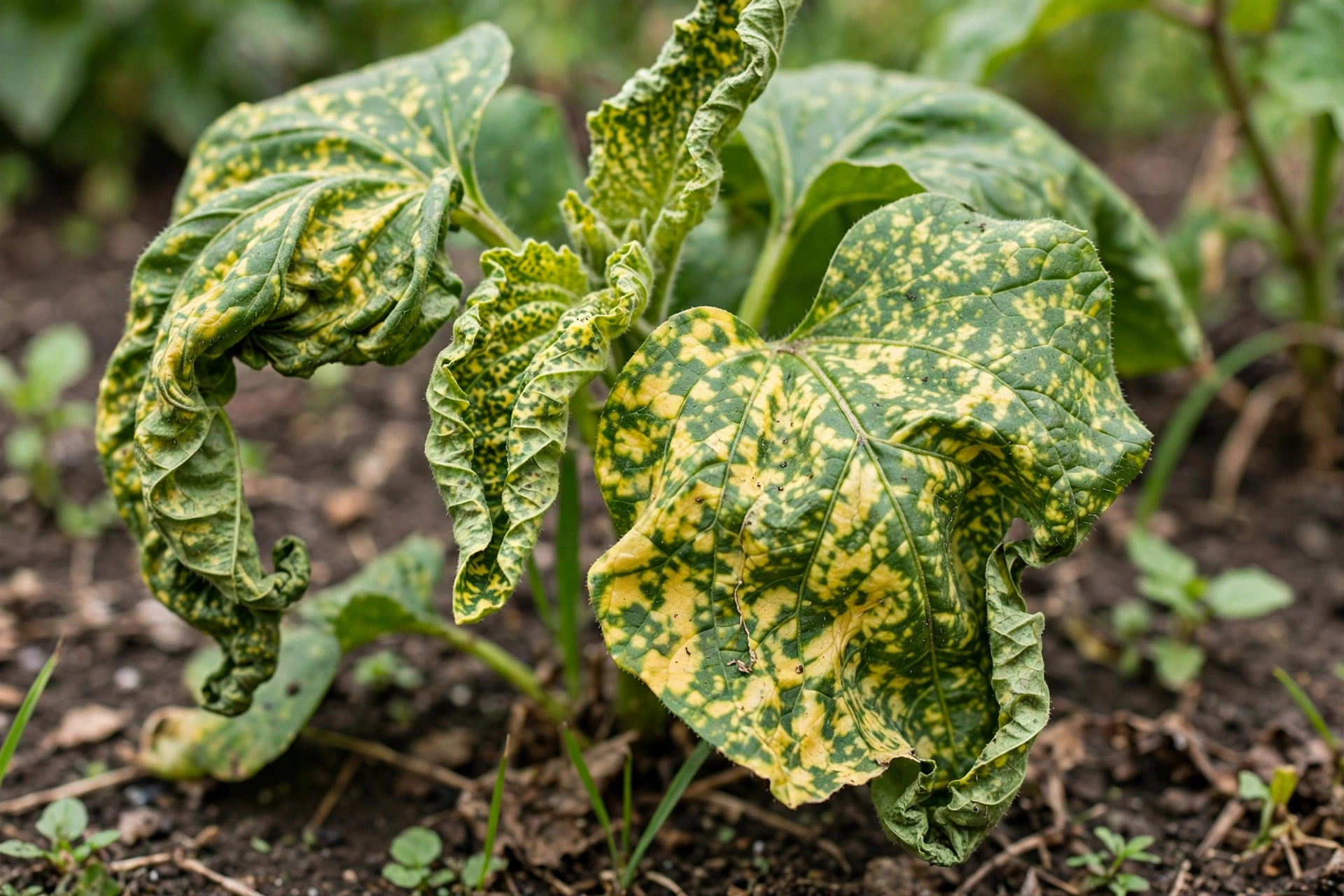
Viral plant diseases are among the most frustrating problems a gardener can face. Unlike a fungus or a pest, a virus cannot be sprayed away, and there is no cure once a plant is infected. The plant may show a mosaic of light and dark green, yellow patches, curled leaves, stunted growth, or poor fruit, and it will usually stay infected for life.
That sounds bleak, but it is not the end of the story. You can learn to recognise viral symptoms, limit how they spread, protect your healthy plants, and make sensible decisions about what to keep and what to remove.
What Viral Plant Diseases Look Like
The classic sign is a mosaic pattern: irregular patches of light green, dark green, and yellow across a leaf, as if the colour were splashed on unevenly. Leaves may also be narrowed, curled, puckered, or distorted, and the plant may grow slowly or look stunted compared with its neighbours.
Other signs include yellowing between the veins, pale streaks, ring-shaped spots, and poor flowering or fruiting. Fruit may be small, misshapen, or marked with pale rings and blotches. Symptoms often vary with the weather and the plant's age, and a plant can carry a virus with only mild signs, or even none at all, while still passing it on to others.
Common Viral Diseases and Their Hosts
Some viruses are well known to gardeners. Cucumber mosaic virus affects cucumbers, tomatoes, peppers, and many ornamental plants, causing mottled leaves and stunted growth. Tomato mosaic virus and tobacco mosaic virus affect tomatoes, peppers, and related plants, with mottling, leaf narrowing, and reduced yield.
How Plant Viruses Spread
Plant viruses cannot move on their own; they need a carrier. The most common carriers are sap-feeding insects, especially aphids, whiteflies, and thrips, which pick up a virus from one plant and pass it to the next as they feed. That is why a bad aphid year often brings a bad virus year too.
Viruses also spread through sap on hands, tools, and clothing, through grafting, and through infected seed, bulbs, and cuttings. Some are spread by soil organisms or by contact between leaves.
Step-by-Step: What to Do When You Suspect a Virus
Step 1: Photograph the symptoms and isolate the plant
Take clear photos of the mosaic pattern, any distortion, and the whole plant, and note which plants nearby show similar signs. If the plant is in a pot, move it away from healthy plants while you decide what to do.
Step 2: Control the insect carriers
Check the undersides of leaves for aphids, whiteflies, and thrips. Encourage natural predators, remove heavily infested shoots, and avoid handling infested plants before healthy ones. Reducing the insect population is one of the most useful things you can do against viruses.
Step 3: Decide whether to keep or remove the plant
A mildly affected ornamental in a quiet corner may be worth keeping if it is not near crops or prized plants. A badly stunted vegetable, or any plant near tomatoes, cucumbers, or other susceptible crops, is usually best removed. Bag it and dispose of it with garden waste rather than composting it.
Step 4: Clean tools and plan for next year
Wash your hands and disinfect secateurs, knives, and pots after handling a suspected plant. This matters most with viruses that spread through sap, such as tobacco mosaic virus, which can survive on tools and surfaces for a long time.
Preventing Viral Diseases
Prevention is the only real defence, so it deserves attention. Buy healthy plants, inspect them before planting, and quarantine new arrivals for a week or two if you can. Keep aphids and other sap-feeders under control, and avoid taking cuttings from plants that show mosaic or distortion.
Common Mistakes Beginners Make
- Spraying a virus as if it were a fungus. Sprays do not cure viral infections, so they waste time and money while the virus keeps spreading.
- Keeping a sick plant next to healthy crops. One infected tomato can pass a virus to the whole bed through aphids and handling.
- Taking cuttings from a mottled plant. Cuttings carry the virus with them, so a sick parent always gives sick offspring.
- Ignoring the insects. Aphids and whiteflies are the main carriers, so controlling them is controlling the virus.
Tobacco Mosaic Virus: A Survivor Worth Knowing About
One virus deserves special attention, because it is unusually tough. Tobacco mosaic virus can survive for months or even years on tools, pots, clothing, and surfaces, and it spreads easily through sap on hands and secateurs. It affects tomatoes, peppers, tobacco, and many other plants, causing mottling, leaf narrowing, and reduced yield. If you suspect it, disinfect tools carefully with a household disinfectant or diluted bleach solution, wash your hands after handling the plant, and do not smoke or handle tobacco near tomato plants, because the virus can be carried that way. Do not take cuttings from an infected plant, and do not save seed from it. The good news is that many modern tomato varieties are bred for resistance to tobacco mosaic virus, so choosing a resistant variety is a simple and effective defence for next year.
Living With a Virus in the Garden
Finding a virus in your garden is disappointing, but it does not mean you have to give up growing. A mildly affected ornamental in a quiet corner, away from vegetables, can often stay, as long as you control aphids, clean your tools, and do not take cuttings from it. A badly affected vegetable, or a plant in the middle of a vegetable bed, is usually best removed to protect the rest of the crop. For next year, the plan is prevention: buy certified disease-free seed and plants, inspect new arrivals, quarantine them for a week or two, control sap-feeding insects, rotate crops, and choose resistant varieties where they are available. Keep a note of which plants were affected and where, so you do not plant the same susceptible crop in the same bed next year. Over time, those habits reduce virus pressure steadily, even though no garden can be made completely virus-free.
FAQ
Can a plant recover from a viral disease?
No, there is no cure for a plant virus. A plant may grow through mild symptoms and still produce some fruit, but it stays infected and can pass the virus on.
Are plant viruses dangerous to people or pets?
No. Plant viruses only infect plants and do not affect people or animals. Still, wash your hands after handling infected plants and wash produce well before eating.
How do I know it is a virus and not a nutrient problem?
Viral symptoms often include mosaic patterns and leaf distortion across the plant, while nutrient problems usually follow a more regular pattern, such as yellowing of older leaves first.
Can I compost a plant with a virus? No. Home compost rarely gets hot enough to kill plant viruses, and infected material can pass the virus on. Bag the plant and dispose of it with garden waste, and disinfect any tools and pots that touched it.
Do weeds carry plant viruses? Yes, some weeds can carry viruses without showing obvious symptoms, and aphids can then carry the virus from a weed to your crops. Keeping beds and paths weeded is part of virus control, not just tidiness.
Conclusion
Viral plant diseases cannot be cured, but they can be managed. Learn the mosaic patterns, yellowing, and distortion, control the insects that carry viruses, clean your tools, and remove badly affected plants before they infect their neighbours. The goal is not to save every infected plant, but to protect the healthy ones around it.
Try it: Try the free Plant Disease Identifier on aitreeidentier.site — upload a clear photo of the mottled or yellowed leaves for instant guidance.
Safety disclaimer: Never eat or use any part of a plant, or treat a disease, based on AI identification alone. AI results are guidance only — consult a local arborist or plant expert before applying treatments, especially near people, pets, food crops, or waterways.