
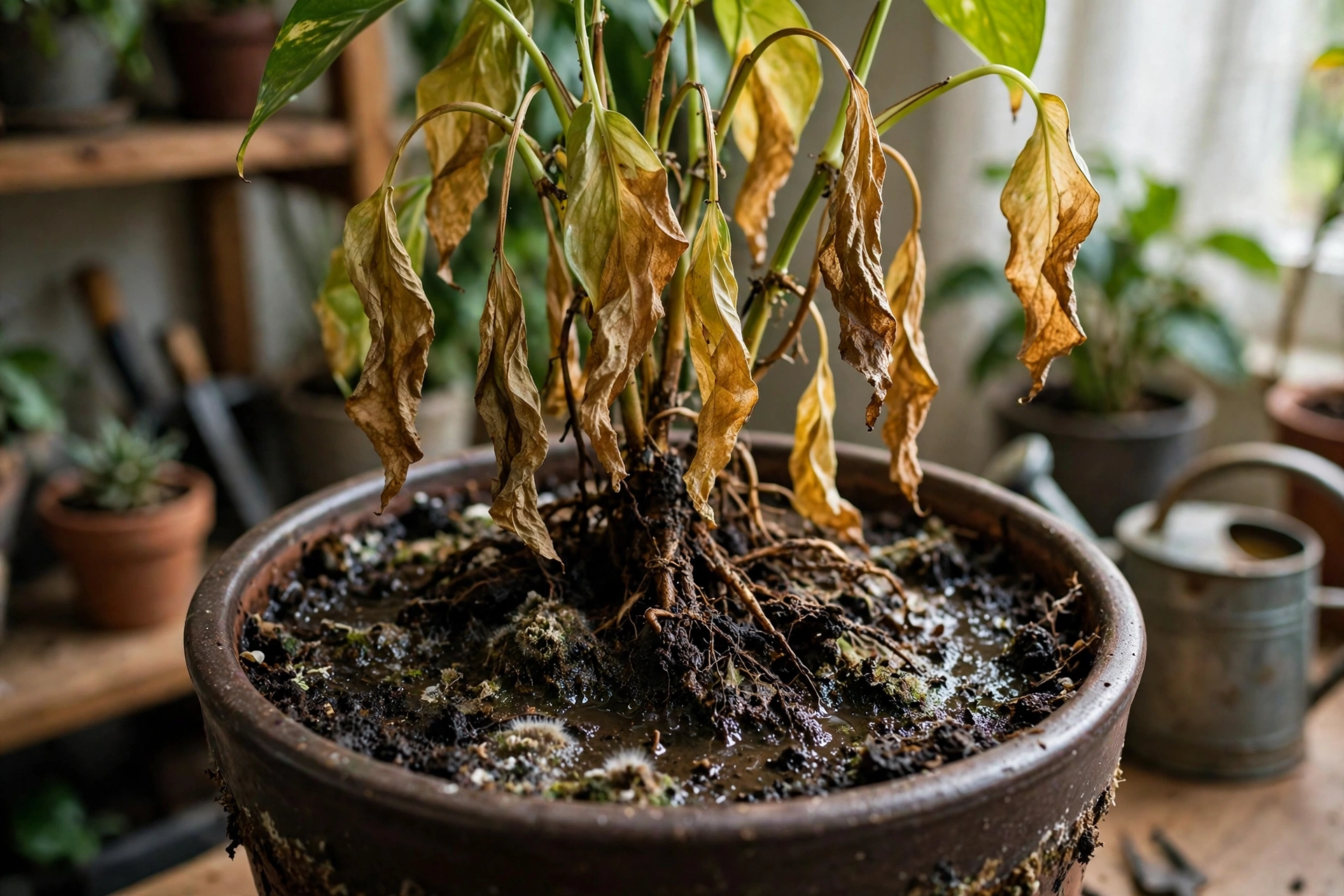
Root rot is one of the most frustrating plant problems because the damage happens where you cannot see it. Above ground, the plant wilts, yellows, and stops growing. Below ground, the roots are turning dark, soft, and mushy, unable to take up water or nutrients. By the time the leaves show clear distress, the rot may already be advanced.
Yet root rot is also one of the most preventable problems. It is rarely bad luck; it is almost always linked to water, drainage, and soil. Understanding the signs, acting quickly, and fixing the conditions that caused it can save many plants — especially houseplants and container plants, where you control the soil completely.
What Is Root Rot?
Root rot is the decay of plant roots, usually caused by fungi or water moulds such as Pythium, Phytophthora, and Fusarium that thrive in wet, airless soil. Healthy roots are firm, pale, and slightly springy, with fine white root hairs. Rotted roots are dark brown or black, soft, slimy, and often smell sour or musty. They break easily and may slough off, leaving only a thin stringy core.
When roots rot, they cannot absorb water. Paradoxically, the plant wilts even though the soil is wet, because the damaged root system cannot deliver that water to the leaves. Growth stalls, leaves yellow and drop, and the plant becomes vulnerable to other diseases and pests.
Signs to Watch For
- Wilting despite wet soil: The classic sign. Leaves droop and do not recover after watering.
- Yellowing leaves: Often starting with older, lower leaves, spreading upward as the problem worsens.
- Slow or stunted growth: New leaves are small, pale, or fail to appear at all during the growing season.
- Soft, dark stems at the base: The stem may feel mushy near soil level, especially in seedlings and succulents.
- Foul smell: Lift the pot and smell the drainage holes. A sour, rotten, or swampy smell suggests rot.
- Mushy, dark roots: The definitive check. Healthy roots are firm and pale; rotted roots are dark and fall apart.
Step-by-Step: How to Save a Plant with Root Rot
Step 1: Remove the plant from its pot
Tip the plant out gently and shake off loose soil. Do this outdoors or over newspaper, and wash your hands afterwards. Do not reuse the old soil.
Step 2: Inspect and trim the roots
Rinse the roots gently under lukewarm water so you can see them clearly. With clean, sharp scissors, cut away all dark, soft, mushy roots, cutting back to firm, healthy tissue. Disinfect the scissors between cuts.
Step 3: Trim the top growth if needed
If you removed a large proportion of roots, trim back some leaves and stems too, so the reduced root system does not have to support too much top growth. Remove yellow and dead leaves.
Step 4: Repot in fresh, free-draining mix
Use a clean pot with drainage holes — or clean and disinfect the old one. Fill with fresh, free-draining potting mix suited to the plant, adding perlite or coarse bark if needed for extra drainage. Plant at the same depth as before, not deeper.
Common Mistakes
- Watering a wilting plant more. If the soil is already wet, more water makes rot worse. Check the soil first, every time.
- Reusing infected soil or an unwashed pot. Pathogens survive in old soil and on pot surfaces. Start fresh and clean.
- Using a pot that is far too big. A large pot holds a large volume of wet soil that small roots cannot dry out.
- Expecting instant recovery. Root regrowth takes weeks. Patience and consistent, light watering matter more than fertiliser or extra attention.
Root Rot in the Garden: Outdoor Plants and Trees
Root rot is not only a houseplant problem. Outdoors, it often strikes plants in heavy clay soil, in low spots where water collects after rain, or where a tree or shrub has been planted too deeply. The signs are similar — wilting despite wet soil, yellowing leaves, slow growth — but the fix is different, because you cannot simply repot a shrub. First, check the drainage: dig a small hole, fill it with water, and see how long it takes to drain. If it is still full after a few hours, the soil is waterlogged. Improve it by adding plenty of organic matter, raising the planting level, or creating a raised bed. For a valuable shrub or tree, an arborist can advise on drainage and root care. Avoid planting the same susceptible species in the same wet spot again, and remember that mulching helps retain moisture in dry soil but makes waterlogged soil worse if it is piled thickly against the stem.
After Recovery: How to Water With Confidence
After a plant has recovered from root rot, the hardest part is trusting yourself to water it again — and not overdoing it out of guilt. Use a simple routine instead of a schedule. For most houseplants, push a finger two to three centimetres into the soil, or lift the pot to feel its weight: a light pot usually needs water, a heavy one does not. Water thoroughly until it drains from the bottom, then empty the saucer so the plant is not sitting in water. In winter, most houseplants need far less water, because growth slows and light is weaker — check the soil, not the calendar. A moisture meter can help while you learn, but your finger and the weight of the pot are free and surprisingly accurate. Within a few weeks of careful watering, new growth will tell you the roots are recovering: look for fresh, firm leaves and steady growth, not just survival.
FAQ
Can a plant recover from root rot? Yes, if caught early and enough healthy roots remain. Trim the rot, repot in fresh mix, and water carefully. Severe cases, where most roots are gone or the stem is mushy, are much harder to save.
How do I know if roots are rotten or just dark? Healthy roots are firm and pale, even if slightly coloured by soil. Rotted roots are soft, slimy, dark brown or black, and fall apart or smell bad when handled.
Should I use fungicide for root rot? Fungicides can help in some cases, but they do not fix the wet soil that caused the problem. Fix drainage and watering first, and seek local advice before using any chemical treatment.
How often should I water to prevent root rot? There is no fixed schedule. Check the soil with your finger — water only when the top two to three centimetres are dry for most houseplants, and less often in winter. Always let excess water drain away.
Can root rot spread to other plants? Yes, it can, especially if plants share water, soil, or tools. Water that drains from an infected pot can carry the fungi to neighbouring plants, so isolate an affected plant, disinfect tools, and do not reuse its soil or water.
How long does recovery from root rot take? Usually several weeks to a few months, depending on how much healthy root remains and the time of year. New leaves in spring and summer are a good sign; be patient in winter, when growth is naturally slow.
Conclusion
Root rot is serious, but it is not mysterious. Wet, airless soil invites it; firm, pale roots and steady growth show a plant is healthy. If you catch it early, trim the damage, repot in fresh mix, and change your watering habits, many plants will recover and thrive. The best cure, as always, is prevention: drainage, the right soil, and watering only when the plant actually needs it.
Try it: Try the free Plant Disease Identifier on aitreeidentier.site — upload a clear photo of the affected leaves for instant guidance.
Safety disclaimer: Never eat or use a plant, or treat a disease, based on AI identification alone. AI results are guidance only — consult a local expert before applying treatments, especially on food plants or near children and pets.