
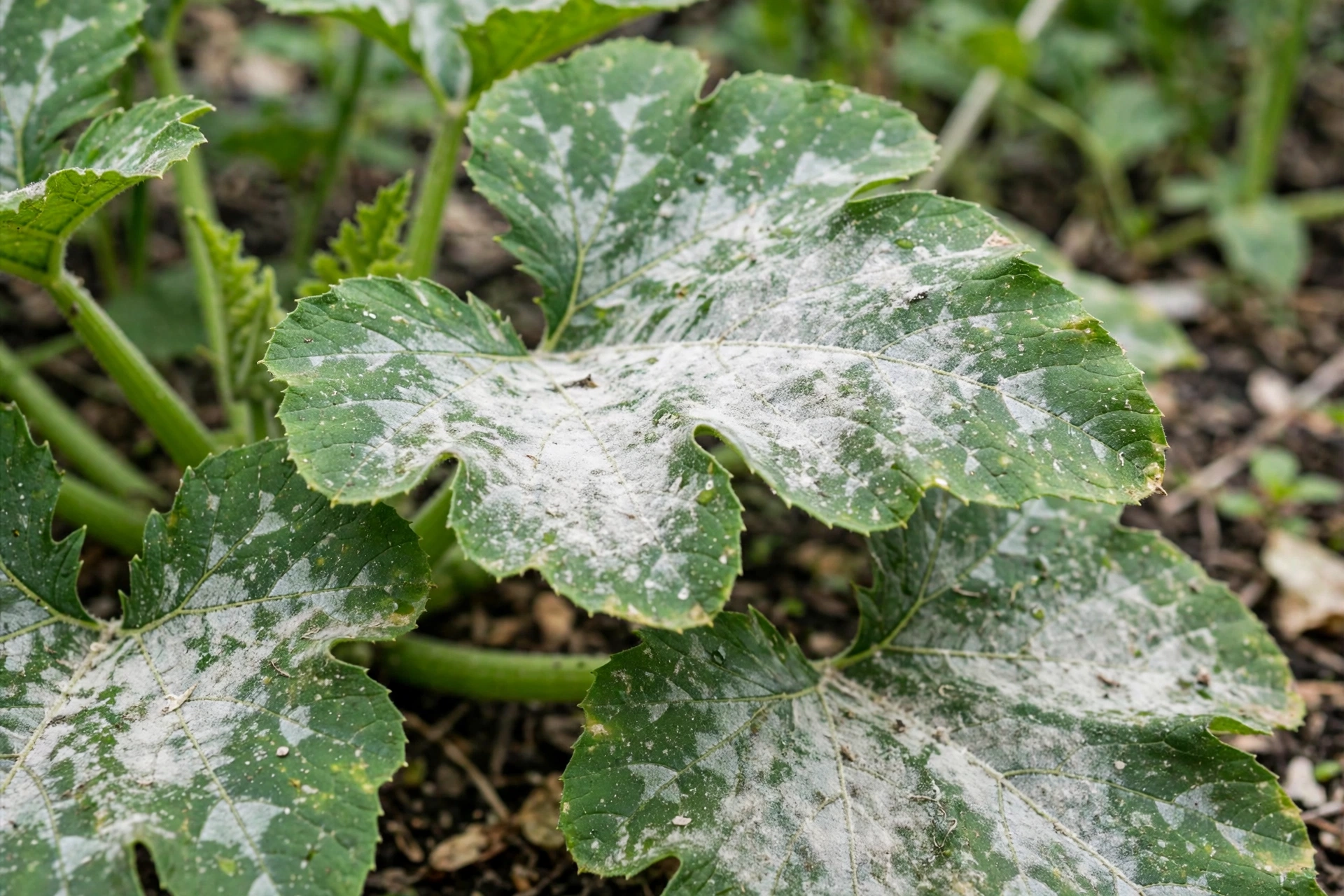
Few plant problems are as instantly recognisable as powdery mildew. One morning your rose, courgette, or phlox looks fine; a few days later its leaves are dusted with white powder, as if someone had shaken flour over them. It is unsightly, it weakens the plant, and if left alone it can reduce flowering, fruiting, and growth.
The good news is that powdery mildew is one of the most manageable plant diseases. It rarely kills an established plant outright, and simple changes to airflow, watering, and spacing — plus prompt removal of affected leaves — will control most cases without harsh chemicals. This guide explains how to identify it, treat it, and stop it coming back.
How to Identify Powdery Mildew
Powdery mildew starts as small, circular white or light-grey powdery patches on the upper surface of leaves, stems, buds, and sometimes fruit. The patches grow and merge, covering large areas. Leaves may curl, distort, yellow, and eventually dry up and fall. Flower buds may fail to open, and fruit may be stunted or cracked.
It is easy to confuse with downy mildew, but the differences help: powdery mildew grows on the upper leaf surface in dry-looking powder, while downy mildew shows as yellow patches above and grey fuzz below, and needs wet leaves. Powdery mildew, unusually for a fungus, does not need leaf wetness — it thrives in warm days, cool nights, high humidity, shade, and still air.
Common hosts include roses, courgettes, squash, cucumbers, peas, beans, grapes, apples, strawberries, phlox, lilac, and many houseplants. Different mildew species often specialise in particular plant families, so mildew on your roses will not necessarily spread to your courgettes.
Step-by-Step Treatment
Step 1: Confirm and isolate
Photograph the powdery patches and compare them with reliable descriptions. If it is a houseplant, move it away from other plants. Outdoors, avoid handling wet plants and wash your hands after touching infected foliage.
Step 2: Remove badly affected growth
Prune or pick off the worst-affected leaves and shoots, bag them, and bin them — do not compost them. Cut back to healthy tissue and disinfect secateurs between cuts. Do not remove more than a third of the plant at once.
Step 3: Improve airflow and light
Thin out crowded growth, space pots apart, and move plants into more sun where the species allows it. Good air movement dries leaf surfaces and makes it harder for mildew to establish. In a greenhouse, open vents and avoid overcrowding.
Step 4: Change how you water
Water at soil level in the morning, so foliage stays dry. Avoid overhead watering, especially in the evening. Mulch helps keep soil moisture even, which reduces plant stress.
Step 5: Try a gentle treatment first
For mild cases, a spray of water with a small amount of baking soda and a drop of mild soap, or a commercial sulphur or potassium bicarbonate spray labelled for powdery mildew, can slow spread. Follow label instructions exactly, test on a few leaves first, and reapply after rain. Neem oil is sometimes used, but check that it is suitable for your plant and local rules.
Prevention: The Long-Term Fix
Prevention is more effective than any spray. Choose resistant varieties when buying roses, squash, peas, and other susceptible plants. Give each plant the space its mature size needs, rather than planting tightly for instant effect. Prune for airflow, avoid excess nitrogen fertiliser that produces soft, sappy growth, and water at the base.
Clean up fallen leaves in autumn, since some mildew overwinters in debris and buds. Rotate vegetable crops so the same family is not grown in the same bed year after year. In a greenhouse, ventilate daily and avoid wide swings between hot days and cool, damp nights.
Common Mistakes
- Spraying and ignoring airflow. Without better ventilation and spacing, mildew returns as soon as the spray wears off.
- Watering leaves in the evening. Even though mildew does not need wet leaves, damp, crowded foliage helps it spread.
- Waiting until the whole plant is white. Early removal of a few spotted leaves is quick and effective; late treatment is a long battle.
Powdery Mildew on Vegetables vs Roses
Powdery mildew behaves a little differently on vegetables and on roses, and knowing the difference helps you respond correctly. On courgettes, squash, and cucumbers, mildew often starts on older leaves in midsummer and spreads fast in warm, still air; removing the worst leaves, spacing plants, and harvesting regularly keeps the plant producing, because new leaves keep coming. On roses, mildew usually attacks young shoots and buds in spring and early summer, distorting growth and spoiling flowers; pruning for airflow and choosing resistant varieties matter more, because the plant's shape and flowering are at stake. On peas and beans, mildew often arrives late in the season, when the crop is nearly finished — in that case, the best response may be to harvest what you can and clear the plants, rather than spraying. The fungus is the same kind of problem in each case, but the plant's growth habit decides whether removal, pruning, or simply accepting a late-season infection is the sensible choice.
Homemade Sprays: What Helps, What to Avoid
Gardeners often ask about homemade sprays, and some do help as a mild preventive, while others do more harm than good. A solution of one teaspoon of baking soda in a litre of water, with a drop of mild liquid soap to help it stick, can slow mildew on some plants if applied early and repeated weekly, but it is not a cure for a heavy infection. Milk spray — one part milk to nine parts water — is also reported to help on courgettes and other vegetables, though results vary. Avoid vinegar, neat soap, and strong homemade mixtures, which can scorch leaves, and never spray any mixture in strong sun or on a plant that is already stressed by drought. Always test a spray on a few leaves first, wait two days, and only then treat the whole plant. And remember that a spray is a supplement, not a substitute: without better airflow, spacing, and watering habits, mildew will return as soon as the spray wears off.
FAQ
Is powdery mildew harmful to humans or pets? Powdery mildew on plants is generally not considered harmful to people or pets in normal garden contact, but avoid eating heavily affected fruit or leaves and wash produce well. If you have respiratory concerns, avoid inhaling dust when handling infected plants.
Can powdery mildew spread to other plants? Yes, spores travel on wind and contact, especially between plants of the same family. Space susceptible plants apart and remove infected leaves promptly to slow spread.
Will powdery mildew kill my plant? It rarely kills an established plant outright, but a severe, repeated infection weakens it, reduces flowering and fruiting, and makes it more vulnerable to other problems. Young seedlings are more at risk.
Can I eat courgettes or peas from a plant with powdery mildew? Fruit and pods that look healthy are usually fine after washing, but do not eat leaves or fruit that are heavily coated or rotting. If the plant is badly affected, harvest the healthy produce and clear the plant rather than trying to save it.
Does powdery mildew survive winter? Yes, in some forms it overwinters in buds, on evergreen leaves, or in fallen debris. Autumn clean-up, pruning out infected shoots, and removing fallen leaves reduce the amount that survives to infect new growth in spring.
Conclusion
Powdery mildew looks alarming, but it is a manageable problem with a clear playbook: identify it early, remove affected growth, improve airflow and light, water at the base, and choose resistant varieties next time. Do those things consistently, and you will see far less white powder — and far healthier plants — next season.
Try it: Try the free Plant Disease Identifier on aitreeidentier.site — upload a clear photo of the affected leaves for instant guidance.
Safety disclaimer: Never eat or use a plant, or treat a disease, based on AI identification alone. AI results are guidance only — consult a local expert before applying treatments, especially on food crops or near children and pets.