
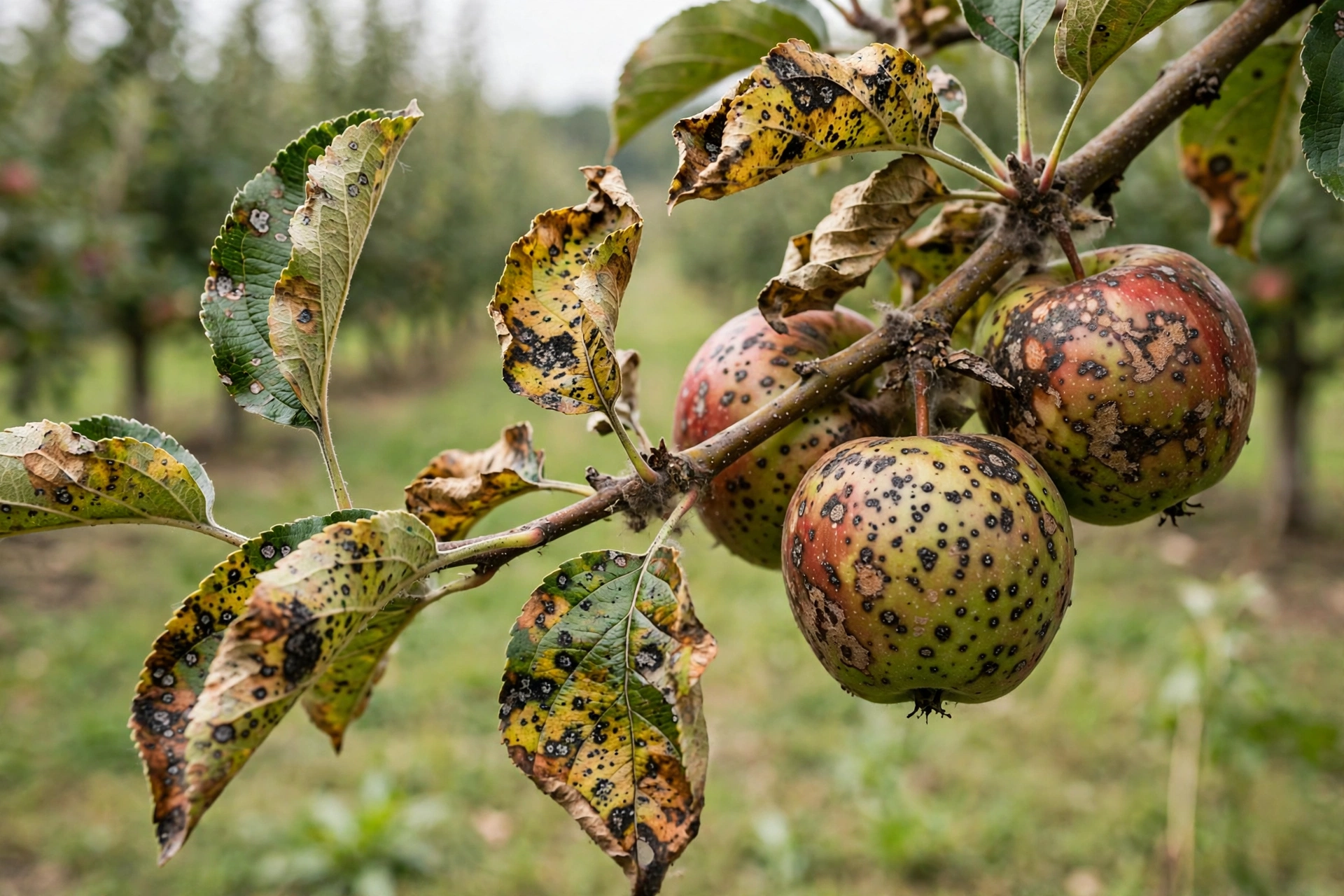
Fruit trees are a long-term investment — you plant them, prune them, wait years for a good crop, and then a fungal infection can spoil the harvest in a single season. Scabbed apples, brown-rotted plums, mildewed leaves, and cankered branches are all familiar to fruit growers, and all are caused by fungi that thrive in wet, crowded, poorly ventilated canopies.
The good news is that many fungal infections in fruit trees can be managed organically, especially if you catch them early and focus on prevention. This guide explains how to identify the most common fungal problems, what organic treatments can help, and how to keep your trees healthy year after year.
Common Fungal Infections in Fruit Trees
Apple and pear scab
Scab causes dark, olive-green to black spots on leaves, often with a velvety texture, and corky, cracked spots on fruit. Leaves may yellow and drop, and fruit may be misshapen or cracked. It thrives in wet springs and spreads by spores in rain. Choose resistant varieties, clean up fallen leaves in autumn, and prune for airflow.
Brown rot
Brown rot affects stone fruit — plums, cherries, peaches, and apricots — and sometimes apples and pears. Fruit develops soft, brown, rotting patches that spread rapidly, often with rings of grey-brown spores. Infected fruit may shrivel and remain hanging as "mummies" on the tree. Blossom may also wilt and die in spring. Remove and bin mummified fruit and infected blossom promptly.
Powdery mildew
White, powdery patches appear on young leaves, shoots, and buds, which may curl and distort. It is common on apples, grapes, and gooseberries. It thrives in warm, dry days and cool, humid nights, and in shaded, crowded canopies. Prune for airflow and light, and remove badly affected shoots.
Canker diseases
Cankers are sunken, dead patches on bark, often with oozing or gum, and dieback above them. Apple canker and bacterial canker on cherries and plums are common examples. Prune out small branch cankers in dry weather, cutting back to healthy wood, and keep trees healthy and unstressed.
Peach leaf curl
Peach leaf curl causes young leaves to thicken, curl, and turn red, yellow, or pink in spring. Leaves may drop, weakening the tree. It is caused by a fungus that overwinters in buds and bark, and infects in cool, wet spring weather. Remove affected leaves, and protect trees from rain in early spring where possible.
Step-by-Step: Identify and Treat Organically
Step 1: Identify the problem
Photograph leaves, fruit, and bark, and note the timing — blossom, fruit set, or harvest — and the weather. Scab in wet spring, brown rot on ripening fruit, and leaf curl on new spring growth each point to different fungi.
Step 2: Remove infected material
Pick off infected leaves and fruit, prune out cankered twigs, and remove mummified fruit from the tree and ground. Bag and bin everything — do not compost it. Disinfect tools between cuts.
Step 3: Improve airflow and light
Prune in winter to create an open, vase-like canopy with good air movement and light penetration. Thin crowded fruit so it dries quickly after rain and does not touch neighbouring fruit.
Step 5: Use organic treatments where appropriate
Options include sulphur sprays for mildew and scab, copper-based sprays for some fungal and bacterial problems, and potassium bicarbonate for mildew — but only where they are permitted locally and labelled for your tree and problem. Follow label instructions exactly, apply in cool, dry weather, and test on a few leaves first. Organic does not mean harmless: even natural sprays can harm beneficial insects and soil life if overused.
Common Mistakes
- Leaving mummified fruit on the tree. Brown rot spores overwinter in mummies and reinfect blossom in spring.
- Spraying too late. Organic sprays work best as prevention in spring, not as a cure for a severe summer infection.
- Assuming organic means no risk. Always read the label, check local rules, and avoid spraying when bees and other pollinators are active.
Spray Timing: The Difference Between Prevention and Cure
Most organic sprays for fruit tree fungi are protectants, not cures: they coat healthy leaves and fruit so spores cannot establish, but they cannot undo damage that is already inside the tissue. That is why timing matters more than the product you choose. For apple scab, the critical period is from bud break through the first weeks after blossom, when young leaves are most vulnerable and spring rain is frequent. For brown rot, the critical periods are blossom time, when infected flowers can carry the fungus into twigs, and the weeks before harvest, when ripening fruit is most easily infected. For peach leaf curl, the single most important spray is in late winter, before buds swell, because once leaves have opened and been infected, no spray will straighten them. Mark these dates on a calendar each year, check the weather forecast, and spray in dry, calm weather so the product stays on the leaves.
Pruning, Thinning, and Site: The Non-Chemical Half of Control
Sprays alone will not save a crowded, shaded tree. An open canopy that dries within a few hours of rain is the single best defence against most fruit tree fungi, because spores need wet leaves to germinate. Winter pruning should aim for a shape where sunlight reaches the centre of the tree and air moves freely through it — remove crossing branches, inward-growing shoots, and any dead wood. In summer, thin the fruit so that no two fruits touch: touching fruit traps moisture and lets brown rot pass from one fruit to the next in days. Also think about the site: avoid planting fruit trees in frost pockets or low, damp corners, and keep grass and weeds clear of the trunk so air can circulate at the base. A tree in the right place, pruned well, may need no spray at all in a dry year.
FAQ
Can I eat fruit from a tree with a fungal infection? Fruit that is unaffected and looks healthy is often fine after washing, but do not eat fruit with rotten, mouldy, or heavily scabbed patches. If in doubt, discard it and seek local advice.
Are organic treatments effective against fruit tree fungi? They can be effective, especially as prevention and for mild infections, when combined with pruning, hygiene, and resistant varieties. Severe infections may need stronger intervention or professional advice.
When is the best time to spray fruit trees organically? Timing depends on the disease and product. Many treatments are applied in late winter or early spring, before bud break or at blossom, and repeated as directed. Follow the product label and local guidance.
Can I compost fallen fruit from a diseased tree? No. Fallen fruit and leaves from an infected tree can carry spores and should be bagged and binned, or disposed of with garden waste. Home compost rarely gets hot enough to kill fruit tree fungi.
How do I protect bees when spraying fruit trees? Spray early in the morning or late in the evening when bees are not flying, avoid spraying open blossom unless the product label specifically allows it, and never spray on a windy day when drift can reach flowering plants nearby.
Conclusion
Fungal infections in fruit trees are common, but they are not inevitable. Identify the problem early, remove infected material, prune for airflow, water at the base, and use organic treatments only where they are appropriate and labelled for your tree. Combine that with a thorough autumn clean-up and resistant varieties, and you will enjoy healthier trees and cleaner, more abundant fruit for years to come.
Try it: Try the free Plant Disease Identifier on aitreeidentier.site — upload a clear photo of the spotted or discoloured leaves for instant guidance.
Safety disclaimer: Never eat or use a plant, or treat a disease, based on AI identification alone. AI results are guidance only — consult a local expert before applying treatments, especially on food trees or near children and pets.