
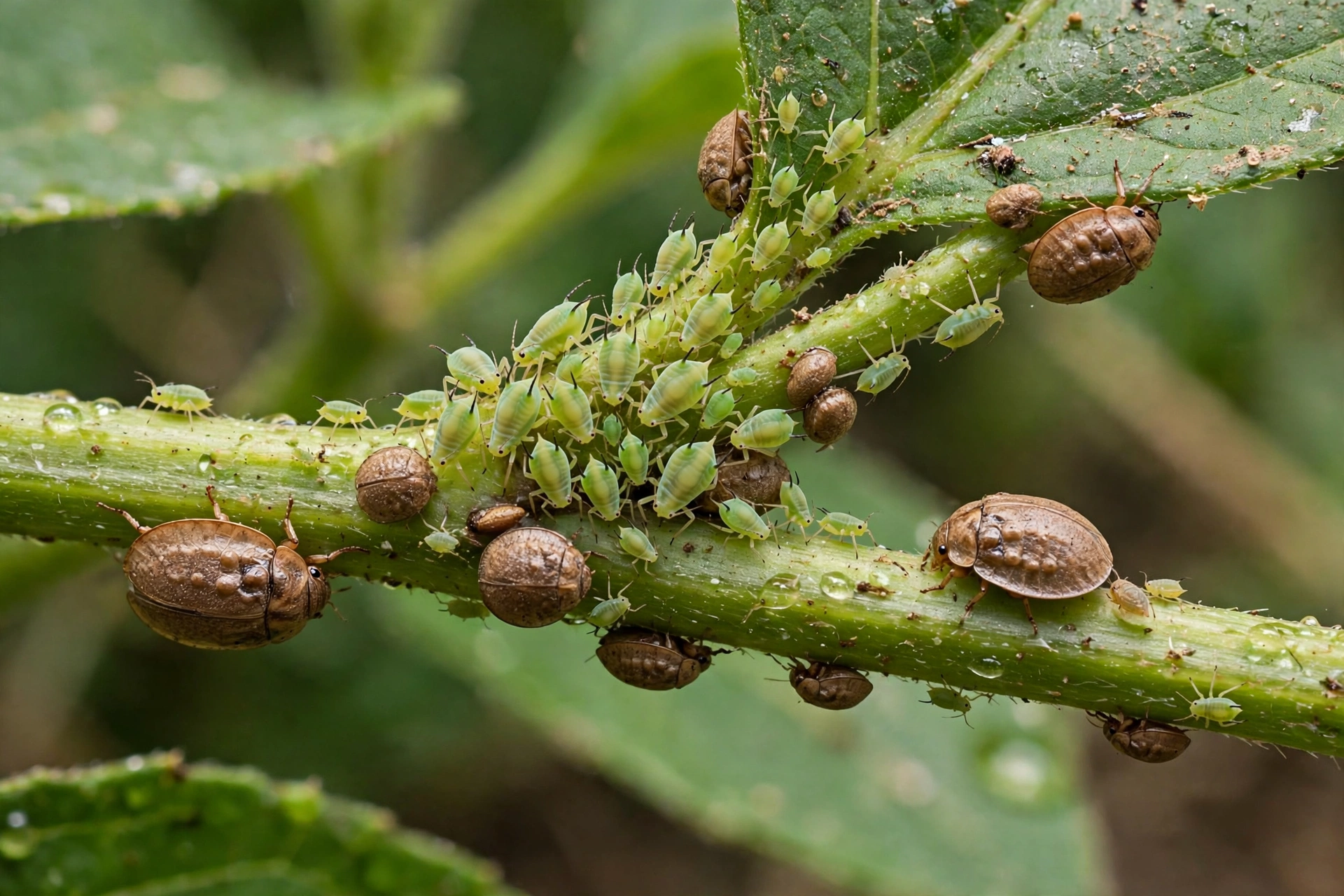
Not every sick-looking plant has a disease. Often, the culprit is a pest — tiny, well-camouflaged, and easy to miss. Aphids cluster under leaves and cause curling and yellowing. Scale insects look like small brown bumps on stems. Spider mites cause fine speckling that looks like a nutrient problem. Whitefly leaves a sticky residue that grows black sooty mould, which looks like a fungal disease.
Mistaking pests for disease leads to the wrong treatment: spraying fungicide on an aphid problem does nothing, and the insects keep feeding. Learning to recognise the most common pests — and the clues they leave behind — will save you time, money, and plants.
Aphids
Aphids are small, soft-bodied insects, usually green, black, yellow, or pink, that cluster on new growth, buds, and the undersides of leaves. They feed by sucking sap, causing leaves to curl, distort, yellow, and drop. They excrete sticky honeydew, which attracts ants and grows sooty mould. They also spread plant viruses.
Check for clusters of tiny insects, curled young leaves, sticky leaves, and ants farming aphids on stems. A strong jet of water can dislodge light infestations; encourage ladybirds and other predators, and avoid broad-spectrum insecticides that kill beneficial insects too.
Scale Insects
Scale insects look like small, immobile bumps — brown, grey, or white — attached to stems and leaf undersides. They are easy to mistake for part of the plant, or for a disease spot. They suck sap, causing yellowing, leaf drop, and stunted growth, and they also produce honeydew and sooty mould.
Look closely: if the "bump" can be flicked off with a fingernail and leaves a mark, it is likely scale. Wipe light infestations off with a damp cloth or cotton bud dipped in soapy water, prune heavily infested stems, and encourage natural predators. Horticultural oil can help in some cases — follow label instructions.
Spider Mites
Spider mites are tiny — barely visible without a lens — and live on leaf undersides. They cause fine yellow or bronze speckling, leaves that look dusty or bleached, and fine webbing on leaf undersides and between stems in severe cases. They thrive in hot, dry conditions and on stressed houseplants.
Hold a white sheet of paper under a leaf and tap it: tiny moving dots suggest mites. Increase humidity, mist leaves, remove badly affected foliage, and wash leaves with water. Avoid broad-spectrum insecticides, which can make mite problems worse by killing their predators.
Step-by-Step: Check for Pests Before Assuming Disease
Step 1: Look under the leaves
Most sap-feeding pests hide on leaf undersides and new growth. Turn leaves over and look closely in good light, using a magnifying glass or phone zoom if needed.
Step 2: Look for clues, not just insects
Sticky honeydew, sooty mould, fine webbing, white cottony tufts, sawdust, or ants on stems are all pest clues, even if you cannot see the insect itself.
Step 3: Tap and shake
Tap a leaf over white paper to dislodge mites and thrips. Shake a branch gently and watch for whitefly flying up.
Step 4: Photograph the damage and the pest
A close-up of both the damage and any insects you find makes identification far easier, whether you use an AI tool or ask a local expert.
Common Mistakes
- Spraying fungicide for an insect problem. It will not help, and it can harm beneficial insects that would have controlled the pests.
- Missing scale because it looks like bark. Scale is camouflaged by design — look closely at stems and leaf joints.
- Using a broad-spectrum insecticide first. It kills predators as well as pests, and can lead to a worse outbreak later.
- Ignoring ants. Ants farm aphids for honeydew and protect them from predators. Controlling ants can help control aphids.
- Bringing a new plant home without checking it. Quarantine new plants for a week or two and inspect them before placing them near healthy plants.
Whitefly, Thrips, and Other Lookalikes
Aphids, scale, and spider mites are the best-known culprits, but two more pests are often mistaken for disease. Whitefly are tiny white insects that rise in a cloud when a plant is shaken; they suck sap, leave sticky honeydew, and cause yellowing and sooty mould, much like aphids. Thrips are even smaller, slender insects that rasp leaf surfaces, leaving silvery streaks, distorted buds, and deformed flowers that can look like a virus. Check for whitefly by shaking the plant gently in the morning, and for thrips by holding a white sheet of paper under a flower and tapping it. Both pests are worst in warm, dry, sheltered conditions, such as a greenhouse, and both spread viruses, so early control matters.
Mealybug is another pest that looks like a disease at first glance. It forms white, cottony masses in leaf joints and under leaves, often mistaken for mould. Like scale, mealybug sucks sap and produces honeydew. Dab small colonies with a cotton bud dipped in soapy water or diluted rubbing alcohol, and repeat weekly until they are gone, because eggs hidden in the cottony mass hatch over several weeks.
Encouraging the Predators That Work for Free
The cheapest pest control is already in your garden if you let it work. Ladybirds and their larvae eat hundreds of aphids, lacewing larvae eat aphids and mites, hoverfly larvae feed on aphids, and birds pick off caterpillars and larger insects. You can encourage them by growing a few nectar-rich flowers such as calendula, dill, and fennel near your vegetables, leaving a small patch of long grass or a log pile for shelter, and avoiding broad-spectrum sprays. A garden that welcomes predators rarely needs much spraying, because the predator population rises to meet each pest outbreak. If you buy ladybirds or lacewings, release them in the evening onto infested plants, and mist the leaves lightly first so they settle instead of flying away.
FAQ
How can I tell if yellow leaves are caused by pests or disease? Check under leaves and on stems for insects, webbing, sticky residue, or bumps. Pest damage often starts on new growth and is patchy; disease often follows a pattern of spots or spread after wet weather. A clear photo helps.
Are aphids harmful to humans? Aphids do not bite people and are generally not harmful to humans or pets, but they weaken plants and spread viruses. Wash produce well before eating.
Will sooty mould harm my plant? Sooty mould itself does not infect the plant, but it blocks light and reduces photosynthesis. The real problem is the honeydew-producing pest underneath. Control the pest, and the mould will fade.
How do I stop aphids coming back every year? You cannot keep them away entirely, but you can keep numbers low: check new growth weekly in spring, wash off the first colonies with water, encourage ladybirds and other predators, and avoid excess nitrogen fertiliser, which produces the soft, sappy growth aphids love.
Can I use washing-up liquid as a pest spray? A very dilute solution of pure soap can help against aphids and other soft-bodied pests, but many washing-up liquids contain detergents and additives that can damage leaves. Test on a few leaves first, use a proper horticultural soap where possible, and never spray in strong sun.
Conclusion
Before you assume disease, take a close look for pests. Aphids, scale, spider mites, whitefly, and their relatives leave distinctive clues — curled leaves, sticky residue, sooty mould, fine webbing, and tiny bumps — that are easy to miss at a glance but clear once you know what to look for. Gentle, targeted control, plus healthy plants and good airflow, will manage most pest problems without harming the beneficial insects that help you.
Try it: Try the free Plant Disease Identifier on aitreeidentier.site — upload a clear photo of the spotted or discoloured leaves for instant guidance.
Safety disclaimer: Never eat or use a plant, or treat a pest or disease, based on AI identification alone. AI results are guidance only — consult a local expert before applying treatments, especially on food crops or near children and pets.