
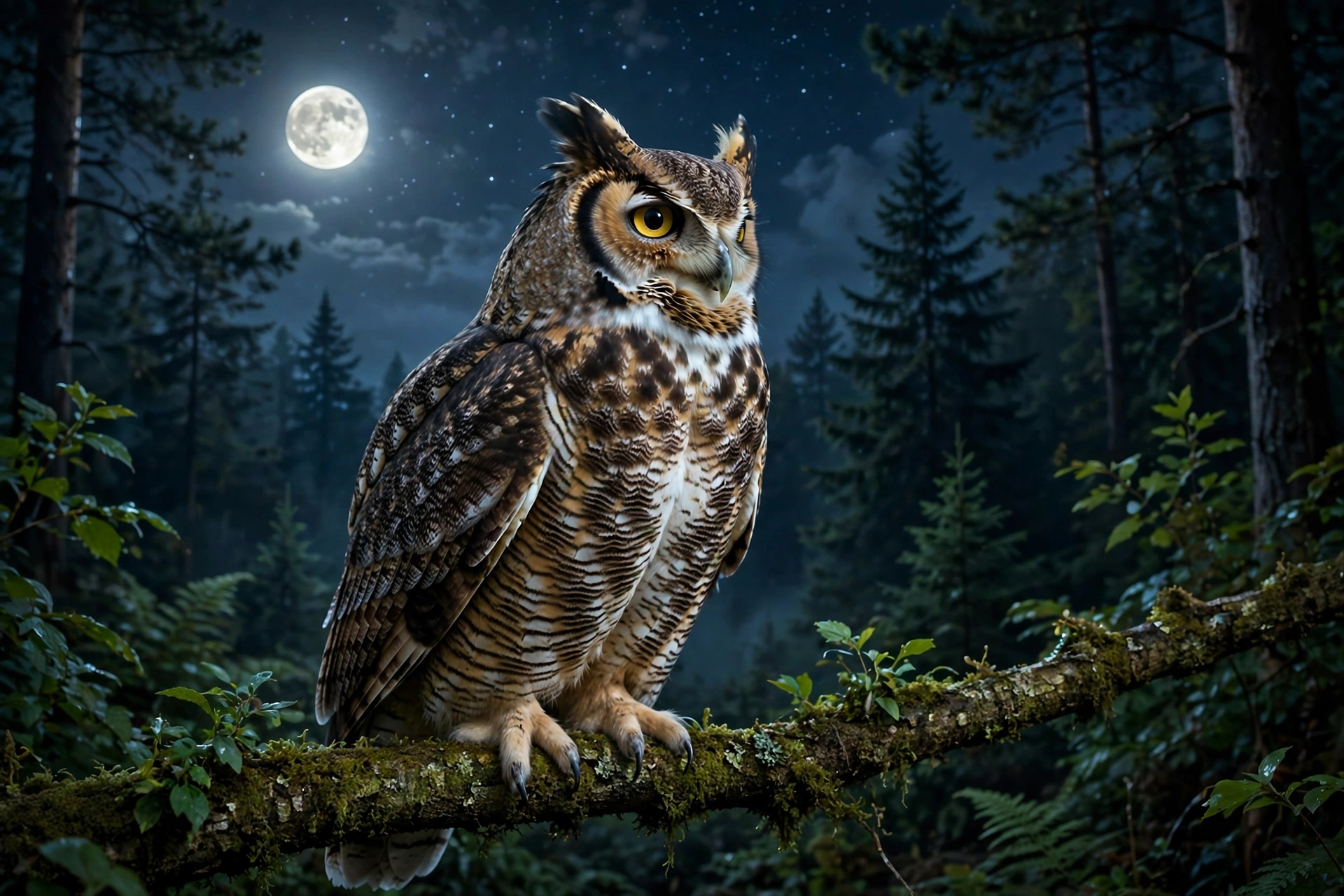
Owls are among the most captivating birds you can see, and also among the hardest to find. They are mostly active at night, they are superbly camouflaged, and they sit silently for long periods. Yet with a little knowledge and patience, you can find and identify owls safely — and the moment you hear your first tawny owl or see a barn owl gliding over a field at dusk is one you will not forget.
Introduction
This guide explains how to find owls at night, how to identify them by call, shape, and flight, and how to do it all without disturbing the birds. Safety comes first, for you and for the owls, and every tip in this guide is written with that in mind.
Why Owls Are Active at Night
Owls are adapted for night hunting. Their large eyes gather more light than ours, their hearing is exceptionally sharp, and their feathers are specially shaped to muffle sound, so they fly almost silently. These adaptations let them hunt mice, voles, and other small animals in darkness, when many other birds are roosting.
The Owls You Are Most Likely to Meet
Tawny owl
The tawny owl is a common woodland owl, about the size of a pigeon, with a rounded head, dark eyes, and mottled brown plumage. Its call is the classic hoot — a clear, trembling hoo-hoo-hoo — often answered by a sharp kew-wick from its mate. Tawny owls are heard far more often than they are seen.
Little owl and eared owls
The little owl is small, about the size of a starling, with a flat-topped head, yellow eyes, and a bold, speckled appearance. It often perches in the open during the day, on a fence post, a rooftop, or a low branch. Its call is a short, yelping kee-ow, repeated at intervals.
When to Look for Owls
Go out at dusk and dawn
The best times to look for owls are dusk and dawn, when light is low but you can still see, and when owls are most active. Barn owls and short-eared owls are often visible at these times, hunting over fields. Tawny owls are best found by listening after dark, when their hoots carry through woodland.
How to Identify an Owl You See
Shape, face, and eyes
Note the overall shape: is the head rounded or flat-topped? Are there ear tufts? Is the bird large and bulky or small and neat? A barn owl looks pale and long-winged, a tawny owl looks compact and brown, and a little owl looks small and speckled.
The face is a key mark. Barn owls have a white, heart-shaped face. Tawny owls have a rounded face with dark eyes. Little owls have a flat face with bright yellow eyes. Long-eared owls have orange eyes and long ear tufts. In a photo, the face pattern is often the clearest clue, and a clear photo taken from a distance can be checked later with the free Bird Identifier on aitreeidentier.site.
Staying Safe at Night
Plan your visit
Tell someone where you are going and when you expect to return. Choose a familiar, safe location, such as a local nature reserve, a well-used path, or a field edge near a road. Check the weather, wear warm clothes and sturdy shoes, and take a fully charged phone. Do not go alone to remote or unfamiliar places at night.
Night birdwatching needs more planning than a daytime walk. Wear warm, layered clothing, because the temperature drops quickly after sunset, and wear sturdy, waterproof shoes, because paths can be muddy and uneven in the dark. Take a torch with a red filter, which lets you see the path without ruining your night vision or disturbing the owls. Take a fully charged phone, and tell someone where you are going and when you expect to be back. Go with a friend if you can — it is safer, and it is more enjoyable. Choose a place you know well in daylight first, so you are not navigating an unfamiliar path in the dark. And if the weather is bad, or if you feel uncomfortable, go home. The owls will still be there another night, and there is no sighting worth taking a risk for.
Common Mistakes Beginners Make
The most common mistake is using a bright torch or a flash to see an owl. Bright light can disturb the bird and harm your own night vision. Use a dim red light to see the path, and watch owls in natural light whenever you can. Another mistake is using playback to lure an owl closer. Playback can stress owls, waste their energy, and attract predators, and it is especially harmful during breeding. A third mistake is approaching a roost or a nest to get a closer view. Owls are sensitive to disturbance, and a bird that is flushed from its roost during the day may not return. A fourth mistake is going out at night alone, in an unfamiliar place, without telling anyone. Always plan your visit, take a phone, and stay in safe, familiar places. Finally, do not expect to see an owl on your first night out. Owls are elusive, and it may take several visits before you hear or see one. Be patient, listen carefully, and enjoy the night itself — the stars, the sounds, and the quiet — even if the owls stay hidden.
FAQ
What is the best time to see owls?
Dusk and dawn are the best times for most species, especially barn owls and short-eared owls. Tawny owls are best found by listening after dark, when their hoots are most frequent.
Can I use a torch to find owls?
Use a dim torch with a red filter to see the path, but never shine a bright light directly at an owl. Bright light can disturb the bird and harm your own night vision. Watch owls in natural light whenever you can.
How can I tell a barn owl from a tawny owl?
A barn owl is pale, almost white below, with a heart-shaped face and a slow, graceful flight over open fields. A tawny owl is mottled brown, with a rounded head and dark eyes, and it is usually heard hooting in woodland rather than seen hunting over fields.
What should I do if I find a roosting owl during the day?
Leave it alone. Watch it briefly from a distance if you can do so without disturbing it, and then move on quietly. Do not stay for a long time, do not call others to the spot, and do not share the location online. A roosting owl needs to rest, and disturbance during the day can leave it too tired to hunt at night.
How can I find owls during the day?
Look for signs: owl pellets under a tree, white droppings on a branch, or a group of small birds mobbing a roosting owl. If you see tits, blackbirds, and robins all giving alarm calls and mobbing a tree, there may be an owl hidden inside. Watch from a distance, and do not approach the tree.
Conclusion
Finding owls at night is a mix of listening, patience, and respect. Learn the calls, go out at dusk and dawn, look for signs during the day, and identify what you see by shape, face, eyes, and flight. Above all, keep your distance, use light wisely, and never disturb a roost or nest. Do that, and owl watching will reward you with some of the most memorable moments in bird watching — a hoot in the dark, a pale shape gliding over a field, or a pair of eyes watching you from a branch.
Try the free Bird Identifier on aitreeidentier.site — upload a clear photo of the owl for instant guidance.
Safety disclaimer: Never disturb nests or wildlife to get a closer view or a better photo. Observe owls from a distance, stay on paths, do not use playback or bright lights near owls, and consult a local expert if you are unsure about a sensitive species or site. At night, always tell someone where you are going, take a charged phone, and stay in safe, familiar places.