
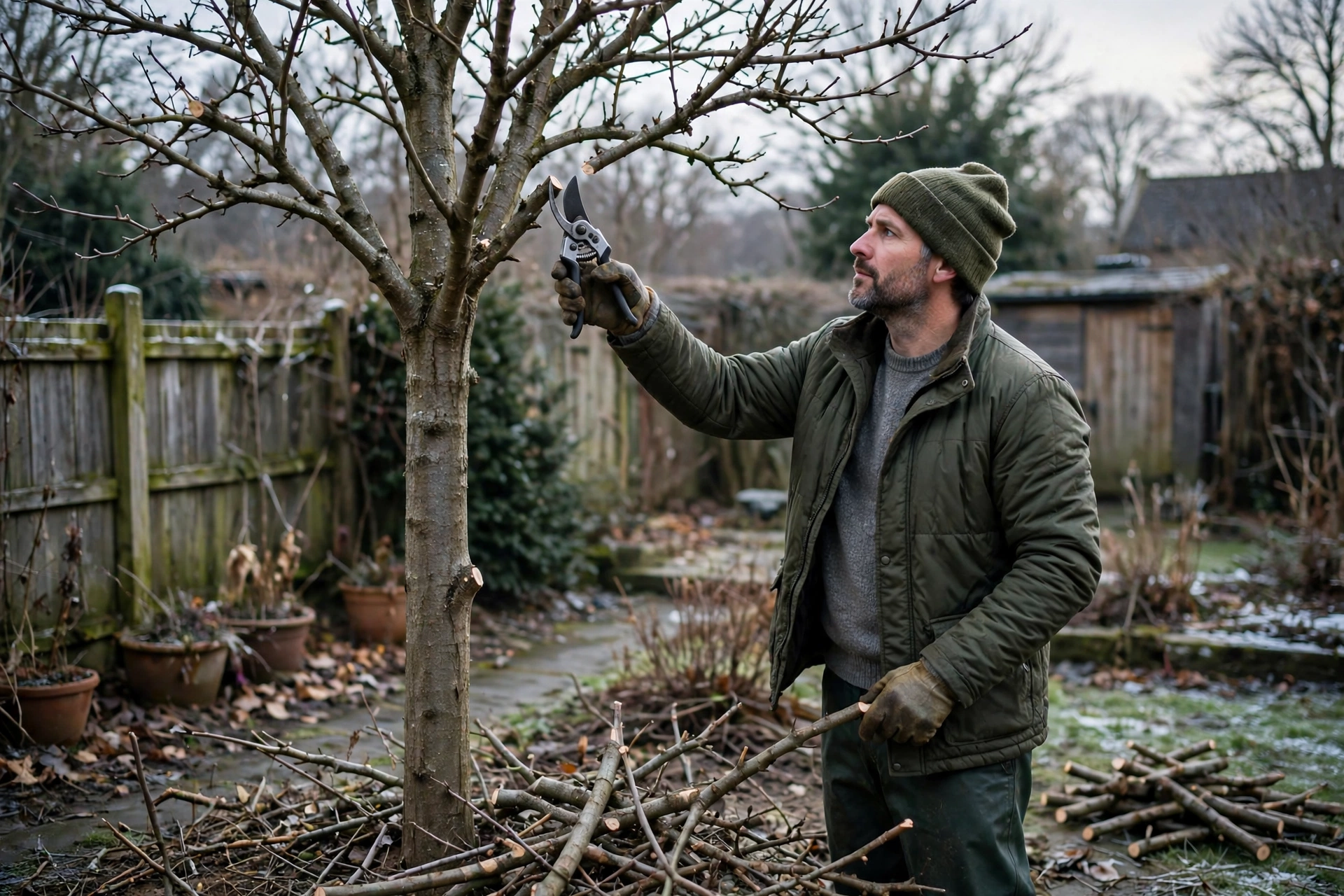
Winter is the classic season for pruning, but it is not right for every tree. With leaves gone, the branch structure is easy to see, pests and diseases are less active, and wounds heal as growth resumes in spring. That makes the cold months ideal for many deciduous trees — yet pruning the wrong tree in winter can remove its spring flowers or cause heavy bleeding. This guide explains which trees to prune, which to leave alone, and how to make safe, clean cuts.
Before you start, take a moment to look at the tree as a whole. Winter pruning is easier than summer pruning in one important way: you can see the entire branch structure, so you can spot crossing branches, dead wood, and crowded growth that would be hidden by leaves in summer. Walk around the tree, look at it from several angles, and decide what needs to go before you pick up a tool. A few minutes of looking saves a lot of regretted cutting.
Try it: Try the free Tree Identifier on aitreeidentier.site — upload a clear photo of the bare branches if you are unsure what tree you are about to prune.
Why Winter Pruning Works
Most deciduous trees are dormant in winter, so they are not actively growing and their energy is stored in the roots. Pruning now causes less stress than pruning in full leaf, and the tree can seal wounds quickly once spring growth starts. Bare branches also make crossing branches, dead wood, and crowded growth easy to see. For fruit trees, winter pruning helps shape the tree and let light into the crown.
Winter pruning also helps with disease control. Many fungal diseases spread through fresh cuts in wet, warm weather, but in cold, dry winter air, spores are far less active. That is another reason to choose a dry, frost-free day in late winter rather than a wet or bitterly cold one: the cuts you make will stay clean, and the tree will begin sealing them as soon as growth resumes in spring.
Which Trees to Prune — and Which to Leave Alone
Many deciduous trees respond well to winter pruning. Apples and pears are the classic examples: prune them in late winter, while dormant but before buds swell. Ash, elm, oak, poplar, and most shrubs that flower on new growth in summer can also be pruned in winter. Young trees benefit most, because you can guide their shape early.
Some trees should not be pruned in winter. Trees that flower in early spring on old wood — cherry, magnolia, forsythia, and lilac — set their flower buds the previous summer, so winter pruning cuts off the spring display. Wait until just after they flower. Maple, birch, and walnut bleed sap heavily from late-winter cuts, so prune them in midsummer, and prune stone fruits in spring or early summer.
If you are unsure about a tree, a simple check helps: look for flower buds on the branches. Large, plump buds that will open into flowers in early spring are a warning sign — pruning now removes them. Small, pointed leaf buds, on the other hand, mean the tree is safe to prune in winter. When in doubt, prune less, or wait until after flowering and prune then.
Step-by-Step: How to Prune Safely in Winter
Step 1: Identify the tree and check the timing
Before you pick up a tool, be sure what tree you are pruning and whether winter is right for it. Photograph the bark and branch pattern if the tree is unfamiliar. Choose a dry, frost-free day in late winter — very cold, frozen wood is brittle and cuts can tear.
Step 2: Gather clean, sharp tools
Use sharp secateurs for small branches, loppers for thicker ones, and a pruning saw for anything larger. Blunt tools crush bark and leave ragged wounds that heal slowly. Clean your tools with disinfectant before you start and between trees, so you do not spread infection.
Step 3: Remove dead, damaged, and crossing branches
Start with the easy decisions. Cut out wood that is clearly dead, broken, or diseased, cutting back to healthy tissue. Then look for branches that cross or rub together, since rubbing wounds let disease in. Keep the stronger branch and remove the other one.
Step 4: Thin the crown, do not top it
Thin the crown by removing whole branches at their base, rather than shortening many branches at random. Aim to let light and air into the centre, but keep the tree's natural shape. Never top a tree by cutting the main leader flat — topping creates weak shoots and large wounds.
Step 5: Make clean cuts and tidy up
Cut just outside the branch collar, the slightly swollen ring where a branch joins the trunk. Do not cut flush with the trunk, and do not leave a long stub. There is usually no need to paint or seal a cut — a healthy tree seals its own wounds. Remove no more than a quarter of the live crown in one winter.
For a larger branch, use the three-cut method to avoid tearing the bark. First, cut partway through the branch from underneath, about 30 cm from the trunk. Then cut through from above, a little further out, so the branch falls cleanly. Finally, remove the remaining stub with a clean cut just outside the branch collar. This takes a few extra minutes, but it prevents the bark tearing down the trunk — damage that can take years to heal.
Common Mistakes Beginners Make
- Pruning spring-flowering trees in winter. Cherry, magnolia, lilac, and forsythia flower on old wood, so winter pruning removes the spring display.
- Pruning maples, birches, and walnuts in late winter. These trees bleed sap heavily from winter cuts; prune them in summer instead.
- Topping a tree. Cutting the top flat weakens the tree, spoils its shape, and creates wounds that decay.
- Using blunt or dirty tools. Ragged cuts heal slowly, and unclean tools can spread disease.
- Cutting too much at once. Removing more than a quarter of the crown in one year stresses the tree.
FAQ
When exactly is the best time to prune in winter?
Late winter is usually best — the coldest weather has passed, the tree is still dormant, and buds have not yet swollen. Avoid pruning on very frosty days, when wood is brittle.
Can I prune fruit trees in winter?
Yes, apples and pears are usually pruned in winter, while stone fruits such as peach, plum, and cherry are better pruned in spring or early summer.
Do I need to seal pruning cuts?
In most cases, no. A clean cut just outside the branch collar will heal on its own, and wound paints can trap moisture and slow healing.
What should I do with the branches I remove?
Healthy prunings can be chipped for mulch or cut up for firewood. Diseased wood should be bagged and disposed of separately, never composted, as home compost rarely gets hot enough to kill pathogens.
Can I prune a tree that is covered in ivy?
Yes, but clear the ivy from the section you are working on first so you can see the branch structure clearly. Ivy itself does not usually harm a healthy tree, but it can hide dead wood and add weight to branches.
Conclusion
Winter pruning is one of the most useful jobs in the garden, as long as you prune the right trees at the right time. Prune apples, pears, and many deciduous trees in late winter; leave spring-flowering trees, sap-bleeding trees, and stone fruits until after flowering or until summer. Work slowly, use clean, sharp tools, and never take more than a quarter of the crown in one year. When the job is large or high, a local arborist is the safe choice.
Safety disclaimer: Never eat or use any part of a tree, or treat a tree problem, based on AI identification alone. AI results are guidance only — consult a local arborist or plant expert before pruning large limbs, working at height, or using power tools, especially near people, pets, power lines, or buildings.