
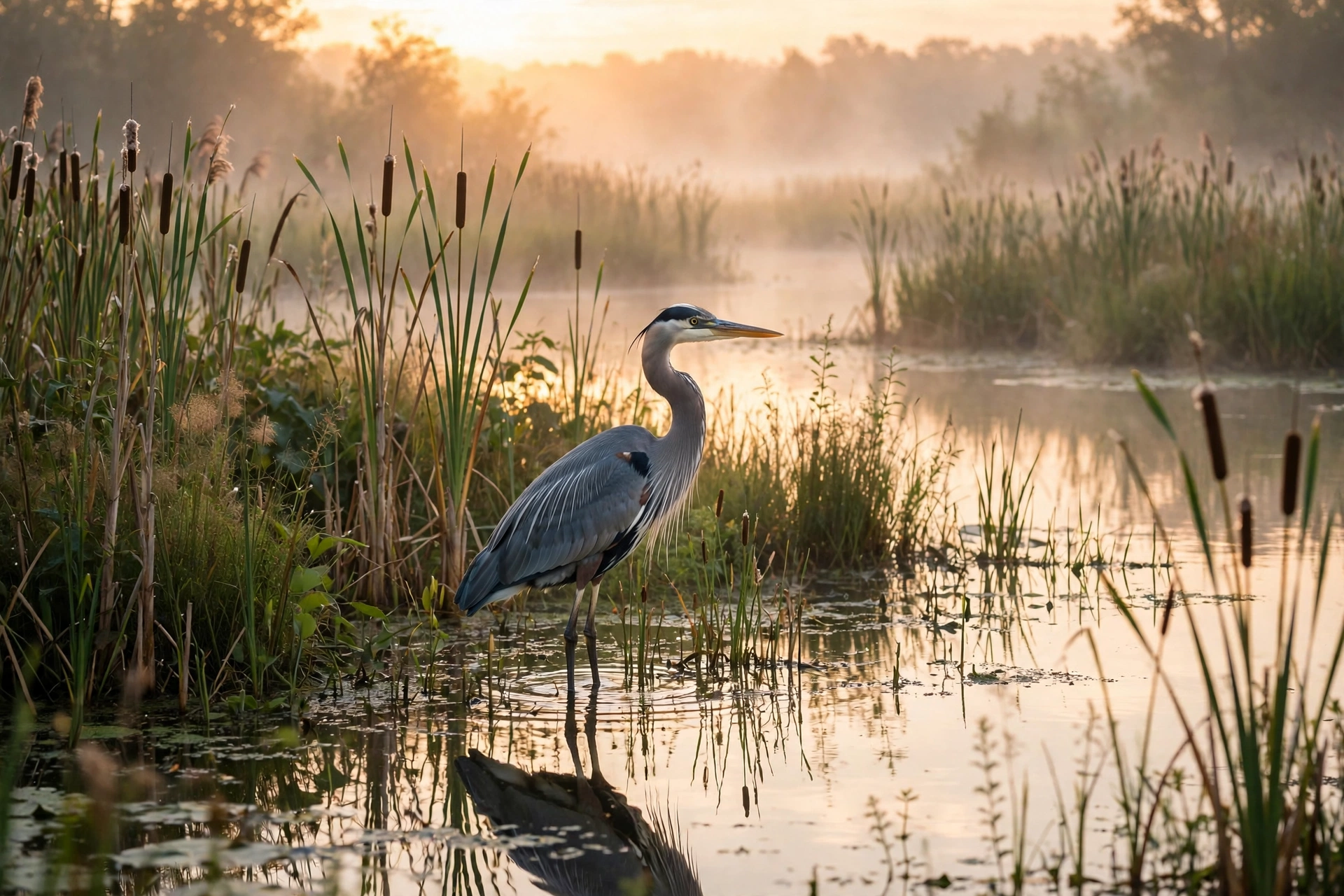
Wetlands are among the richest places for wildlife. Where water meets land — in marshes, reedbeds, ponds, lakes, estuaries, and slow rivers — you will find birds, plants, fish, amphibians, and insects living side by side. A single wetland visit can reveal herons standing motionless in shallow water, dragonflies darting over reeds, marsh marigolds blooming at the water's edge, and fish rising to catch insects.
This guide introduces the birds, plants, and fish you are most likely to spot near water, and shows you how to identify them by shape, colour, habitat, and behaviour. Wetlands are sensitive places, so this guide also explains how to watch wildlife without disturbing it. Bring binoculars if you have them, a camera, and patience — wetlands reward slow, quiet observation. Arrive early, move gently, and use a hide or a screen of reeds when you can: many wetland birds will carry on feeding only if they do not feel watched.
Wetland Birds: Herons, Ducks, and Waders
Wetland birds are often large, visible, and distinctive. Herons are tall, grey, and patient, standing still in shallow water before striking at fish. Egrets are similar but white, with black legs and a yellow or black bill. Ducks are common and varied: mallards are the most familiar, with males showing a green head and females mottled brown, while teal, shoveler, and gadwall each have their own bill shape and pattern.
Waders — such as lapwings, redshanks, and sandpipers — feed along muddy edges, probing for invertebrates with long bills. Note the bird's size, bill shape, leg length, and behaviour. A long bill and long legs suggest a wader. A flat, broad bill suggests a dabbling duck. A pointed bill and a still, hunting posture suggest a heron or egret. Photograph the bird from the side if you can, showing the bill, legs, and overall shape.
Other wetland birds reward a closer look. Swans are large and unmistakable, but note the bill colour: mute swans have an orange bill with a black knob, while whooper and Bewick's swans have yellow and black bills. Moorhens and coots are common on ponds — moorhens have a red bill and a white stripe, coots are dark with a white shield on the forehead. Kingfishers are small, fast, and brilliantly blue and orange, and they are most often seen as a flash of colour low over the water. Listen too: the loud, pig-like squeal of a water rail and the booming of a bittern are often heard long before the birds are seen.
Wetland Plants and Fish
Wetland plants are identified by where they grow as much as by how they look. Reeds and bulrushes stand tall in shallow water, their stems rising from the mud. Yellow flag iris and marsh marigold flower at the water's edge in spring, while water lilies float on still ponds in summer. Look at the leaves: are they long and strap-like, round and floating, or divided and feathery underwater? Note whether the plant grows in the water, at the margin, or on damp ground nearby, because that position is a strong clue to its identity.
Fish are harder to see, but not impossible. Watch for rings on the surface where fish rise to take insects, for shadows moving in clear shallows, and for the flicker of a shoal in a sunny spot. Carp, roach, perch, and pike all live in freshwater wetlands, and each leaves signs: pike are ambush hunters that lurk in weed beds, perch often hunt in small groups, and carp stir up muddy clouds as they feed on the bottom. At dusk, listen for frogs and toads calling, and watch for newts in shallow, weedy ponds in spring. Dragonflies and damselflies are another wetland highlight: dragonflies are large and strong fliers that hold their wings flat, while damselflies are smaller, slimmer, and rest with their wings folded.
Step-by-Step: Identify Wetland Wildlife
Step 1: Note the wetland type
Is it a pond, marsh, reedbed, lake, river, or estuary? Is the water fresh, brackish, or salt? Record this first — it is the strongest filter for birds, plants, and fish.
Step 2: Observe birds by shape and behaviour
Note the bird's size, bill shape, leg length, and what it is doing: standing still, dabbling, diving, or probing mud. Photograph from the side with the habitat visible.
Step 3: Identify plants by flower, leaf, and position
Note the flower colour and shape, leaf shape, and whether the plant grows in water, at the edge, or on damp ground. Photograph the flower, leaves, and the plant's position relative to the water.
Step 4: Look for fish and other signs
Watch the water surface for rising fish, ripples, or shadows. Look for tracks, droppings, and feeding signs along the bank. Note the time of day and weather.
Step 5: Confirm with an AI tool
Upload your clearest bird photos to the Bird Identifier on aitreeidentier.site and compare its suggestion with your notes on size, bill, legs, and habitat. Use other identification tools for plants and fish in the same way.
Common Mistakes to Avoid
Disturbing birds to get closer. Wetland birds are easily disturbed, especially in breeding season. Use binoculars and zoom, keep to paths and hides, and do not approach nests.
Identifying by colour alone. Male and female ducks look very different, and juvenile birds often look different from adults. Combine colour with shape, bill, legs, and behaviour.
Forgetting the water type. A freshwater plant or fish cannot live in salt water, and vice versa. Always note whether the water is fresh, brackish, or salt.
Ignoring the season. Many wetland birds are migratory and appear only at certain times of year. A bird that looks right but is out of season is probably a similar resident species.
Overlooking dragonflies and damselflies. They are often the most colourful wetland animals, and they are easier to identify than many birds. Note the size, colour, and whether the wings are held flat or folded at rest.
FAQ
What is the best time to visit a wetland? Early morning and late afternoon are often best for birds, when they are feeding and light is good. Spring is excellent for flowers and breeding birds; autumn is good for migrating waders.
Do I need binoculars to identify wetland birds? They help a great deal, especially for distant birds. A camera with zoom can also work. Start with large, distinctive birds such as herons and swans, which are easy to see without binoculars.
Are wetlands safe to visit? Yes, if you stay on paths, wear suitable footwear, and follow local signs. Do not wade into deep or fast water, and keep children close near water.
Can AI identify a wetland bird from a photo? Yes, often well, if the photo is clear and shows the bird's side view, bill, legs, and habitat. Distant, blurry photos are much harder to identify reliably.
What is the difference between a dragonfly and a damselfly? Dragonflies are larger and stronger, with eyes that touch and wings held flat at rest. Damselflies are smaller and slimmer, with eyes set apart and wings folded along the body at rest. Both are common around wetlands in summer.
Conclusion
Wetland wildlife is rich, varied, and rewarding to identify: herons and ducks, reeds and water lilies, fish and dragonflies all share the same watery world. Start with the wetland type, observe birds by shape and behaviour, identify plants by flower and position, and watch the water for fish. Use the Bird Identifier on aitreeidentier.site as a second opinion, keep to paths, and watch quietly. The more time you spend at wetlands, the more you will see — and the more you will want to protect these vital habitats.
Safety note: Stay on marked paths, do not enter deep or fast water, keep a safe distance from wildlife, and never eat or use a wild plant or mushroom based on AI alone. Consult a local expert if you are unsure.