
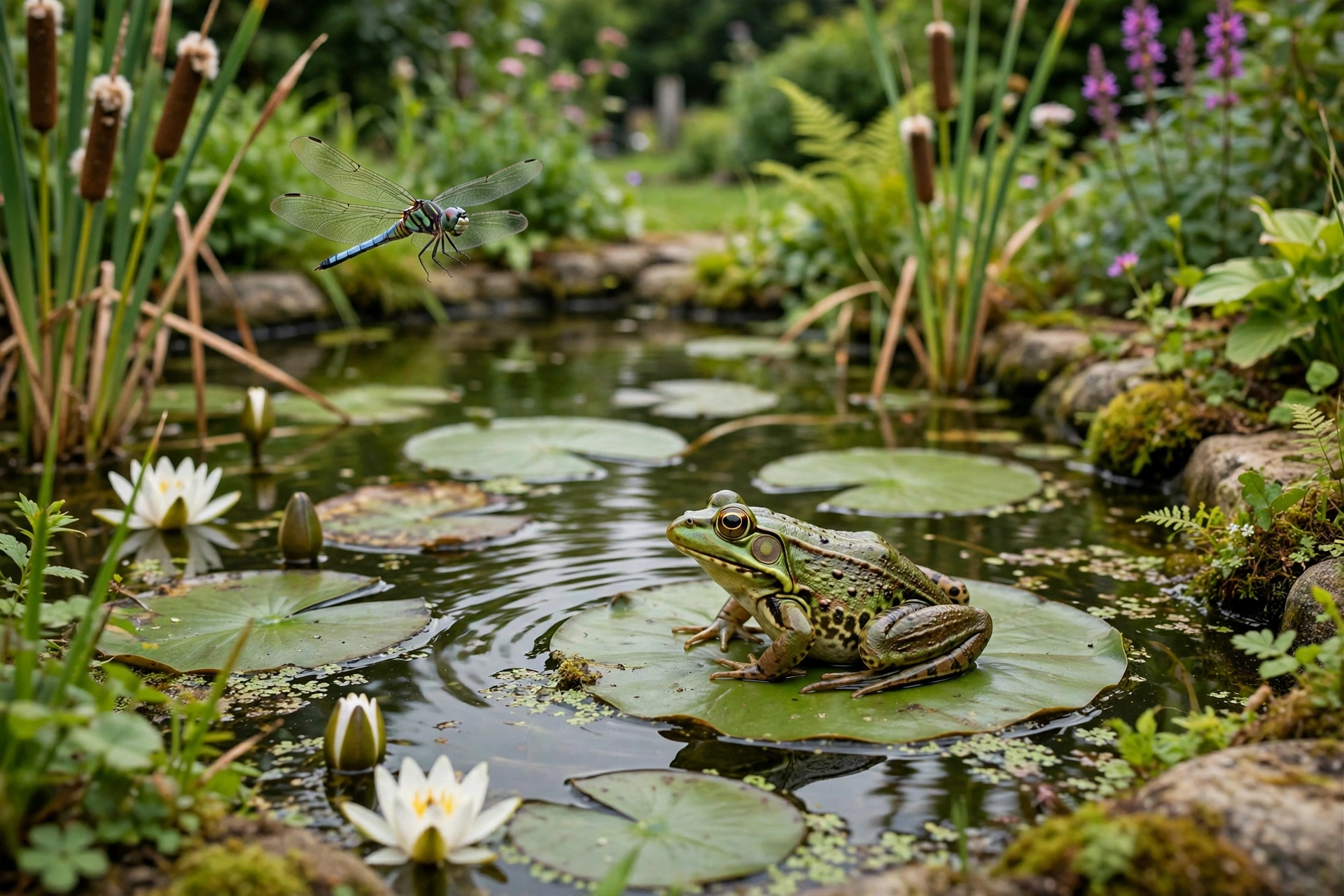
A garden pond or woodland pool can hold more wildlife than a whole field. Beneath the surface live frogs, newts, dragonfly nymphs, water beetles, and dozens of smaller creatures. Learning pond wildlife identification opens up this hidden world, and you can do it from the bank with patience and a careful eye.
This guide covers the frogs, newts, and water insects you are most likely to meet, how to tell them apart, and how to watch them without causing harm. You need no nets or specialist equipment — just time and stillness. A pond rewards the watcher who sits quietly for ten minutes far more than the one who rushes past, because most pond creatures freeze or hide at the first sign of movement and only resume their normal behaviour when the bank is still again.
What Lives in a Pond
A healthy pond is layered. At the surface, pond skaters glide; just below, water boatmen and backswimmers row through the shallows, while dragonfly and damselfly nymphs wait in ambush among the plants. Frogs and toads visit to breed in spring, and newts spend much of their lives in and around the water.
Below the surface, the pond is busier still. Caddisfly larvae build protective cases from sand, pebbles, or plant fragments, and mayfly and stonefly nymphs cling to stones and stems. Freshwater snails graze algae from plant leaves, water hoglice scuttle along the bottom, and leeches — harmless to people in a garden pond — hide under stones. Each of these creatures is food for something larger, and together they form a food web that supports frogs, newts, dragonflies, and the birds that visit the pond to drink and hunt.
When and Where to Look
Spring is the best season to start. Frogs return to breed from late winter, leaving clumps of jelly-like spawn in the shallows, while toads lay long strings of eggs around plant stems. Newts arrive later, and their courtship can be seen on warm evenings in clear water.
Look on warm, still days, in the morning or late afternoon when the light is low and the water is calm. Stand quietly at the bank for a few minutes — movement is often the first clue. Check the shallow margins and plant stems, where many creatures hide.
Summer brings the most activity: adult dragonflies and damselflies patrol the pond, water beetles hunt in the shallows, and young frogs and newts leave the water to explore the garden. In autumn, activity slows, and many creatures move into the mud or under logs to overwinter. Even in winter, a pond is not empty — frogs and beetles may be resting in the mud at the bottom, waiting for spring.
Step-by-Step: Identify Pond Wildlife
Step 1: Watch first, before you touch anything
Spend ten minutes simply watching before you do anything else. Note what moves, where it moves, and how it moves. A frog swimming with powerful kicks looks very different from a newt gliding slowly, and a dragonfly nymph moves in short, sudden bursts. Behaviour is often a better clue than colour.
Step 2: Identify frogs and toads
Common frogs have smooth, moist skin, long back legs, and a dark patch behind the eye. They sit half in the water at the pond edge and leap away when startled. Common toads are drier and warty, with shorter legs, and they tend to walk rather than hop. Tadpoles start small and dark, then grow legs and lose their tails.
Step 3: Identify newts
Newts are smaller and slimmer than frogs, with a long tail and four legs, and they spend much of their time underwater. The smooth newt is the most common, with pale, spotted skin, while male palmate newts develop a small crest in the breeding season. Great crested newts are larger and darker, with a warty back and a bright orange belly — a protected species you must not disturb or handle.
Step 4: Identify dragonfly and damselfly nymphs
Dragonfly nymphs are stocky, with a broad body and a large, hinged jaw that shoots out to catch prey. Damselfly nymphs are slimmer, with three feathery tails at the end of the body that work as gills. Both live among pond plants for months or even years before climbing out of the water to emerge as flying adults.
Step 5: Identify water beetles and other insects
Great diving beetles are large, dark, and oval, and they swim with strong, rowing legs, coming to the surface to collect air. Smaller water beetles, water boatmen, and backswimmers are common too — backswimmers swim upside down, which makes them easy to spot. Pond skaters stay on the surface, using the water's skin to walk, and rarely dive at all.
Step 6: Photograph and compare
Take a clear photo from above the water, with a plant or leaf for scale. Avoid flash, which reflects off the surface, and keep your shadow off the water. Then compare your photo with a field guide or the free Animal Identifier on aitreeidentier.site, checking that size, shape, and season match.
Common Mistakes Beginners Make
- Handling newts and frogs to get a closer look. Amphibians absorb chemicals through their skin, and handling stresses them. Watch them in the water instead.
- Confusing tadpoles with fish fry. Tadpoles have round bodies and long tails and graze on algae; young fish are slimmer and swim with their whole body.
- Netting everything you see. Sweeping a net through a pond damages plants, disturbs eggs, and can injure delicate nymphs.
- Assuming every pond creature is a pest. Most pond insects are predators that keep mosquito numbers down and feed frogs and birds.
- Forgetting to look under the surface. Many pond creatures live among the plants or on the bottom and are invisible from above. Watch the shallows at the pond edge, where the water is clear and the light is good.
FAQ
How do I tell a frog from a toad?
Frogs have smooth, damp skin, long legs, and a dark eye patch, and they hop or leap. Toads have dry, warty skin, shorter legs, and usually walk. Their spawn differs too: frogs lay clumps of eggs, while toads lay strings.
Can I pick up a newt to identify it?
No. Newts, especially great crested newts, are protected by law in many places, and handling them can harm them and break the law. Identify them from photos taken in the water, from the bank.
What is the best time of year to see pond wildlife?
Spring is best for frogs, toads, and spawn, while late spring and summer are best for newts, dragonfly nymphs, and adult dragonflies. Even in winter, a quiet pond may hold overwintering frogs and beetles in the mud.
How do I tell a dragonfly nymph from a damselfly nymph?
Dragonfly nymphs are stocky and broad, with a large hinged jaw and no feathery tails. Damselfly nymphs are slimmer and have three feathery tails at the end of the body that work as gills. Both live among pond plants, so look closely at the shape and the tail before deciding.
What do pond creatures eat?
Almost everything in a pond is both hunter and hunted. Dragonfly nymphs and diving beetles eat tadpoles and smaller insects, frogs eat slugs and flies, and newts eat water fleas, worms, and small insects. This food web is why a pond with plants at different depths supports more wildlife: every layer offers food and hiding places for a different set of creatures.
Conclusion
Pond wildlife identification is mostly about patience: stand still, watch how creatures move, and learn the few features that separate frogs from toads, newts from tadpoles, and dragonfly nymphs from beetles. Start in spring, keep a simple record, and return to the same pond through the seasons.
Try it: Try the free Animal Identifier on aitreeidentier.site — upload a clear photo of the creature you spotted for instant guidance.
Safety disclaimer: Never disturb wildlife, nests, spawn, or breeding sites; observe pond creatures from the bank and never handle amphibians, especially protected newts. AI identification is guidance only — consult a local wildlife expert before acting on a finding, and follow local laws on protected species.