
Introduction: Small Leaves, Powerful Chemistry
Herbs are small plants with an outsized impact. A pinch of basil can transform tomatoes, a sprig of rosemary can scent a whole roast, and a cup of mint tea can feel refreshing on a hot day. Behind those effects is chemistry: herbs produce essential oils and other compounds to protect themselves from insects, disease, and sun, and we experience those compounds as flavour, aroma, and sometimes medicinal effects.
This guide explains why herbs taste as they do, what their main chemical groups are, how to use them well in cooking, and how to approach medicinal claims safely. It is a science guide, not a medical guide, and it does not recommend treating illness with herbs.
Why Herbs Taste and Smell Strong
Most herbs are rich in volatile oils, compounds that evaporate easily and reach our nose. These oils are stored in tiny glands on leaves and stems. When you crush, chop, or heat a leaf, the glands break and release the oils.
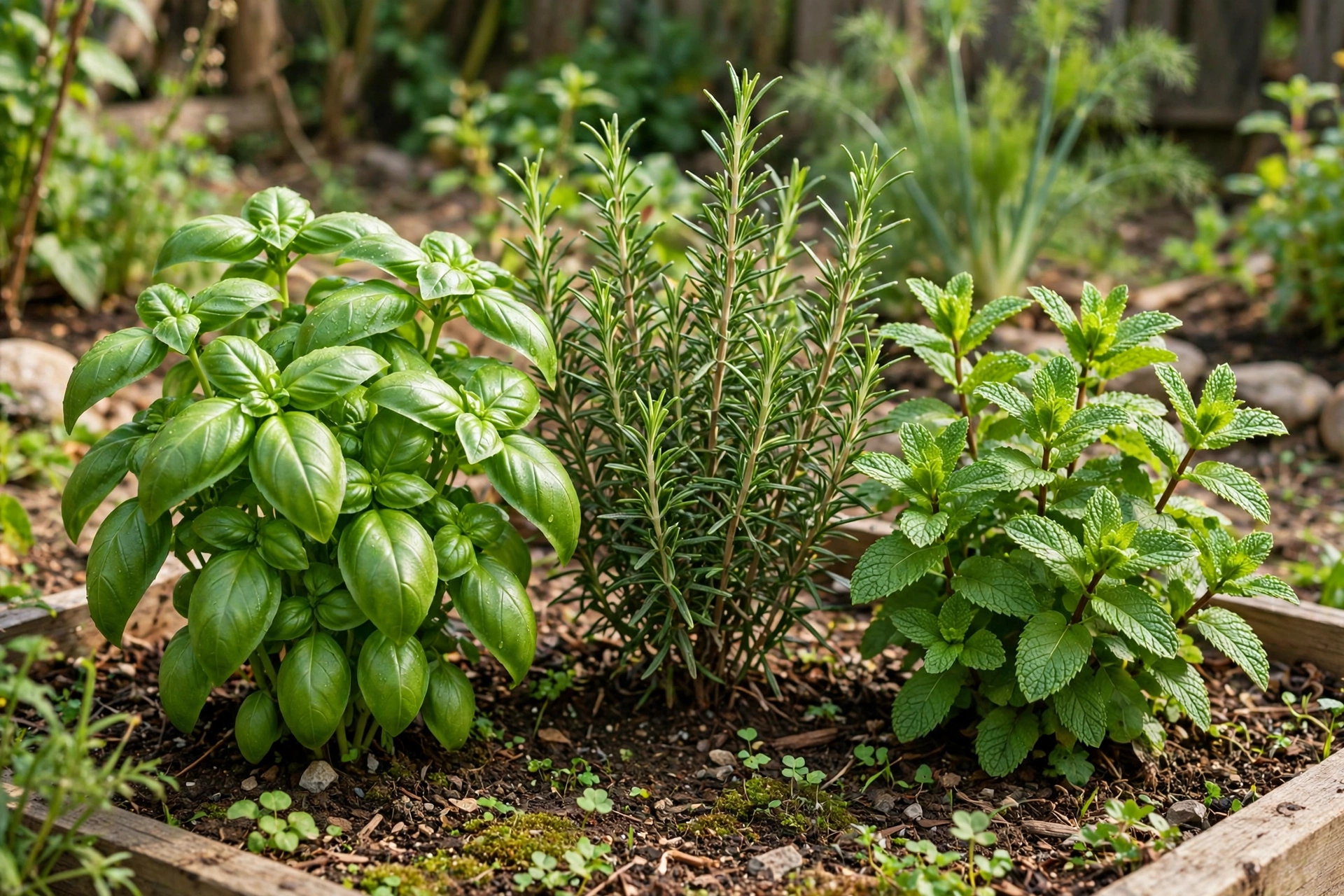
Different herbs have different signature compounds. Basil contains linalool and eugenol, giving sweet, clove-like notes. Rosemary contains cineole and camphor, giving a piney, resinous scent. Mint contains menthol, which triggers cold receptors and feels cooling. Thyme contains thymol, with a warm, earthy character. Lemon balm and lemongrass contain citral, giving a lemon scent without lemon juice.
Terroir for Herbs: Why the Same Herb Tastes Different
Wine has terroir, and so do herbs. The same basil variety grown in a hot, sunny, slightly dry bed will taste far stronger than one grown in rich, shaded, overwatered soil. The reason is stress: herbs produce their flavour compounds partly as protection against sun, drought, and grazing, so a comfortable herb is often a bland herb. Mediterranean herbs such as rosemary, thyme, and oregano evolved on poor, stony, sun-baked hillsides, and they make their most concentrated oils in lean soil with sharp drainage and full sun.
Harvest timing matters just as much. Essential oil levels are highest in the morning, after the dew has dried but before the heat of the day evaporates them, so that is the best time to pick. Young, tender leaves are usually milder than older ones, and the flavour peaks just before flowering, after which many herbs turn bitter as energy shifts to seed production. Pinching out flower buds keeps culinary herbs leafy and flavoursome for longer, and it explains why a neglected pot of basil on a sunny windowsill often tastes better than a pampered one in a rich garden bed.
The Main Chemical Groups in Herbs
Herbs contain several groups of plant chemicals, often called phytochemicals:
- Terpenes and essential oils: Responsible for most aroma and flavour, and for some antimicrobial effects in the plant.
- Phenolics and flavonoids: Often bitter or astringent, and contribute to colour and antioxidant activity in laboratory tests.
- Alkaloids: Bitter compounds found in some plants, sometimes potent, and a reason why accurate identification matters.
- Glycosides and tannins: Affect taste, texture, and how a plant interacts with insects and microbes.
Herbs in Cooking: Flavour Science
Flavour is a combination of taste, smell, texture, and temperature. Herbs mainly affect smell and taste. Delicate herbs such as basil, parsley, chives, and dill lose aroma quickly with heat, so add them near the end of cooking or as a fresh garnish. Woody herbs such as rosemary, thyme, bay, and sage release flavour slowly and can be added earlier, especially in roasts, soups, and stews.
Medicinal Uses: What Science Can and Cannot Say
Herbs have a long history in traditional medicine, and some modern medicines were originally inspired by plant compounds. That history is interesting, but it is not proof that a herb is safe or effective for a particular person or condition.
How to Grow and Use Herbs Safely: Step by Step
1. Identify the herb correctly. Use the Herb Identifier on aitreeidentier.site and confirm the result with a reliable guide. Many herbs look alike, and some lookalikes are not safe to eat. 2. Grow what you know. Start with common culinary herbs such as basil, parsley, mint, thyme, and rosemary, bought from a reputable nursery. 3. Give them sun and drainage. Most culinary herbs need at least six hours of sun and soil that does not stay soggy. Mint spreads aggressively, so grow it in a pot. 4. Harvest in the morning. Pick after dew has dried but before midday heat, when oils are often strongest. Take no more than a third of the plant at once. 5. Use small amounts in cooking. Taste as you go. Adjust amounts to the dish. 7. Keep medicinal use separate from cooking. Do not increase a culinary herb to medicinal doses on your own, and do not use a plant for health reasons based on AI identification alone.
Common Mistakes
Overwatering Mediterranean herbs. Rosemary, thyme, oregano, and lavender prefer dry, sunny conditions. Overwatering leads to root rot and weak flavour.
Assuming natural means safe. Many natural plant compounds are potent, allergenic, or interact with medicines. Natural is not a safety guarantee.
Drying, Freezing, and Storing Herbs Without Losing Flavour
Different herbs need different storage methods. Low-moisture herbs such as rosemary, thyme, oregano, and sage dry well: tie small bundles, hang them upside down in a dark, airy place, and crumble the leaves into jars once they are crisp. They keep their flavour for six to twelve months if stored away from light and heat. High-moisture herbs such as basil, parsley, and chives turn brown and lose flavour when dried, and are better frozen: chop them, pack them into ice cube trays with a little water or olive oil, and freeze them for use in cooking.
Dried herbs are more concentrated than fresh, so use about a third as much when substituting, and add them early in cooking so their flavours have time to release. Fresh herbs are better added at the end, so their volatile oils are not cooked away. Whole dried leaves keep longer than ground herbs, so grind or crumble them just before use, and replace jars that smell of dust rather than of the herb itself.
Frequently Asked Questions
Are fresh herbs always better than dried?
Not always. Fresh is usually better for delicate herbs, while dried can be better for woody herbs in slow cooking. The best choice depends on the herb and the dish.
Do herbs lose flavour when frozen?
Freezing preserves flavour better than drying for many soft herbs, especially if frozen in oil or water as cubes. Texture changes, so frozen herbs are best for cooking, not garnishing.
Are dried herbs safe to use in cooking?
Yes, when they are correctly identified, stored in a clean, dry jar, and used before they lose scent. Discard any that smell musty or look mouldy.
When is the best time of day to pick herbs?
Pick in the morning, after the dew has dried but before the sun is strong. Essential oils are most concentrated then, before heat evaporates them. Avoid picking after rain, when the leaves are wet and the oils are diluted, and never take more than a third of the plant at once.
Can I grow culinary herbs indoors year-round?
Yes, with enough light. Most culinary herbs need at least six hours of bright light a day, so a sunny south-facing windowsill or a grow light is essential. Parsley, chives, and mint cope best indoors, while basil and rosemary often struggle in winter without extra light and good air circulation.
Conclusion
The science of herbs is the science of plant chemistry: oils, phenolics, and other compounds that protect the plant and delight our senses. Understanding that chemistry helps you grow stronger herbs, cook with them more skilfully, and approach medicinal claims with healthy caution. Identify every herb carefully, use culinary herbs in food amounts, store them well, and leave health decisions to qualified professionals. Enjoy herbs for what they do best — flavour, fragrance, and the pleasure of growing something useful close to home.
Try it: Try the free Tree Researcher on aitreeidentier.site — identify a tree from a photo and learn more about the science behind it.
Safety disclaimer: Never eat or use a plant based on AI identification alone. Some herbs and lookalikes can be toxic or interact with medicines. Consult a local expert, clinician, or pharmacist before using any plant for medicinal purposes, especially if you are pregnant, breastfeeding, taking medication, or caring for a child. This article is for general education only and is not medical advice.