
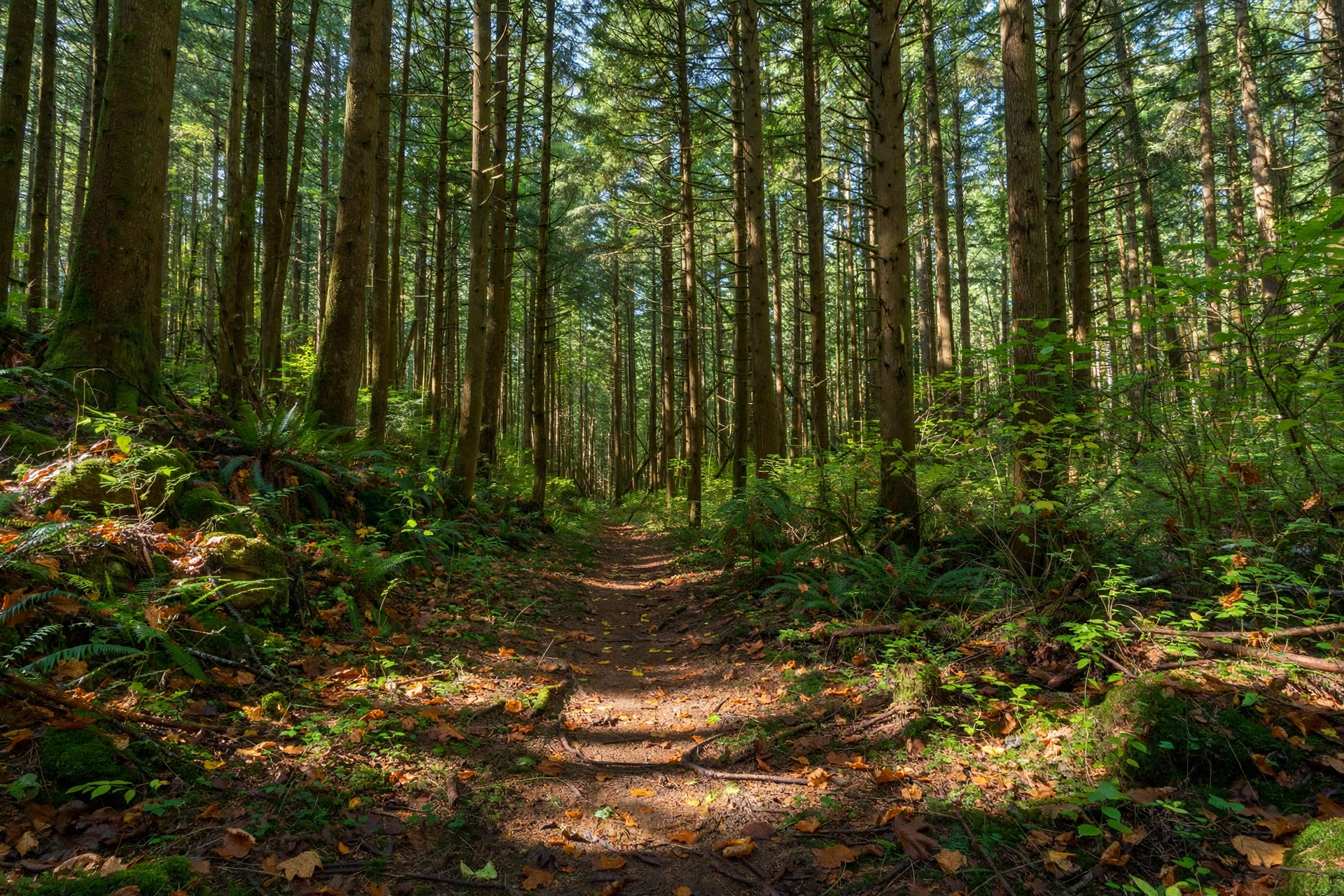
A forest is not just a collection of trees. It is a living story, written in bark, leaves, soil, and animal signs. Learning to read a forest means learning to notice what is growing, what has been eaten, what has passed through, and how the pieces fit together. A chewed pine cone, a woodpecker hole, a deer track in soft mud, or a carpet of bluebells in spring each tells you something about the forest's health, its wildlife, and its history.
This guide shows you how to read those signs step by step. You will learn what trees and undergrowth reveal, how to recognise common wildlife signs without disturbing animals, and how to build a fuller picture from a single walk. You do not need special equipment — just curiosity, patience, and a notebook or phone for photos and notes. The key is to slow down: most people walk through a forest in twenty minutes and see very little, while a slow hour in the same place can reveal tracks, feeding signs, fungi, and birdsong that a fast walker would never notice.
Start with the Trees
Trees are the framework of the forest. Begin by noting the dominant species: are the trees mostly oak, pine, birch, beech, or a mixture? Look at the canopy — is it closed and shady, or open with light reaching the ground? Look at the trunks — are they straight and tall, suggesting a managed plantation, or varied in age and size, suggesting a more natural woodland?
Bark and leaves help you identify individual trees. Oak bark is deeply fissured, birch bark is pale and peeling, and pine bark is often scaly and reddish. Fallen leaves, cones, and seeds on the ground are useful clues too. A forest floor covered in acorns points to oak. Pine cones point to conifers. Note the mix of young saplings and old trees: a healthy forest usually has trees of many ages.
Dead and fallen trees are part of the story as well. A standing dead tree, called a snag, may be full of woodpecker holes and provide homes for owls, bats, and beetles. A fallen trunk, slowly rotting, feeds fungi and insects and shelters small mammals and amphibians. If a forest has no dead wood at all, it has probably been tidied too much, and much of its wildlife will be missing. Look for fungi on dead wood, moss on fallen trunks, and seedlings growing from rotting logs — these are signs of a forest that is recycling itself.
Read the Undergrowth and the Forest Floor
What grows beneath the trees tells you about light, soil, and moisture. A carpet of bluebells, wood anemones, or wild garlic in spring suggests rich, moist soil and a canopy that lets light in before the leaves open. Brambles, bracken, and nettles often mark richer or disturbed ground, while heather, bilberry, and wavy hair-grass point to acidic, poorer soils. Ferns thrive in damp, shady spots, and mosses cover the ground where the air stays humid.
The forest floor also records the animals. Look for deer slots in soft mud, badger paths worn through the undergrowth, and latrines — shallow pits where badgers leave droppings. Look for feeding signs: hazelnuts nibbled by mice, pine cones stripped by squirrels, and bark stripped by deer. Each sign adds a line to the story, and together they can tell you which animals use the forest even when you never see them.
Step-by-Step: Read a Forest on a Walk
Step 1: Pause and look in layers
Stand still and look in layers: canopy, mid-storey, undergrowth, and forest floor. What is growing at each level? What is the light like? Take a wide photo for reference.
Step 2: Identify three trees
Pick three trees and identify them by bark, leaves, or cones. Photograph each one and note its features. Three confident identifications give you a strong sense of the forest type.
Step 3: Look down for signs
Walk slowly and look at the ground. Note tracks, droppings, feathers, fur, chewed cones, and nibbled nuts. Photograph signs from above with something for scale, and note where you found them.
Step 4: Listen and look up
Listen for birdsong and look for nests, holes, and roosting sites. A woodpecker drumming, a jay calling, or a nest high in a tree all add to the picture. Note the time of day and the weather.
Step 5: Put the picture together
Back home, review your photos and notes. What forest type is it? What animals live there? What does the undergrowth suggest about light and soil? Use the Forest Identifier on aitreeidentier.site to check your tree and forest identifications, and keep your notes for your next visit.
Common Mistakes to Avoid
Walking too fast. Most forest signs are small and easy to miss. Slow down, pause often, and look closely at the ground and at eye level.
Touching droppings or nests. Observe without touching. Droppings can carry germs, and nests should never be disturbed. Photograph from a distance.
Assuming one sign means one animal. A chewed cone could be squirrel, mouse, or bird. Combine several signs before you conclude which animal was there.
Ignoring the season. Spring flowers, autumn fungi, and winter tracks each appear at different times. A forest in winter tells a different story from the same forest in summer.
Visiting only once. A single visit gives you a snapshot; repeat visits across the seasons give you the full story. Return to the same forest in spring, summer, autumn, and winter, and compare your notes.
FAQ
What is the easiest wildlife sign for beginners? Feeding signs are often easiest: stripped pine cones, nibbled hazelnuts, and woodpecker holes are common, distinctive, and easy to photograph.
Do I need to identify every tree to read a forest? No. Identifying the dominant two or three trees, plus the main undergrowth plants, gives you a good understanding of the forest type and habitat.
How can I tell deer tracks from other hoofed animals? Deer tracks are cloven, pointed, and usually neat. Size, shape, and habitat help separate deer from sheep, goats, and other hoofed animals. Compare with a field guide and note the location.
Can AI help me read a forest? Yes. AI tools can help identify trees and forest types from photos, which gives you a starting point. Your own observations of undergrowth, tracks, and feeding signs complete the picture.
What is the best time of day to read a forest? Early morning is often best: birds are singing, the light is soft, and fresh tracks from the night are still clear in soft ground. Late afternoon is good too, as animals become active again before dusk. Midday in summer is the quietest time, though it is still worth looking at trees, undergrowth, and fungi.
What should I bring on a forest-reading walk? Very little: your phone for photos and notes, a small field guide or identification app, and something for scale such as a coin. Binoculars are a bonus for birds, and a hand lens helps with small fungi and mosses. Leave the rest at home and travel light.
Conclusion
Reading a forest is about slowing down and noticing layers: trees, undergrowth, and the signs animals leave behind. Identify a few trees, look for tracks and feeding signs, listen for birds, and note the light and season. Use the Forest Identifier on aitreeidentier.site to confirm what you saw, and keep a simple record of each walk. Over time, you will start to see forests not as a green blur, but as a living, interconnected place full of stories.
Safety note: Stay on paths where required, do not disturb nests or wildlife, and never eat or use a wild plant or mushroom based on AI alone. Consult a local expert if you are unsure.