
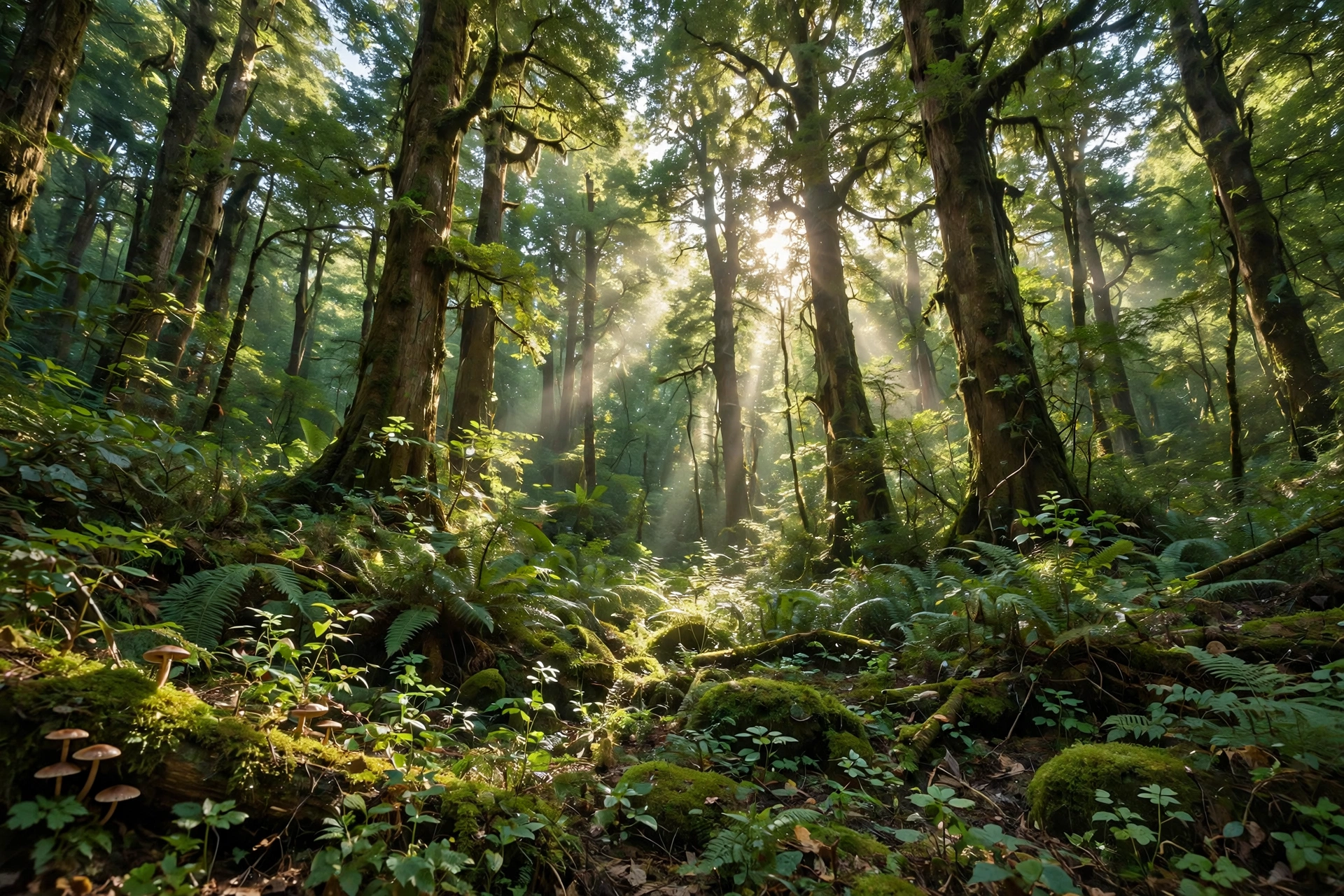
A forest is more than a group of trees. It is an ecosystem — a living network in which trees, plants, animals, fungi, and soil all depend on each other. Trees provide food and shelter. Plants feed pollinators. Animals spread seeds. Fungi recycle nutrients. Soil stores water and carbon. Remove one part, and the whole system feels it. Understanding forest ecosystems helps you see why forests matter, how they work, and what happens when they are damaged or protected.
This guide explains forest ecosystems in plain language: the layers of a forest, the food web, the role of fungi and soil, and how trees, plants, and animals depend on each other through the seasons. You do not need a science background to follow it — just curiosity and a willingness to look closely at the forest around you.
The Layers of a Forest
Forests have layers, like a building with several floors, and different animals live on each floor. The canopy is the top layer, where tall trees spread their leaves and catch sunlight. Birds, squirrels, and insects live here, feeding on leaves, flowers, and seeds. The understorey is the middle layer, where smaller trees and shrubs grow in partial shade. Birds nest here, and mammals shelter here.
The shrub layer and forest floor are the lower layers, where ferns, wildflowers, seedlings, and fungi grow. Insects, amphibians, and small mammals live here, feeding on leaves, fungi, and each other. Below the surface, roots and soil organisms — worms, fungi, and bacteria — break down dead matter and recycle nutrients. Each layer depends on the others: the canopy shades the forest floor, the forest floor feeds the soil, and the soil feeds the trees.
The Food Web: Who Eats Whom
A forest food web is far more tangled than a simple food chain. Caterpillars eat oak leaves, blue tits eat caterpillars, sparrowhawks eat blue tits, and fungi and bacteria eventually break down everything that dies, returning nutrients to the soil. A single oak tree can support hundreds of insect species, and those insects feed birds, bats, and small mammals. Remove the oak, and the whole web thins out.
Seasons drive the food web. In spring, caterpillars hatch in huge numbers just as nesting birds need protein for their chicks — a timing that has evolved over thousands of years. In autumn, nuts, berries, and fungi provide a feast that helps animals build fat reserves for winter. In winter, life continues quietly underground and inside trees.
Fungi, Soil, and the Hidden Network
Perhaps the most surprising part of a forest is underground. Most trees are connected to a vast network of fungal threads called mycorrhizae, which link root to root and tree to tree. Through this network, fungi pass water and minerals to trees in exchange for sugars the trees make from sunlight. The network can even carry warning signals between trees when insects attack, and it helps seedlings growing in deep shade by sharing resources from larger, sunlit trees.
Step-by-Step: Explore a Forest Ecosystem
Step 1: Look in layers
Stand in a forest and look in layers: canopy, understorey, shrub layer, forest floor, and soil. What is growing and living at each level? Take a wide photo for reference.
Step 2: Find three connections
Find three connections between species: a bird feeding on caterpillars, a bee on a flower, a squirrel burying an acorn, a fungus on a log, or a jay carrying a seed. Note each one — these are the threads of the food web.
Step 3: Look for fungi and dead wood
Look for mushrooms, fungi on logs, and fallen branches. Note how many insects and plants depend on dead wood. Dead wood is not waste; it is habitat and food.
Step 4: Note the season and the soil
What season is it, and what is happening in the forest? Is the ground covered in leaf litter? Is the soil damp or dry? Note the weather and the time of year.
Step 5: Use an AI tool to identify what you saw
Upload your forest photos to the Forest Identifier on aitreeidentier.site to learn more about the forest type and its trees. Use your notes to connect what you identified with the ecosystem around it.
How Forests Change Through Time
Forests are never static. After a storm fells a large tree, light floods the forest floor, seeds germinate, and a burst of new growth begins. Over decades, young trees compete for light, some die and become standing deadwood, and the forest slowly returns to a dense canopy. This cycle of disturbance and regrowth is natural, and it creates the mix of ages and habitats that wildlife needs. A forest with trees of many ages — seedlings, young trees, mature trees, and old, hollow ones — supports far more species than a plantation where every tree is the same age.
Threats to Forest Ecosystems
Forests face real pressures. Fragmentation — when roads, fields, and housing split a forest into small patches — isolates wildlife and makes it harder for species to move, breed, and find food. Invasive plants such as rhododendron can smother native undergrowth, while introduced pests and diseases can kill whole tree species. Climate change brings longer droughts, hotter summers, and storms that stress trees and shift the timing of flowering, insects, and bird migration. Deer can also damage forests when their numbers are too high, eating seedlings and preventing young trees from growing. Understanding these threats is the first step towards supporting the forests near you, whether that means joining a local conservation group, reporting tree disease, or simply staying on paths and leaving dead wood where it lies.
Common Mistakes to Avoid
Thinking a forest is just trees. Trees are the framework, but plants, animals, fungi, and soil are equally important. A forest without undergrowth, fungi, or dead wood is a poorer ecosystem.
Tidying a forest too much. Removing leaf litter, dead wood, and undergrowth removes food and shelter for many species. Leave natural material where it belongs.
Assuming a quiet forest is empty. Many forest animals are nocturnal, shy, or hidden in the canopy. Look for tracks, droppings, feeding signs, and birdsong — the forest is busier than it looks.
Forgetting that forests need time. A mature forest ecosystem takes decades or centuries to develop. Protecting old forests matters because they cannot be replaced quickly.
Visiting only in summer. Forests change completely through the year. Spring brings wildflowers and birdsong, autumn brings fungi and falling leaves, and winter reveals nests, tree shapes, and tracks in the mud or snow. Visit the same forest in every season to see the full story.
FAQ
What is a forest ecosystem? A forest ecosystem is the community of trees, plants, animals, fungi, and soil organisms in a forest, plus the non-living parts such as sunlight, water, and air, all interacting and depending on each other.
How do trees help animals? Trees provide food, shelter, nesting sites, and shade. They also support insects that feed birds, produce seeds that feed mammals, and create habitats at many heights.
Why are fungi important in forests? Fungi recycle nutrients from dead matter, help tree roots absorb water and nutrients, and provide food for animals. Without fungi, forests would struggle to grow and recycle.
How can I help forest ecosystems? Stay on paths, do not disturb wildlife or remove plants, support forest protection, plant native trees where appropriate, and leave dead wood and leaf litter in place.
Do trees really communicate with each other? In a sense, yes. Through underground fungal networks, trees can share nutrients and chemical signals, and some studies suggest stressed trees can warn their neighbours. The science is still developing, but the connections underground are real and important.
What is the difference between a forest and a woodland? The terms overlap and are often used interchangeably. In general, a forest is a larger area of trees, while a woodland is smaller and more open, with more light reaching the ground. Both are forest ecosystems, and both matter for wildlife.
Conclusion
Forest ecosystems are living networks in which trees, plants, and animals depend on each other for food, shelter, pollination, and healthy soil. The canopy, understorey, forest floor, fungi, and soil each play a part, and the food web connects them all. By looking in layers, finding connections, and noticing fungi and dead wood, you can start to see a forest as an ecosystem, not just a collection of trees. Use the Forest Identifier on aitreeidentier.site to explore the forests near you, and remember: protecting forests means protecting the whole web of life they support.
Safety note: Stay on marked paths, do not disturb wildlife, and never eat or use a wild plant or mushroom based on AI alone. Consult a local expert if you are unsure.