
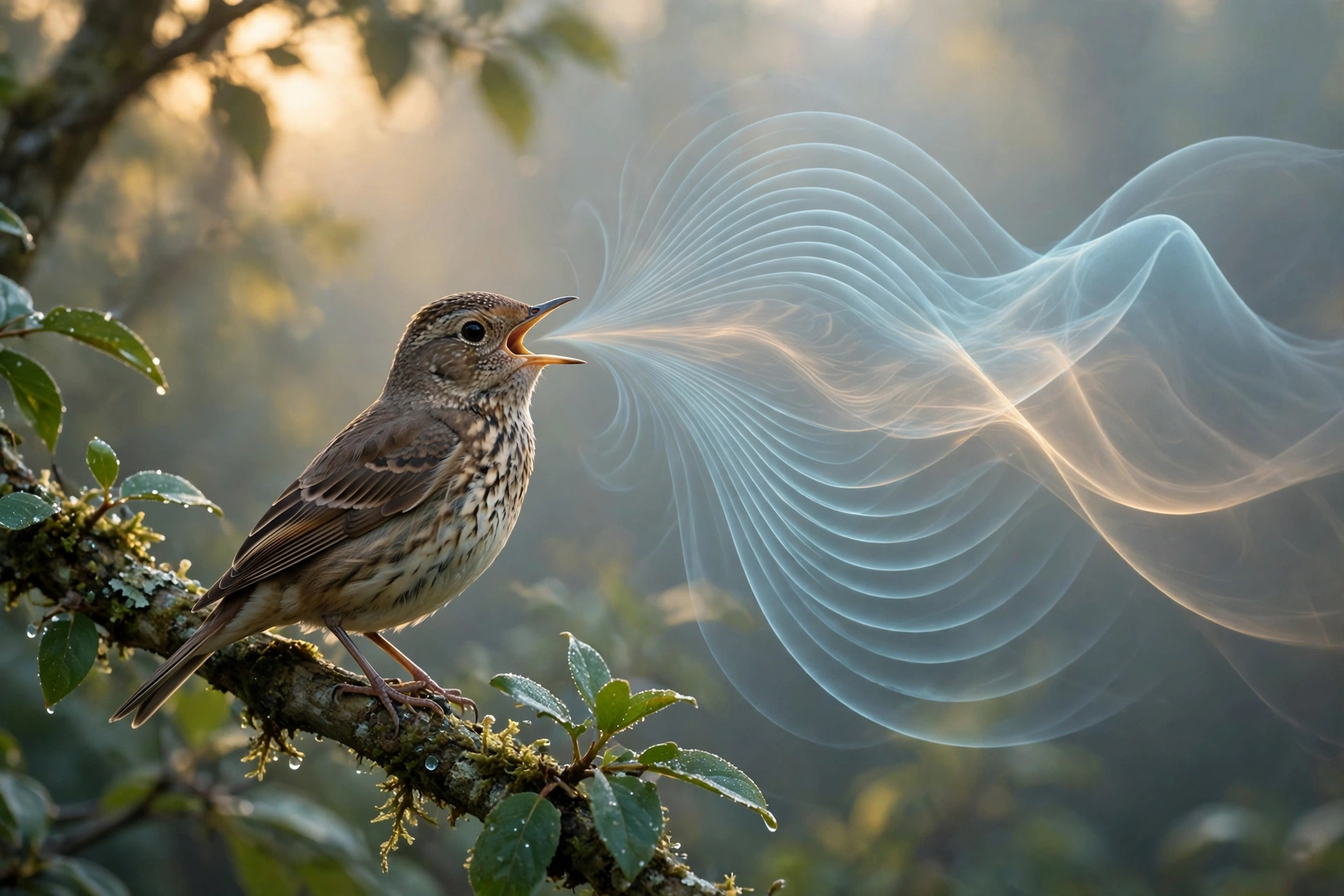
Many birds are heard before they are seen. They sing from dense bushes, high treetops, or reedbeds where a clear view is impossible. Learning birdsong opens up a whole layer of birdwatching that visual identification alone cannot reach — and it makes every walk richer, even when birds stay hidden.
Introduction: Hearing Is Half of Birdwatching
You do not need perfect pitch or a musical ear. Birdsong identification is about pattern, rhythm, pitch, and repetition. With a small set of common songs learned well, you can identify a surprising number of birds by ear, and you will notice far more birds than you would by sight alone.
In fact, on a spring morning in woodland, you may hear twenty species and see only five. That is not a failure of your eyesight — it is simply how birds live. Most small birds spend their lives hidden in leaves, singing to defend a territory they rarely leave. If you can only identify birds by sight, you will miss most of them. If you can identify them by sound, the same woodland becomes full of birds you can name, count, and follow through the season. Learning songs also changes how you walk: you start to listen before you look, and you notice birds you would otherwise have passed without a glance. It is a skill that rewards patience, and it grows faster than most beginners expect.
Step 1: Learn to Listen Actively
Slow Down and Focus
Find a quiet spot, close your eyes for a minute, and simply listen. How many different songs can you hear? Try to separate them — one high and fast, one low and fluty, one repetitive. Active listening is a skill, and it improves quickly with practice.
Step 2: Start with Five Common Songs
Learn a small set first, rather than trying to learn everything at once. These five are widespread and distinctive:
Blackbird: A rich, fluty, mellow song with varied phrases and pauses. It sounds relaxed and musical, often sung from a rooftop or treetop at dawn and dusk.
Robin: A sweet, warbling, liquid song with short phrases and pauses. Robins sing through much of the year, including winter, and often sing at night near streetlights.
Great Tit: A clear, loud, two-note "teacher-teacher" or "tee-cher tee-cher." It is rhythmic and easy to recognise once you have heard it a few times.
Chaffinch: A loud, fast, descending song ending with a flourish — often described as a cheerful rattle that finishes with a flourish. It is common in woodland and gardens.
Wren: An astonishingly loud, rattling, trilling song for such a tiny bird, with a long, bubbling burst of notes. Wrens sing from low bushes and often repeat the same song many times.
Once you know these five, add a second set of five that are also common: the song thrush, which repeats each phrase two or three times; the chiffchaff, which repeats its own name; the dunnock, with a thin, high, warbling song; the goldfinch, with a tinkling, twittering call; and the woodpigeon, with its soft, five-note coo. Ten songs is enough to identify most of the birds you will hear in a typical garden or park in spring, and from there you can add new species one at a time. The key is to learn each song so well that you recognise it instantly, rather than learning twenty songs badly and confusing them all. Listen to recordings at home, then listen for the real song outdoors, and repeat that cycle until the song is fixed in your memory.
Step 3: Use Mnemonics, Rhythm, and Pitch
Mnemonics — phrases that sound like the song — help many people remember songs. The great tit's "teacher-teacher," the chiffchaff's repeated "chiff-chaff," and the cuckoo's two-note call are classic examples. Make up your own phrases if the standard ones do not stick; what matters is that they work for you.
Step 4: Combine Sound with Sight and Habitat
When you hear a song, try to find the singer. Watch where the sound comes from, note the habitat — woodland, garden, reedbed, or open field — and the time of day. If you can see the bird, even briefly, you can confirm the song and link sound to sight in your memory. That link is powerful: the next time you hear the same song, you will picture the bird.
A Practical Listening Routine
1. Choose one place and visit it regularly, so you learn its usual singers. 2. Pick one new song to learn each week, and focus on it. 3. Listen for 10 minutes without trying to identify everything — just notice patterns. 4. When you hear a song you know, say the species name aloud to reinforce it. 5. Record an unknown song on your phone if you can, and check it later. 6. Keep a simple log: date, place, species heard, and any notes on the song.
Common Mistakes
The most common mistake is trying to learn too many songs at once. Start small and build slowly. Another mistake is relying on mnemonics alone — they help, but rhythm, pitch, and habitat matter too. A third mistake is assuming every bird you hear is singing; many sounds are calls, not songs. Calls are usually shorter and simpler — alarm calls, contact calls, and flight calls — and they are useful too, but they are different from the longer, musical song used mainly in spring to defend territory and attract a mate. Finally, do not be discouraged by mimics. Starlings and marsh warblers copy other birds, so if a song sounds like several birds at once, check whether a starling is nearby.
FAQ
How long does it take to learn birdsong? You can learn five common songs in a few weeks with regular listening. Learning 20–30 songs takes a season or two, but it builds steadily.
Is it better to learn songs in spring? Yes, spring is the best time because birds sing most and most species are present. Winter listening is quieter but still useful for robins and wrens.
Can I use an app to identify birdsong? Yes, sound-identification apps can help, but use them to learn, not just to get an answer. Listen first, guess, then check the app to confirm.
What if I hear a bird but cannot see it? Note the habitat, time, and a description of the song — pitch, rhythm, repetition — and check it later. A recording helps a great deal.
What is the difference between a song and a call? A song is usually longer, more musical, and used mainly in the breeding season to defend territory and attract a mate. A call is shorter and simpler, used all year for alarm, contact, and flight. Learning common calls — such as the blackbird's sharp alarm call or the robin's ticking call — is just as useful as learning songs, because calls are what you will hear most often outside spring.
Why do birds sing more at dawn? Sound travels further in the cool, still air of early morning, and singing at dawn lets a male claim its territory before other birds become active. It is also a time when feeding is less urgent, because insects are not yet active. That is why the dawn chorus is the best time to hear the most songs in the shortest time.
Conclusion
Birdsong identification is a rewarding skill that turns every walk into a listening experience. Start with five common songs, learn their rhythm and pitch, use mnemonics that work for you, and link sound to sight and habitat whenever you can. Be patient, listen regularly, and let your ear learn gradually. Before long, you will recognise birds you never see — and your birdwatching will feel twice as rich.
Try the free Bird Identifier on aitreeidentier.site — upload a clear photo of the bird for instant guidance.
Safety disclaimer: Never disturb nests or wildlife to hear or see a bird. Observe from a distance, keep noise low near sensitive sites, and consult a local expert if you are unsure about a species.