
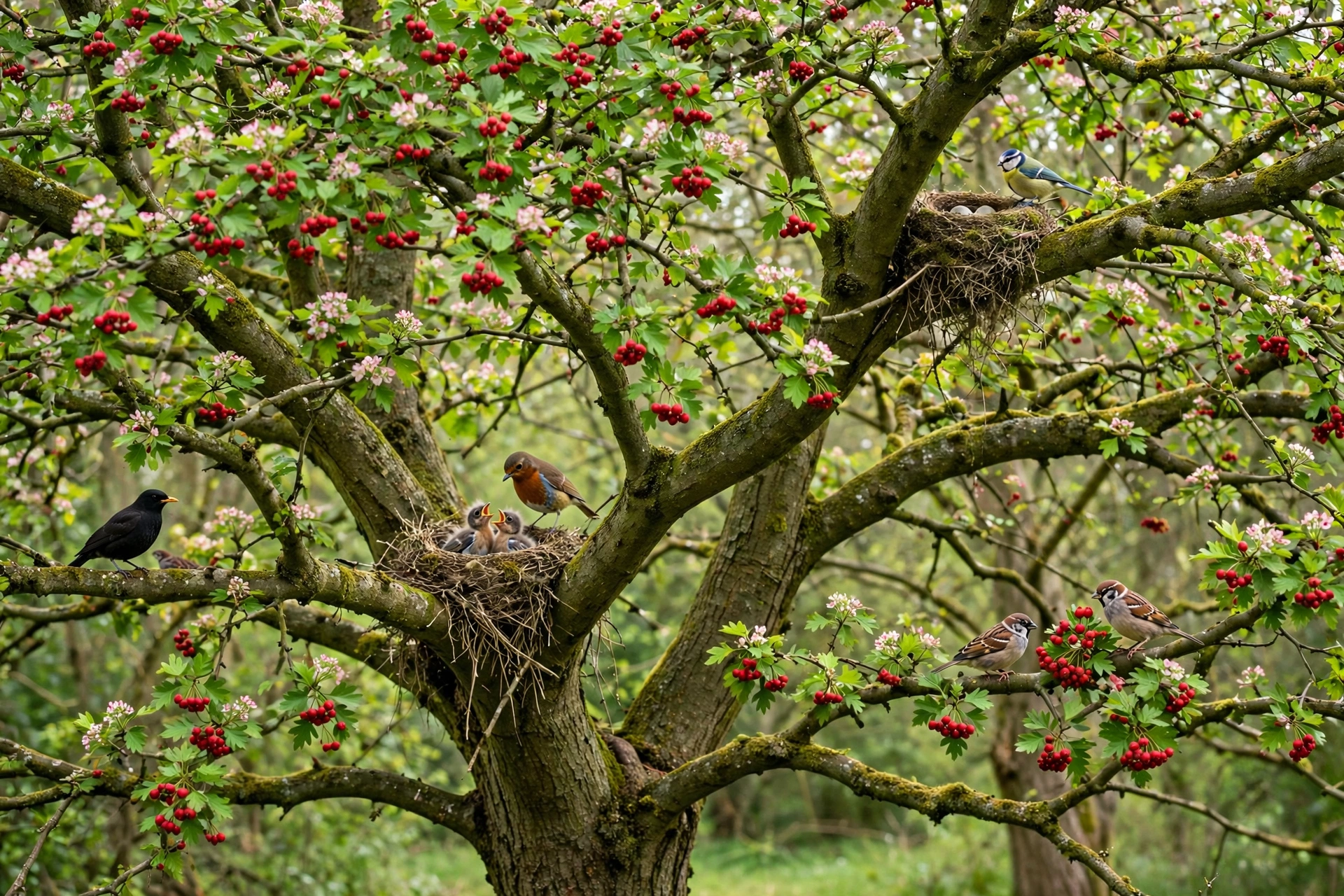
Trees do more for birds than any single feeder or nest box. A mature tree provides food, shelter, nesting sites, song posts, and a safe roost — all in one place. It supports insects that feed chicks, produces berries and seeds that sustain birds through autumn and winter, and offers dense cover where birds can hide from predators and harsh weather.
Introduction: Trees Are the Backbone of Bird Habitat
Choosing the right trees for your garden, park, or community space is one of the most lasting ways to help birds. This guide explains which trees work best, what they offer in each season, and how to choose and care for them.
The Best Native Trees for Birds
Oak
Oak is one of the most valuable trees for wildlife in many temperate regions. It supports hundreds of insect species, which in turn feed birds, especially in spring when chicks need caterpillars. Oak also produces acorns that feed jays and other birds in autumn. It is a large tree, so it suits larger gardens and parks, but even a young oak in a suitable spot will support insects.
An oak's value grows with age. A mature oak can support more than 200 species of moth caterpillars alone, and its bark crevices shelter insects all winter, giving treecreepers and nuthatches food when little else is available. Jays collect acorns in autumn and bury them, and a forgotten acorn becomes the next oak. If you have room for only one large tree, an oak is hard to beat, but it needs space: it can grow 20 metres tall and just as wide, so plant it well away from houses and paths.
Rowan
Rowan, also called mountain ash, is a medium-sized tree with clusters of bright red berries in autumn that attract thrushes, blackbirds, waxwings, and other fruit-eating birds. It has attractive blossom in spring, supports insects, and grows well in many soils. It is an excellent choice for a small or medium garden.
Rowan berries ripen in late summer and are often stripped quickly by thrushes, so a rowan near a window gives you a front-row seat to one of autumn's best wildlife shows. In some years, waxwings arrive from the north in flocks and descend on rowans and other berry trees, stripping them bare in a day. Rowan is also tough and tolerant of wind, poor soil, and cold, which makes it a good choice for exposed gardens where more delicate trees struggle.
Hawthorn
Hawthorn is a small tree or large shrub with white blossom in spring, red berries — haws — in autumn, and dense, thorny branches that provide safe nesting sites. It is a classic hedgerow tree and supports many insects. Its thorns deter predators, making it a safe place for birds to nest.
Crab Apple
Crab apple produces blossom in spring that attracts pollinators, and small apples in autumn that feed blackbirds, thrushes, and other birds. It is compact, ornamental, and well suited to a small garden. Leave some fruit on the tree through winter for birds to find.
Birch
Birch is a fast-growing, graceful tree with light canopy that lets other plants grow beneath it. It supports many insects, produces tiny seeds that feed finches and tits in winter, and provides nesting sites and song posts. Silver birch and downy birch are both valuable for birds.
Elder, Holly, and Other Useful Trees
Elder grows quickly, produces berries in late summer, and offers dense cover. Holly is evergreen, so it provides shelter in winter, and its red berries feed birds in late winter when other food is scarce. Willow supports many insects and provides early pollen for bees. Alder produces cones with seeds that attract siskins and redpolls in winter. A mix of these trees gives birds food and shelter across the year.
What Birds Eat from Trees in Each Season
Thinking in seasons helps you choose a mix that never leaves birds hungry. In spring, the most important food is insects, and the trees that support the most caterpillars — oak, birch, willow, and hawthorn — matter most. Chicks cannot eat seeds or berries; they need soft insects, and a garden with few insect-supporting trees will raise few young birds, however many feeders it has. In summer, fruit begins to ripen: elder berries in late summer, and the insects that live on flowering trees such as lime and willow keep feeding adult birds and their second broods.
Autumn is the season of plenty, when rowan, hawthorn, crab apple, and elder all fruit, and birds build up fat for winter or for migration. This is when you will see the most birds in your trees, including visitors from elsewhere. Winter is the hardest season, and the trees that still hold food then are the most valuable: holly berries, which birds often leave until late winter, ivy berries, and the seeds of birch and alder. If your garden has trees that fruit in different months, birds will keep coming back all year, and you will see a changing cast of species rather than the same few.
How to Choose and Plant Trees for Birds
1. Choose native species suited to your soil, space, and climate — a local nursery or tree guide can advise. 2. Plant a mix, not just one species, so food and shelter are available at different times. 3. Think about size at maturity — do not plant a large oak in a tiny garden. 4. Plant in autumn or early spring when the tree is dormant, and water well in the first year. 5. Leave some leaf litter and deadwood where safe, as they shelter insects. 6. Avoid pruning during the nesting season, and check for nests before any work. 7. Be patient — a new tree takes time to grow, fruit, and support birds.
Common Mistakes
The most common mistake is planting only ornamental, non-native trees that offer little food for insects or birds. Another is planting a tree that will outgrow the space, leading to heavy pruning or removal later. A third is tidying too much — removing deadwood, leaf litter, and fallen fruit removes food and shelter. Finally, do not plant trees in the wrong place, such as too close to a house or in a waterlogged spot, without checking the species' needs.
FAQ
What is the single best tree for birds in a small garden? Rowan or crab apple are excellent choices. They are compact, produce berries or fruit, support insects, and provide nesting and song posts.
Do I need to plant native trees only? Native trees are usually best because they support more native insects, but some non-native trees that produce berries can also help. A mix with a strong native base is a good approach.
How long before a new tree helps birds? Insects may use a young tree within a year or two, but berries and nesting sites take longer. A tree is a long-term investment that improves with age.
Can I help birds if I have no garden? Yes. Support local tree planting, keep a balcony pot with a small shrub or climber, and visit parks and reserves that have bird-friendly trees.
Should I plant trees or shrubs first? If you have limited space or budget, start with shrubs — hawthorn, elder, and hazel establish quickly and fruit within a few years. Add trees as space allows. A mix of shrubs and trees gives birds cover at different heights, which is what they need most.
Do trees near feeders help or hinder birds? They help, as long as there is a balance. Birds need cover within a short flight of a feeder so they can escape from a sparrowhawk, but cover that is too close can hide a cat. Aim for shrubs or trees about two to three metres from the feeder — close enough for a quick escape, far enough that a predator cannot hide and pounce unseen.
Conclusion
The best trees for birds are those that offer food, shelter, and nesting sites through the seasons. Oak, rowan, hawthorn, crab apple, birch, elder, and holly are all excellent choices, and a mix of native species is better than a single tree. Choose trees suited to your space, plant them well, avoid disturbing nests, and be patient. Your trees will grow into a living habitat that supports birds for decades.
Try the free Bird Identifier on aitreeidentier.site — upload a clear photo of the bird for instant guidance.
Safety disclaimer: Never disturb nests or wildlife. Observe from a distance, check for nests before pruning, and consult a local expert if you are unsure about a tree or a sensitive site.