
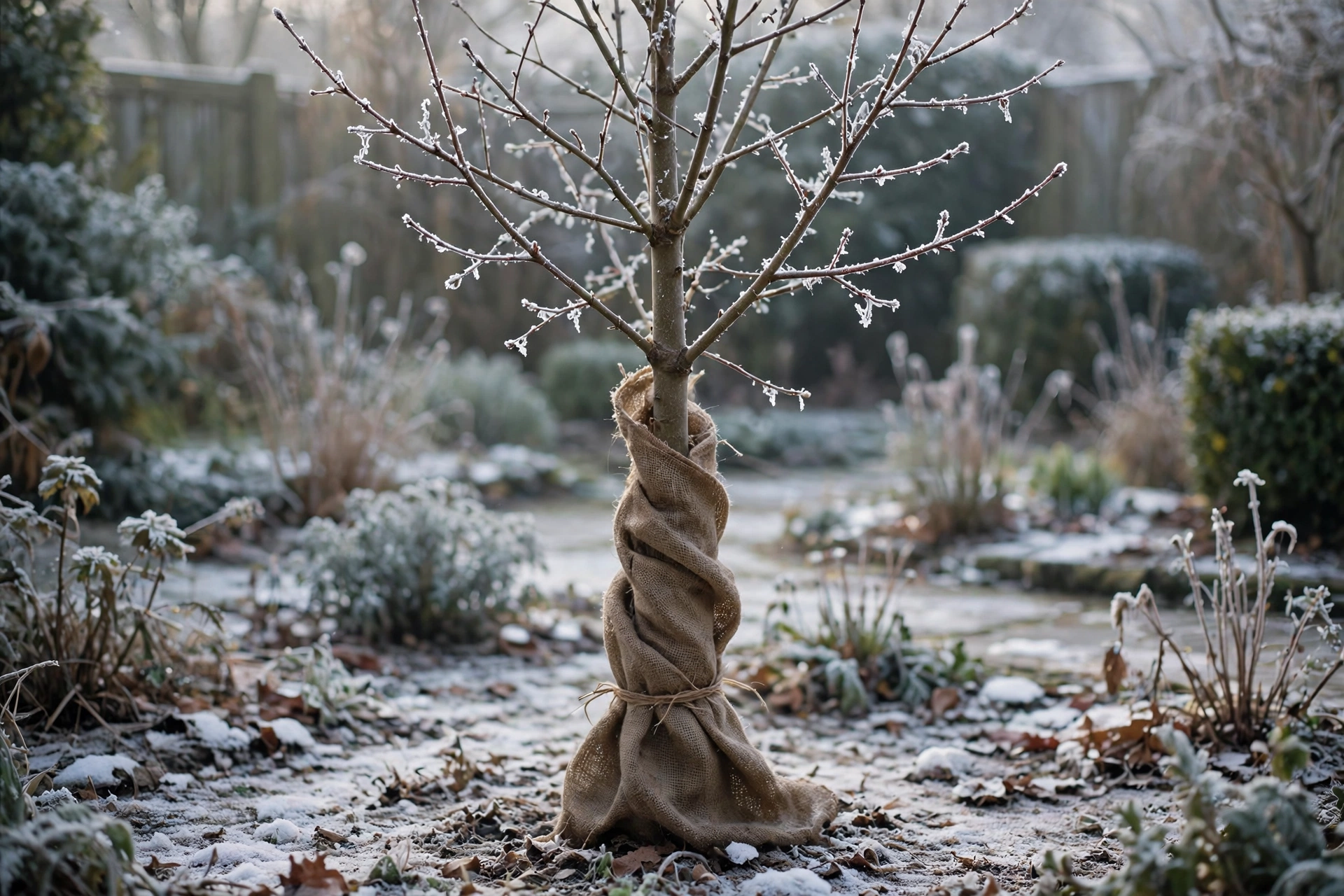
Young trees and garden plants are far more vulnerable to winter than established ones. Their roots are shallow, their bark is thin, and their branches are brittle. A hard frost, a drying wind, or a hungry rabbit can do damage that takes years to repair. With a little preparation in autumn, though, most young plants can get through winter safely.
This guide explains how to protect young trees and garden plants from frost, wind, snow, and animals, and what to do when cold weather arrives.
The key is to prepare in autumn, not react in midwinter. Once the ground is frozen, you cannot water or mulch effectively, and wrapping a tree in a storm is miserable work. Spend an afternoon in late autumn — after the soil has cooled but before the first hard frost — working through the steps below, and keep fleece and guards handy for the coldest nights. That single afternoon of preparation protects months of growth.
Try it: Use the Garden Plant Identifier on aitreeidentier.site — confirm what you are growing so you can check its hardiness and winter needs.
What Winter Threatens Young Plants
Frost is the most obvious threat. It can kill tender growth, damage roots in frozen soil, and cause bark to split when temperatures swing between day and night. Wind dries out evergreen foliage and can rock a young tree loose in the ground. Heavy snow can snap branches. And in many areas, rabbits, deer, and voles gnaw bark in winter when other food is scarce — damage that can girdle and kill a young tree.
One threat beginners often miss is the freeze-and-thaw cycle. When soil freezes, thaws, and freezes again, it can heave young plants out of the ground, exposing their roots to cold air. A good layer of mulch greatly reduces this, because it keeps soil temperature steadier. That is why mulching in late autumn, after the soil has cooled, matters more than mulching early, when warm soil under mulch can delay the plant's preparation for winter.
Step-by-Step: Protecting Young Trees and Plants
Step 1: Mulch before the ground freezes
Spread a 5–8 cm layer of mulch around young trees and perennials after the soil has cooled but before it freezes, keeping it away from trunks and stems.
Step 2: Water before winter
Water young trees and shrubs deeply in late autumn if the weather has been dry. Moist soil holds heat better than dry soil and protects roots from frost damage. Do not water when the ground is frozen.
Step 3: Protect trunks and stems
Wrap a young tree trunk with a light-coloured guard to prevent sunscald and frost cracks. For small shrubs, a fleece cover can protect against frost on the coldest nights; remove covers during the day.
Step 4: Guard against animals
Fit a mesh guard around young tree trunks, at least 60 cm high, to prevent rabbits and voles gnawing bark, and check regularly that it is not rubbing.
Step 5: Stake and support
Check that young trees are staked securely but not rigidly — a little movement helps the trunk strengthen. Tighten loose ties, and make sure ties are not cutting into bark. Remove stakes after one or two seasons once the tree is established.
Step 6: Protect pots and containers
Potted plants are more vulnerable than plants in the ground. Move pots to a sheltered spot, group them together, wrap them, and raise them off the ground so water drains.
Grouping pots together is one of the simplest protections: pots shelter each other from wind, and the soil in the middle of the group stays warmer than a pot standing alone. Wrap the group in bubble wrap or hessian, raise the pots on bricks or pot feet so water drains freely, and move the most tender plants into a greenhouse or cold frame if you have one.
Protecting Evergreens and Tender Plants
Evergreens lose water through their leaves all winter, even when the ground is frozen and roots cannot replace it. This is called winter desiccation. Water evergreens before the ground freezes, mulch their roots, and shelter them from drying winds with a windbreak or fleece on the windward side.
Tender plants such as dahlias, cannas, and some herbs should be lifted, or heavily mulched and covered, in cold areas. Check the hardiness of each plant — a plant that is hardy in a mild coastal garden may need protection inland.
Hardiness ratings are a useful starting point, but they describe the average lowest temperature a plant can survive, not the full story. Wind, wet soil, and sudden temperature swings can kill a plant that the rating says should survive. A plant in a sheltered, well-drained spot often survives a colder winter than the same plant in an exposed, wet one — so choose planting positions as carefully as you choose the plants themselves.
Common Winter Protection Mistakes
Wrapping plants too early or too tightly. Covers left on in mild weather trap moisture and encourage rot. Use covers only on cold nights and remove them during the day.
Piling mulch against the trunk. This causes rot and hides pests. Always leave a gap.
Forgetting to water in autumn. Dry roots are more vulnerable to frost. Water before the ground freezes.
Leaving stakes and ties unchecked. A tight tie can strangle a growing trunk, and a loose stake can rub bark in wind.
Using plastic directly on foliage. Plastic traps condensation and can freeze to leaves. Use breathable fleece or hessian instead.
Frequently Asked Questions
When should I start winter protection? Start in mid to late autumn, after the soil has cooled but before the first hard frost. Protect tender plants first, and keep fleece handy for sudden cold snaps.
Do I need to protect established trees? Usually not — mature trees are hardy in their climate. Focus protection on trees planted in the last two to three years, and on tender or marginally hardy species.
Can I leave fleece on plants all winter? It is better to cover only on cold nights and remove it during the day. Permanent covers block light and trap moisture, which can cause more harm than frost.
What should I do after snow? Brush heavy snow off young branches gently to prevent breakage, but do not shake frozen branches — they are brittle and can snap. Leave a light snow cover on beds, as it insulates the soil.
How do I know if a plant is hardy enough for my area? Check its hardiness rating against your local climate, but also consider shelter, soil drainage, and your garden's microclimate. A plant rated for your zone in a sheltered, well-drained spot is a safer bet than the same plant in an exposed, wet one.
Should I water plants during a mild spell in winter? If the ground is not frozen and the soil is dry, a light watering can help evergreens and container plants. Never water when the ground is frozen, and do not water dormant plants that are sitting in wet soil already.
Make a habit of checking your protections after every storm and during mild spells in midwinter. A guard that has slipped, a tie that has tightened, or a fleece that has blown loose can do more harm than no protection at all if it is left unchecked. A quick walk around the garden once a week in winter — five minutes with a torch on a dark evening is enough — catches most problems while they are still easy to fix.
Conclusion
Winter protection is simple preparation, not complicated care. Mulch roots, water before the freeze, guard trunks against animals and sun, support young trees, and protect pots and tender plants. Check your protections after storms and on mild days, and remove covers when the weather warms. Do those things well, and your young trees and plants will come through winter ready to grow strongly in spring.
Safety note: Never eat or use any part of a plant based on AI identification alone. If a tree is damaged, leaning, or looks unsafe after winter storms, consult a local arborist.