
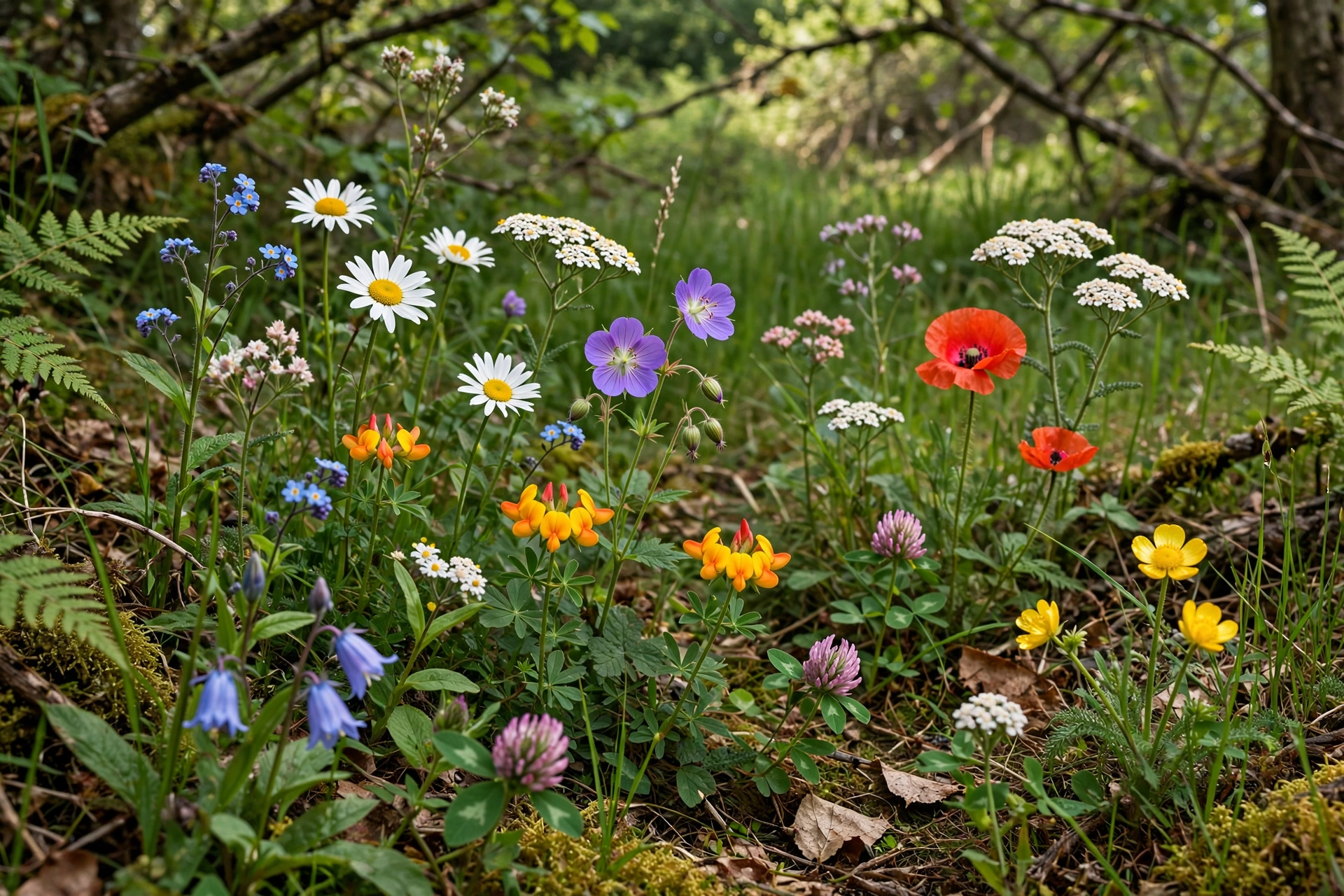
Wildflowers turn meadows, woodlands, hedgerows, and verges into living colour, yet many look alike at first glance. A small white flower in woodland, a tall purple spike in a meadow, and a yellow carpet in spring could each belong to several species, and learning to tell them apart makes every walk more rewarding. Wildflower identification is also a gentle way to learn about seasons, habitats, and local ecology.
This beginner's guide explains how to identify wildflowers using flower shape, leaves, stem, season, and habitat. You do not need to know Latin names to start, and you do not need expensive equipment. A phone camera, a notebook, and a willingness to look closely are enough. You will learn a simple method, common beginner mistakes, and how to enjoy wildflowers without picking or disturbing them.
Wildflowers are a good group to learn because habitat and season do so much of the work for you. A flower in a damp woodland in April is a different set of candidates from a flower in a dry meadow in July, even if the colour is the same. Start by learning the flowers of one place you visit often — a local meadow, a woodland path, or a hedgerow near your home — and you will build a solid foundation faster than by trying to learn every species at once.
Where to Start: Habitat and Season
Meadows and Woodlands
Meadows are open, sunny places where grasses and wildflowers grow together, and they favour species that like light and well-drained soil. Woodlands are shadier, and their flowers often bloom early in spring, before the tree canopy closes and blocks the light. Note whether the flower grows in open sun or in shade, and whether it grows among grasses or among trees, because that habitat clue alone can rule out many species.
Hedgerows, Verges, and Wetlands
Hedgerows and verges are edges where woodland and meadow species meet, and they often contain a mix of flowers. Wetlands, ponds, and stream banks favour moisture-loving species with different leaves and growth habits. Always note the habitat, because the same flower colour in a meadow and a wetland is unlikely to be the same species.
Season
Season is one of the strongest wildflower clues. Spring woodland flowers, summer meadow flowers, and autumn flowers each belong to different groups. Record the date of your walk, and note whether the flower is in bud, in full flower, or going to seed. A flower in April and the same colour in August are rarely the same plant.
What to Look for in a Wildflower
Flower Shape and Petals
Count the petals, note their shape and arrangement, and look at the centre. Are petals separate or joined, rounded or pointed, flat or tubular? Are flowers single, in clusters, in spikes, or in flat heads? Small details such as petal number and flower arrangement often separate similar species.
Leaves and Stem
Photograph leaves and stem as well as the flower. Note leaf shape, arrangement, edge, and whether leaves are basal, on the stem, or both. Some wildflowers are identified mainly by their leaves, especially when flowers are small or similar. Note stem colour, hairiness, height, and whether the plant is upright, sprawling, or climbing.
Step-by-Step: Identify a Wildflower
Step 1: Photograph Without Picking
Photograph the wildflower in place, without picking it. Many wildflowers are protected, and picking removes food for pollinators and seeds for next year. Take a close-up of the flower, a photo of the leaves and stem, and a wider photo showing the plant in its habitat.
Step 2: Note Habitat, Date, and Location
Record where you saw the flower — meadow, woodland, hedgerow, verge, or wetland — the date, and the general location. These notes are often as useful as the photo, because habitat and season narrow the possibilities quickly.
Step 3: Count Petals and Study Leaves
Count the petals, note flower shape and arrangement, and study leaf shape and arrangement. Write a short description in your notebook or phone. This forces you to look carefully and gives you a checklist to compare against suggestions.
Step 4: Upload and Compare
Upload your clearest flower photo and compare the top suggestions against petal number, flower shape, leaf shape, habitat, and season. The best match should agree on several points. If the suggestions disagree, upload a second photo of the leaves and stem, and check whether the habitat and flowering date fit. The correct identification should match on structure and context, not just colour.
Step 5: Keep a Record and Revisit
Keep a simple record of what you found, where, and when. Return to the same place later in the year to see the plant in seed, and return next year to see it flower again. Repeated visits build familiarity faster than any single identification.
Common Mistakes to Avoid
The most common beginner mistake is relying on colour alone. Many wildflowers share the same colour, and colour varies with light and age. Another mistake is photographing only the flower and ignoring leaves, stem, and habitat, which are often more distinctive. A third mistake is picking a flower to photograph it at home. Picking harms the plant and removes context, and a picked flower often wilts and loses colour before you photograph it. Finally, do not assume a wildflower is edible or medicinal because it looks like a garden plant. Many wildflowers are toxic, and some are protected by law.
Another common error is assuming that a flower you saw in a garden is a wildflower, or that a wildflower is a garden escape, without checking the context. Gardens contain many cultivated varieties that look like wild species but differ in petal number, size, or colour, while wildflowers that have spread into gardens may look like garden plants. Always note where you found the flower, and check whether the species is known to grow wild in your area before deciding.
Frequently Asked Questions
Do I need to know Latin names to identify wildflowers?
No. Common names are a good starting point, and you can learn Latin names gradually if you wish. Focus first on flower shape, leaves, season, and habitat, and use common names to keep a record.
What is the best photo for wildflower identification?
A clear close-up of a fresh flower in natural light, plus a photo of leaves and stem, and a wider photo showing habitat. Together, these give the most complete information without picking the plant.
Can I identify a wildflower in winter?
It is harder without flowers, but leaves, rosettes, stems, seed heads, and habitat can still help. Some wildflowers have distinctive winter rosettes, while others disappear completely until spring. Note the location and return in flowering season to confirm.
How many wildflowers should I learn first?
Start with ten common species in a place you visit often, and add a few more each month. Learning a small set well — their flowers, leaves, habitats, and seasons — is more useful than trying to memorise a long list. Your photo record will grow into a personal field guide that is tailored to your local area.
What should I do if I find a rare or protected wildflower?
Enjoy it, photograph it without picking or disturbing it, and note the location and date. Do not share the exact location publicly if the species is rare, because trampling and collecting can harm it. You can report the sighting to a local wildlife group or recording scheme, which helps conservation and adds to local knowledge.
Conclusion
Wildflower identification is a rewarding skill that grows with every walk. Start with habitat and season, study flower shape and leaves, photograph without picking, and compare several features before you settle on a name. Keep simple records, revisit favourite places, and enjoy the process of learning. Over time, familiar meadows and woodlands will become places you recognise flower by flower, season by season.
Try it: Try the free Flower Identifier on aitreeidentier.site — photograph a wildflower in place for instant guidance.
Safety disclaimer: Never eat, use, or apply any wildflower, plant, mushroom, or fruit based on AI identification alone. Some wildflowers are toxic or easily confused with lookalikes. Consult a local expert before any use.