
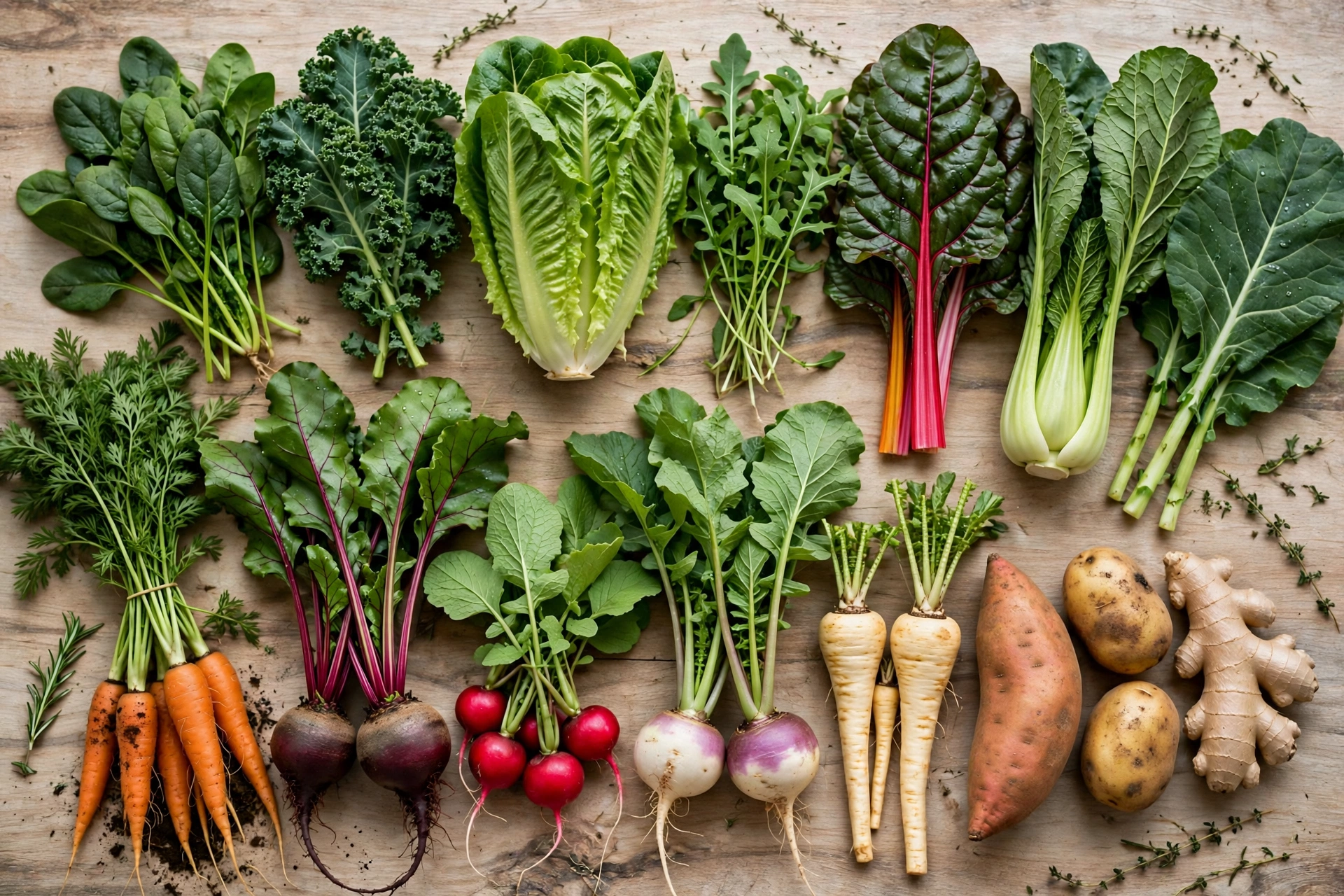
Vegetables come in many forms — leafy greens, brassicas, roots, bulbs, pods, and fruits used as vegetables — and many look similar when they are young, chopped, or out of season. Knowing what you have matters in the kitchen, in the garden, and at the market. It affects cooking time, flavour, storage, and whether a plant needs sun, water, or more time to grow.
This guide explains how to identify vegetables by their most useful features: leaves, shape, colour, texture, and family. You will learn how to photograph vegetables clearly, how to tell leafy greens apart, how to recognise root vegetables, and how to avoid the mistakes that lead to wrong identifications. Whether you are sorting a vegetable box, identifying a seedling, or checking a market purchase, the same practical method applies.
Thinking in families makes vegetable identification much easier. Brassicas share a family, alliums share a family, and legumes share a family, and each family has shared traits in its leaves, flowers, and growth habit. Once you can place a vegetable in its family, the list of possible species shrinks quickly, and the remaining differences — leaf shape, root colour, bulb size — become much easier to judge.
Identifying Vegetables by Group
Leafy Greens and Brassicas
Leafy greens include lettuce, spinach, chard, and kale, while brassicas include cabbage, broccoli, cauliflower, and Brussels sprouts. Compare leaf shape, edge, texture, and thickness, and note the stem: chard has thick, colourful stems, kale leaves are often curled and tough, and lettuce leaves are usually tender and smooth. Brassicas often have a slightly waxy, blue-green leaf and a compact head or curd. Photograph several leaves and the whole plant, and note whether the vegetable forms a head, a loose rosette, or an open leafy plant.
Root Vegetables
Root vegetables include carrots, parsnips, beetroot, turnips, and radishes. Note the root shape — long and tapered, round, or flattened — the skin colour, and the flesh colour when cut. Carrots are usually orange and tapered, parsnips are pale and tapered, beetroot is round and deep red inside as well as out, and turnips are round with white flesh. Always photograph the leaves as well, because carrot tops, beetroot leaves, and turnip leaves are all distinctive and often separate similar roots.
Bulbs and Alliums
Onions, garlic, leeks, and shallots belong to the allium family. Look at bulb shape, skin colour, and whether the bulb is single or divided into cloves. Leeks have a long white stem and flat leaves, while spring onions are slender with a small bulb. Note the scent — alliums have a distinctive smell — but do not rely on scent alone, and do not eat an unknown bulb based on smell.
Pods, Fruits, and Other Vegetables
Peas, beans, courgettes, cucumbers, peppers, and tomatoes are fruits used as vegetables. Note pod shape, seed arrangement, skin texture, and plant habit. Peas grow in pods on climbing plants, beans may be flat or round, courgettes are long and smooth, and peppers vary in shape, colour, and size. Photograph the whole vegetable and, if possible, the plant it came from.
Step-by-Step: Identify a Vegetable from a Photo
Step 1: Photograph the Whole Vegetable
Photograph the vegetable from the side and from above in natural light, against a plain background. Include the leaves, stem, or top if they are still attached, and add a hand or coin for scale. For root vegetables, brush off loose soil but do not wash away distinctive skin colour before photographing.
Step 2: Photograph Leaves and Cut Views
Photograph the leaves separately if they are distinctive, and if the vegetable is a familiar shop or garden type, photograph a cut view showing flesh colour, seeds, or internal structure. A cut beetroot, for example, is very different from a cut turnip, even when the outside looks similar.
Step 3: Note Texture, Colour, and Family
Describe the vegetable in your own words: shape, colour, texture, size, and whether it is leafy, root, bulb, or pod. Think about family — brassicas, alliums, roots, and legumes each have shared traits that help narrow the search. This note-taking step helps you compare suggestions carefully.
Step 4: Upload and Compare
Upload your clearest photo and compare the suggestions against shape, leaves, colour, and size. The best match should agree on several features. If the vegetable is young, a seedling, or a less common variety, the suggestions may be broader, and you may need a photo of the mature plant or the leaves to confirm.
Step 5: Confirm with Growing Clues
If the vegetable is still growing, note the plant height, leaf arrangement, flowers, and growing conditions. Seedlings are especially hard to identify, so wait for true leaves to develop if you can, and photograph the plant at different stages.
Common Mistakes to Avoid
One common mistake is identifying a seedling as a mature vegetable. Seedlings of different vegetables can look almost identical, and the first leaves are often not the true leaves. Wait for the second set of leaves before deciding. Another mistake is relying on colour alone, especially for varieties bred in purple, yellow, or white forms. A third mistake is confusing similar roots — carrots, parsnips, and white radishes, for example — without checking the leaves and flesh colour. Finally, do not assume a wild plant is a vegetable because it looks like one. Many wild plants resemble garden vegetables but are not edible, and some are toxic.
Another common error is identifying a vegetable after it has been chopped, peeled, or cooked. Once a vegetable is prepared, it loses its leaves, skin, and shape, and many chopped vegetables look alike. If you need to identify a prepared vegetable, photograph it alongside any leaves, peelings, or packaging that remain, and note where it came from. Similarly, a vegetable that has been stored for a long time may have shrivelled, sprouted, or changed colour, so photograph it when it is fresh whenever you can.
Frequently Asked Questions
Can I identify a vegetable from a leaf alone?
Sometimes, especially for distinctive leaves such as carrot tops, beetroot leaves, or kale. For many vegetables, however, the leaf alone narrows the options and the root, head, or fruit is needed to confirm the identification.
How do I tell similar leafy greens apart?
Compare leaf shape, edge, texture, thickness, stem colour, and growth habit. Lettuce leaves are usually tender and smooth, kale leaves are often curled and tough, and chard has thick, colourful stems. Photograph several leaves and the whole plant.
Why do seedlings look so similar?
Seedlings start with seed leaves that look alike across species, and true leaves develop later. Photograph the plant again after a week or two, when true leaves, stems, and growth habit become clearer.
How do I tell a carrot from a parsnip?
Carrots are usually orange, though white and purple varieties exist, and their leaves are feathery and finely divided. Parsnips are pale cream, usually larger and thicker, with broader, flatter leaves. A cut view also helps: carrot flesh is orange throughout, while parsnip flesh is pale and ivory-coloured.
Can I identify a vegetable from a market stall photo?
Often, yes, if the photo is clear and shows the whole vegetable with its leaves or top attached. Market vegetables are usually fresh and typical of their variety, but they may be polished, trimmed, or photographed under artificial light, so include a photo of the label or sign if there is one, and compare the suggestions against shape, colour, and size.
Conclusion
Vegetable identification becomes easier when you think in groups — leafy greens, brassicas, roots, bulbs, and pods — and when you check leaves, shape, colour, texture, and family together. Photograph the whole vegetable clearly, include leaves and scale, compare several features, and be patient with seedlings and young plants. With practice, you will recognise common vegetables quickly, cook with more confidence, and garden with a clearer sense of what is growing.
Try it: Try the free Plant Identifier on aitreeidentier.site — photograph a vegetable with its leaves for instant guidance.
Safety disclaimer: Never eat, use, or apply any plant, mushroom, or wild vegetable based on AI identification alone. Some plants are toxic or easily confused with edible lookalikes. Consult a local expert before any use.