
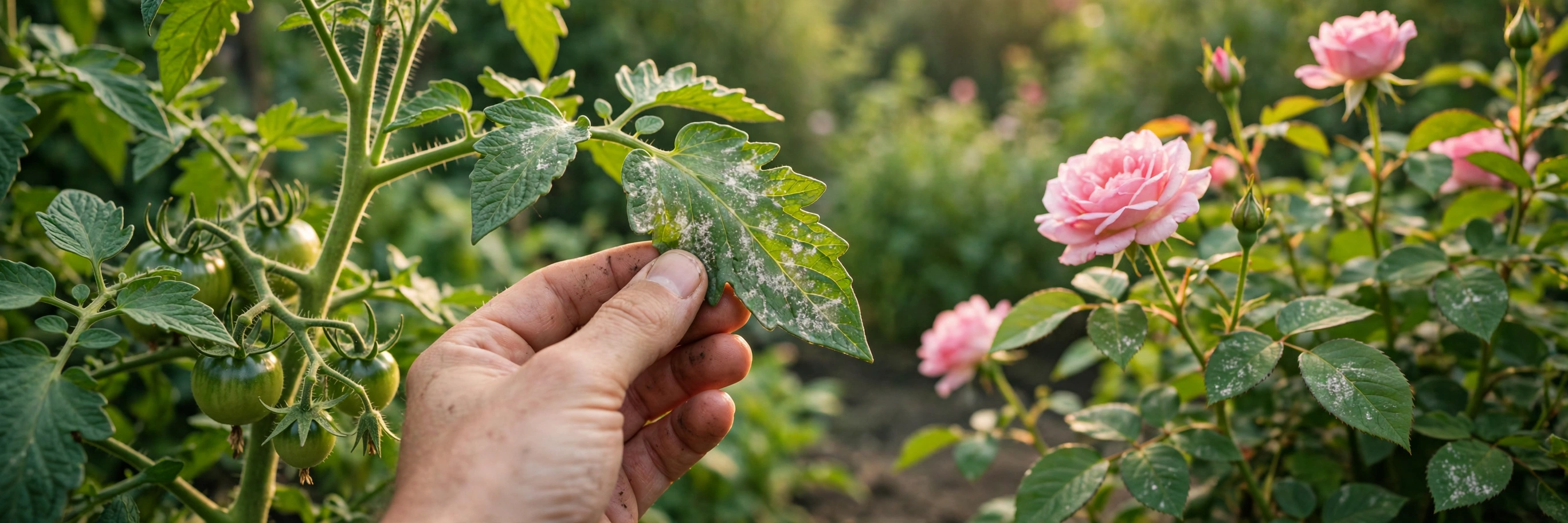
Warm, humid summer weather suits plant growth — and plant diseases. Fungal infections and mildews spread quickly when leaves stay wet, air is still, and plants are crowded. Most summer diseases are preventable, and early action can save a plant.
This guide covers the most common summer plant diseases, how to recognise them, and how to prevent them without relying on harsh chemicals.
The key idea is simple: diseases need three things — a susceptible plant, a pathogen, and the right conditions. You cannot always control the pathogen, since spores travel on wind and rain, but you can control the plant and the conditions. Choose resistant varieties, keep plants healthy and well spaced, water the soil rather than the leaves, and remove infected material quickly. Do those things consistently and most summer diseases never get a foothold, even in a warm, wet year.
Try it: Use the Plant Disease Identifier on aitreeidentier.site — photograph the affected leaves for a first suggestion, then confirm with a local expert.
Why Diseases Spread in Summer
Heat and humidity create perfect conditions for fungi and bacteria. Spores spread in water droplets, on tools, and through the air. Plants that are wet for long periods, crowded together, or already stressed by drought or poor soil are more vulnerable. Overwatering, watering leaves instead of soil, and planting too closely together all increase risk.
Even the time of day matters. Leaves that stay wet overnight give fungi hours to germinate and infect, while leaves that dry quickly in morning sun are far safer. That is why watering early in the morning is one of the most effective disease-prevention habits: it gives leaves the whole day to dry. Similarly, pruning to open a crowded canopy lets air and sunlight reach the inner leaves, drying them faster after rain.
Common Summer Plant Diseases to Watch For
Powdery mildew
A white, powdery coating on leaves and stems, common on roses, courgettes, cucumbers, and many ornamentals. It thrives in warm, dry days with cool, humid nights and poor air circulation. It rarely kills a plant outright, but it weakens growth and reduces flowering and fruiting.
Downy mildew and blight
Yellow patches on upper leaf surfaces with grey or purple fuzz underneath, often on lettuces, cucumbers, and grapes. Blight on tomatoes and potatoes causes dark spots on leaves and stems, and fruit rot. Both spread fast in wet weather.
Leaf spot and bacterial spot
Small dark or brown spots on leaves, sometimes with yellow halos. Bacterial spot affects tomatoes, peppers, and many ornamentals. Fungal leaf spots affect a wide range of plants. Spots can merge, leaves may yellow and fall, and fruit can be marked.
Rust
Orange, brown, or yellow powdery pustules on leaves and stems, common on roses, beans, and hollyhocks. Rust spreads in warm, moist conditions and weakens plants over time.
Root and stem rots
Wilting, yellowing, and collapse despite wet soil can signal root rot, often caused by overwatering and poor drainage. The roots may be dark and soft when examined.
One warning sign deserves special attention: a plant that wilts even though the soil is wet. Many gardeners respond by watering more, which makes root rot worse. If a plant wilts in wet soil, check the drainage and the roots before adding water. Dark, soft, foul-smelling roots mean rot, and the cure is better drainage and less water, not more.
Step-by-Step: Preventing Summer Diseases
Step 1: Give plants space and air
Follow spacing guidance so air can move between plants, and prune lightly to open crowded canopies.
Step 2: Water the soil, not the leaves
Water at the base of the plant, early in the morning, so leaves dry quickly. Drip irrigation or a soaker hose is ideal. Avoid overhead watering in the evening, when leaves stay wet overnight.
Step 3: Mulch and keep beds clean
Mulch reduces soil splash onto leaves. Remove fallen, diseased leaves promptly and dispose of them away from compost.
Step 4: Choose resistant varieties
When buying seeds or plants, look for varieties described as disease-resistant. Resistant tomatoes, courgettes, and roses can save a season of trouble.
Step 5: Inspect plants weekly
Check the undersides of leaves as well as the tops. Early signs — a few spots, a patch of white powder, or a yellowing leaf — are far easier to manage than a full outbreak.
What to Do If Disease Appears
Remove affected leaves carefully, bag them, and dispose of them away from compost. Do not compost diseased material. Improve air flow and reduce watering if the soil is wet. For mild cases, removing affected parts and improving conditions is often enough.
For serious outbreaks, seek advice from a local garden centre or extension service, who can suggest a suitable, locally approved treatment.
It also helps to rotate crops from year to year. Many soil-borne diseases survive in the soil over winter, so planting tomatoes or potatoes in the same bed year after year invites the same problems back. A simple three- or four-year rotation — moving each vegetable family to a different bed — breaks the cycle and keeps the soil healthier at the same time.
Common Mistakes That Invite Disease
Watering leaves in the evening. Wet foliage overnight is an open invitation to fungi.
Crowding plants. Dense planting traps humidity and blocks air flow.
Composting diseased material. Home compost rarely gets hot enough to kill pathogens.
Ignoring the first signs. A few spots can become a full outbreak in a week in warm weather. Act early.
Over-fertilising with nitrogen. Soft, fast growth is more vulnerable to disease. Feed moderately and balance nutrients.
Frequently Asked Questions
How can I tell if a plant has a disease or just needs water? Disease often shows as spots, powder, or mould on leaves, while drought shows as wilting, dry leaf edges, and dry soil. Check soil moisture and look closely at leaf symptoms — and photograph them for identification.
Can I save a plant with powdery mildew? Often, yes. Remove badly affected leaves, improve air circulation, avoid wetting leaves, and the plant may recover, especially if caught early.
Should I remove a diseased plant entirely? If a plant is badly affected and the disease is spreading to neighbours, removing it may protect the rest of the garden. For mild cases, pruning affected parts is usually enough.
Are summer plant diseases dangerous to people? Most plant diseases do not affect people, but never eat diseased fruit or leaves, and wash your hands after handling diseased plants. Always confirm identification with a local expert.
Can I still eat fruit from a plant with mildew on its leaves? If the fruit itself is clean and undamaged, it is usually fine after washing, but never eat fruit that shows rot, mould, or spots. When in doubt, ask a local expert and do not take the risk.
Do I need to disinfect my tools after handling a diseased plant? Yes. Spores and bacteria can travel on secateurs and trowels to the next plant you touch. Wipe blades with disinfectant or hot soapy water between plants, especially after cutting diseased material.
It is also worth keeping a short disease diary. Note the date, the plant, the symptoms, and what you did — removing leaves, improving air flow, or changing watering. Over a few summers, patterns emerge: which plants are prone to mildew in your garden, which beds stay damp, and which treatments actually helped. That record is far more useful than memory, and it helps you plan next year's planting with resistant varieties in the right places.
Conclusion
Summer plant diseases are mostly a matter of conditions: wet leaves, still air, crowding, and stress. Water the soil, give plants room, mulch, inspect weekly, and remove problems early. Choose resistant varieties where you can, and keep diseased material out of compost. With those habits, most gardens get through summer with only minor trouble — and you will spot the real problems early enough to act.
Safety note: Never eat or use a plant based on AI identification alone, and do not use a plant for food or medicine if it shows signs of disease. Consult a local expert for diagnosis and treatment advice.