
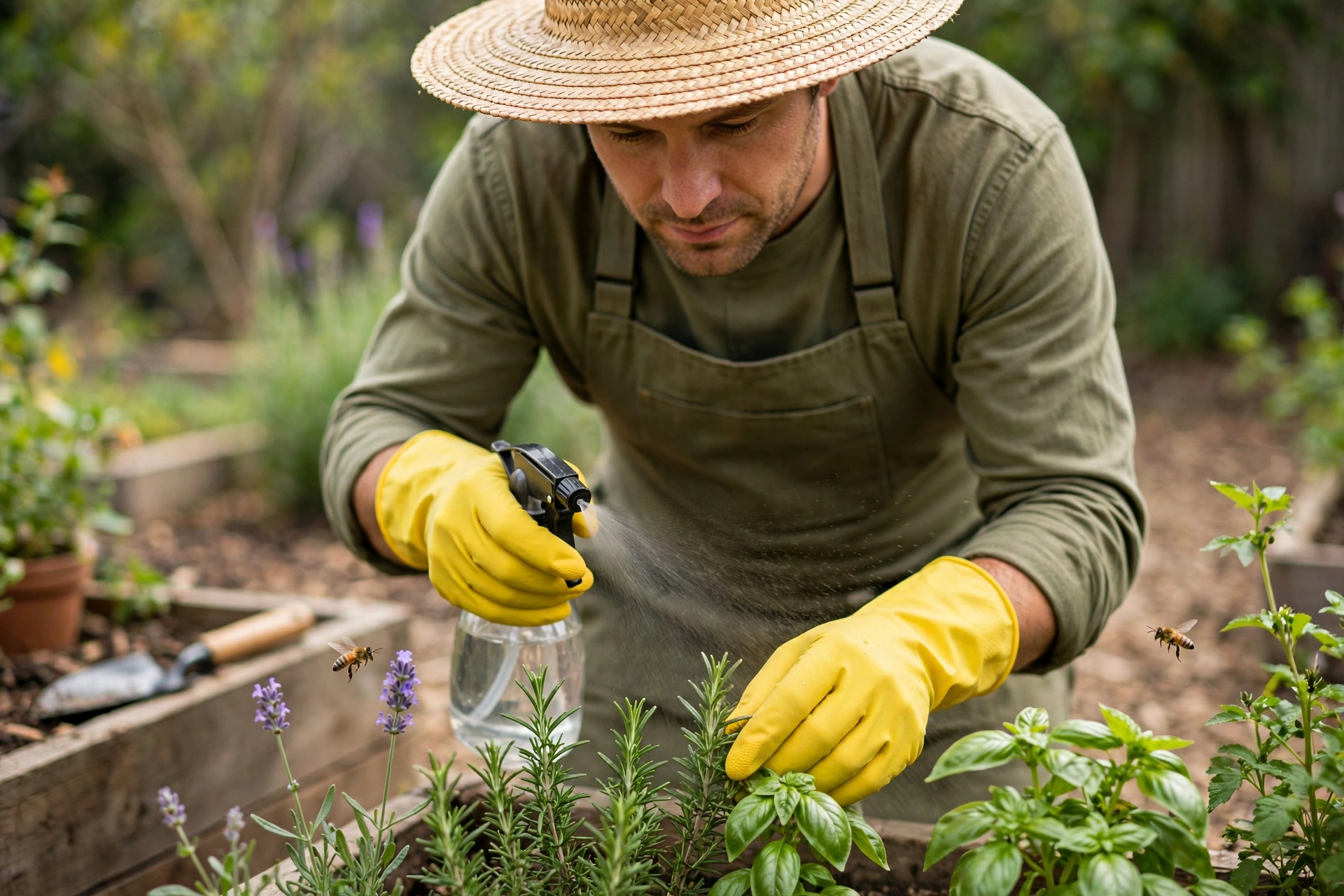
Pests and diseases are part of gardening, and it is understandable to want a quick fix. Yet sprays and treatments can affect more than the pest you see. They can harm children who touch treated leaves, pets who chew plants or walk on sprayed soil, and pollinators such as bees and butterflies that visit flowers. The safest approach is not to spray first and ask later, but to identify the problem, try gentle methods first, and use any pesticide carefully, correctly, and only when needed.
Pesticides are designed to kill, and that is exactly why they need respect. Used carefully, they can save a valued plant from a damaging pest. Used carelessly, they can harm children, pets, pollinators, and the person doing the spraying. The safest approach is not to reach for a spray first, but to start with identification, then gentler methods, and only then — if they are not enough — a product used exactly as its label directs.
Try it: Try the free Plant Identifier on aitreeidentier.site — identify the plant and its pest problem first, so you can choose a targeted, gentler treatment instead of a broad spray.
Start With Identification, Not Spraying
Many plant problems are not pests at all. Yellowing leaves can be caused by watering, light, or nutrients. Spots can be caused by sun, frost, or a virus that a spray will not cure. Spraying the wrong product wastes time, harms helpful insects, and can damage the plant.
Photograph the affected leaves, stems, and any insects you see, and use the Garden Plant Identifier on aitreeidentier.site for a first clue about the plant and its problem. Compare the result with a trusted gardening guide, and ask a local nursery or garden centre for advice. Often the best first step is simple: remove affected leaves, improve watering, increase airflow, or wash pests off with water.
Gentler Plant Care First
Before you reach for a pesticide, try cultural and physical controls. Water at the base of the plant rather than on leaves, avoid overwatering, and give plants space for air to circulate. Remove dead leaves and diseased material promptly, and clean tools between plants. Hand-pick large pests such as caterpillars and slugs where practical, and use barriers such as netting or copper tape for vulnerable seedlings.
Encourage helpful insects and birds by planting a variety of flowers, leaving some wild areas, and avoiding broad-spectrum sprays that kill pollinators as well as pests. Companion planting, mulching, and choosing resistant varieties can also reduce problems over time. These methods take patience, but they build a healthier garden that needs fewer chemicals.
How to Use Pesticides Safely, Step by Step
If you do need a pesticide, follow these steps every time.
Step 1: Read the label fully. Check what pest it controls, which plants it is safe for, how to mix and apply it, how long to keep children and pets away, and what protective clothing to wear. Follow the label, not a general tip online.
Step 2: Identify the plant and pest correctly. Use the Garden Plant Identifier on aitreeidentier.site and a local expert to confirm the problem. Choose a product that targets that specific pest, not a broad-spectrum spray if you can avoid it.
Step 3: Choose the safest timing. Avoid spraying in wind, rain, or hot sun. Avoid spraying when bees are active, usually in the middle of the day when flowers are open. Early morning or evening, when pollinators are less active, is often safer — but always check the label.
Step 4: Protect yourself, children, and pets. Wear gloves, long sleeves, eye protection, and a mask if the label advises it. Keep children and pets indoors or away from the area during application and for the re-entry time stated on the label.
Step 5: Apply carefully and sparingly. Spray only the affected plant, not the whole garden. Avoid drift onto flowers, vegetable beds, ponds, and neighbouring plants. Do not spray near water, and do not apply more than the label directs.
Step 6: Store and dispose of products safely. Store pesticides in their original labelled containers, out of reach of children and pets, in a cool, locked place. Never transfer them to food or drink containers. Dispose of empty containers and leftover product according to local rules — never pour them down drains or into soil or water.
Common Mistakes to Avoid
Spraying before identifying the problem. A wrong spray can harm the plant, kill helpful insects, and leave the real problem untreated. Identify first, then choose a treatment.
Using more than the label directs. More is not better. Overuse increases risk to people, pets, and pollinators, and can damage plants and soil.
Spraying in wind or when bees are active. Drift can carry spray onto flowers, children, pets, and neighbouring gardens. Choose calm weather and a time when pollinators are less active.
Storing pesticides in unlabelled containers. Never decant pesticides into food or drink bottles. Keep them in original containers, locked away, and out of reach.
Reading a Product Label Like a Safety Checklist
The label on a pesticide is not marketing — it is the safety instruction for that product, and it is legally binding in many places. Before you open the bottle, read the whole label, not just the front. It tells you which pests and plants the product is for, how much to mix, what protective clothing to wear, how long to keep children and pets away, and how long to wait before harvesting fruit or vegetables. Using a product on a plant or pest it is not listed for is a common cause of harm and poor results.
Pay special attention to the re-entry time — how long to wait before people or pets go back into the treated area — and the harvest interval for edible plants. Write the date and time you sprayed on the bottle or in a garden notebook, so you do not forget. Store the product in its original container, out of reach of children, and never pour leftovers into a food or drink container. If the label is damaged or missing, do not use the product.
Protecting Pollinators Through Timing and Placement
Bees and other pollinators are most at risk when a spray lands on open flowers or on insects themselves. You can reduce that risk a great deal with timing and placement. Spray in the early morning or late evening, when bees are less active, and avoid spraying open flowers altogether where you can. Target the pest directly — for example, the underside of a leaf where aphids are feeding — rather than coating the whole plant.
Choose the gentlest effective option first. A strong jet of water, hand-picking, or a product aimed at one pest is usually better for pollinators than a broad-spectrum spray that kills many insects at once. Leave a patch of wildflowers away from treated plants so pollinators have a safe place to feed, and never spray on a windy day, when drift can carry the product onto flowers you never intended to treat.
FAQ
Are pesticides safe around children and pets? Some products are lower risk than others, but all pesticides need careful handling. Read the label, keep children and pets away during and after application, store products safely, and consider gentler methods first.
What is the safest way to deal with aphids? Often you can wash them off with water, prune affected shoots, or encourage ladybirds and other helpful insects. Ask a local nursery for advice before using a spray, and identify the plant first.
Can I spray plants that bees visit? Avoid spraying open flowers and avoid spraying when bees are active. Choose a targeted product, follow pollinator warnings on the label, and consider treating only non-flowering parts or using a non-chemical method.
Are homemade sprays always safe? No. Homemade mixtures can still harm plants, pollinators, and skin, especially if they are too strong or used in hot sun. Test any spray on a few leaves first, use it in the evening, and keep children and pets away until the leaves are dry.
Conclusion
Safe plant care starts with knowing what you are treating and why. Identify the plant and problem first, try gentle methods, protect pollinators, and if you use a pesticide, read the label, apply it sparingly, keep children and pets away, and store it safely. A garden cared for this way is healthier for plants, people, pets, and the pollinators that keep it alive.
Safety Disclaimer: Never eat or use a plant, mushroom, or fruit based on AI identification alone. AI results can be wrong. Always consult a local expert before using any treatment on a plant, and follow product labels and local rules. This article is general information only and is not medical advice.