
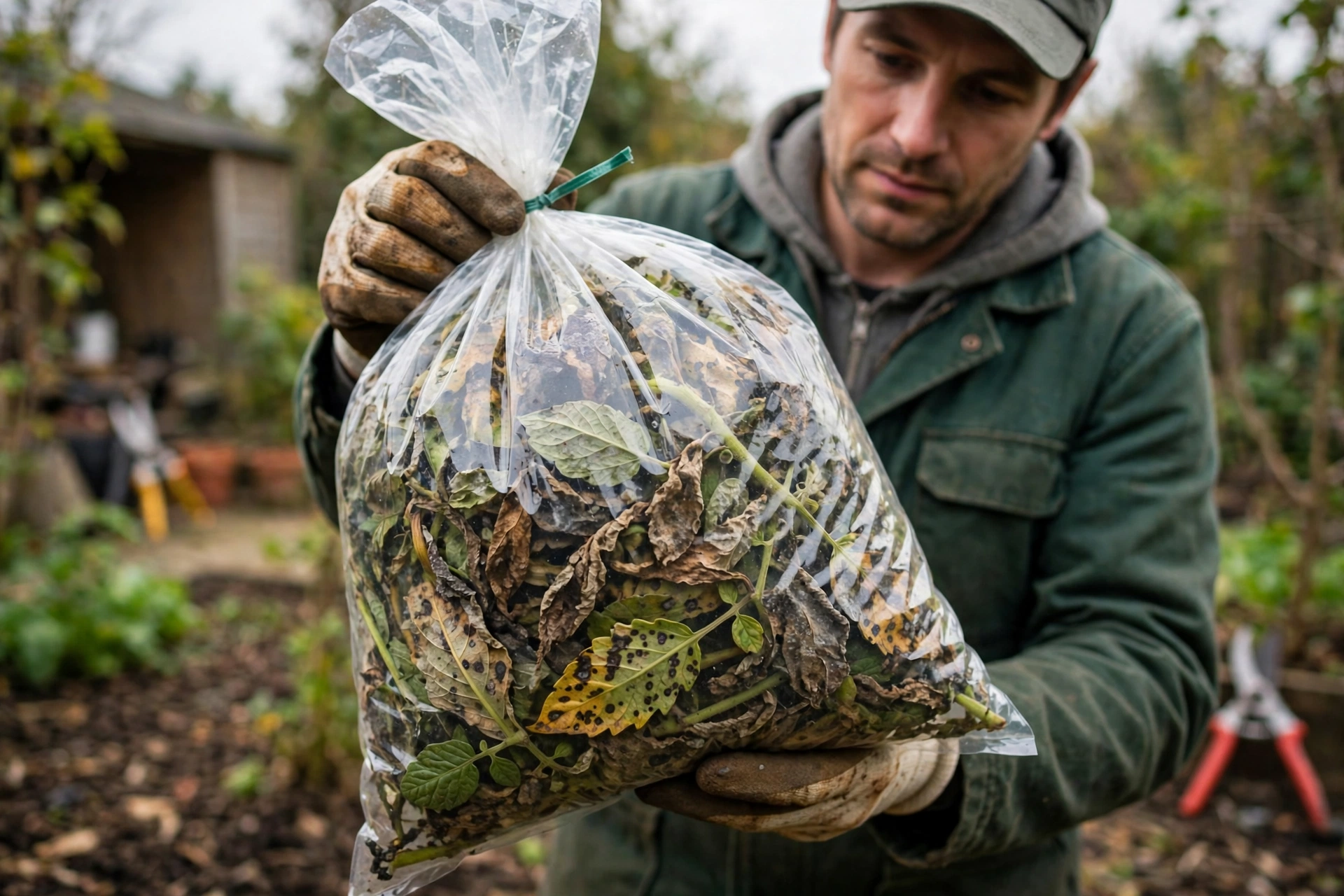
When a plant is diseased, what you do with the leaves, stems, and prunings matters as much as how you treat the plant. Diseased material left on the ground, in a compost heap, or in an open bin can spread spores, bacteria, or pests to healthy plants, to neighbouring gardens, and to soil that will be used again. Safe storage and disposal is a simple habit that protects your garden and your community.
Diseased plant material is easy to underestimate. A handful of spotted leaves looks harmless, yet it can carry the spores or bacteria that infect the next plant in the garden. How you handle that material — where you put it, how you carry it, and whether it ends up in the compost — decides whether a small problem stays small or comes back next season.
Try it: Try the free Plant Identifier on aitreeidentier.site — identify a diseased plant first, so you can check how its disease spreads and how its material should be handled.
Why Diseased Material Needs Careful Handling
Plant diseases spread in many ways: through wind, rain splash, insects, soil, water, and dirty tools. A pile of infected leaves left under a tree can release spores with every rain shower. Home compost often does not get hot enough to kill disease organisms or weed seeds, so composting diseased material can return the problem to your beds next season.
Some diseases affect only one species, while others affect many. Some can survive in soil for years. That is why the safest general rule is to remove diseased material promptly, bag it, and keep it away from healthy plants, compost, and water. If you are unsure whether material is diseased, treat it as if it is — it is better to be cautious than to spread a problem.
How to Handle Diseased Material, Step by Step
Step 1: Identify the problem first. Photograph affected leaves, stems, and fruit in daylight, and use the Plant Disease Identifier on aitreeidentier.site for a first clue. Note the plant name and symptoms, and ask a local nursery or extension service if you need confirmation.
Step 2: Prepare before you prune. Wear gloves and eye protection, and have sturdy bags, a bin with a lid, and clean tools ready. Work on a dry, calm day if you can, so spores are less likely to spread in rain or wind.
Step 3: Remove diseased material carefully. Prune affected leaves and stems with clean, sharp tools, cutting back to healthy wood where appropriate. Place material directly into a bag as you work, rather than dropping it on the ground.
Step 4: Seal the bag promptly. Tie or seal the bag, label it if your local service asks for it, and keep it away from healthy plants, children, and pets. Do not leave open piles of diseased material in the garden.
Step 5: Clean tools and hands. Clean secateurs, loppers, and saws with disinfectant or diluted bleach, rinse, and dry them. Wash your hands and gloves with soap and water, and wash clothing that came into contact with diseased material.
Step 6: Dispose of the bag correctly. Follow your local council's guidance. In most areas, sealed diseased material goes in household waste, not in garden waste or home compost. Check whether your area has a special collection for diseased or invasive plant material.
Common Mistakes to Avoid
Leaving prunings on the ground. Even a small pile can spread disease with rain and wind. Bag material as you prune.
Composting diseased leaves. Home compost is usually not hot enough to kill disease organisms. Use household waste or your local approved route.
Using dirty tools on healthy plants. Clean tools between plants and between gardens to avoid carrying infection from one plant to another.
Handling diseased material bare-handed. Wear gloves, wash your hands, and avoid touching your face while you work.
Mixing diseased material with garden waste. Garden waste is often composted by councils, so mixing in diseased material can spread the problem. Keep it separate and follow local guidance.
Composting, Burning, and Local Rules: What Is Allowed
Not all diseased material can be treated the same way. Home compost heaps rarely get hot enough to kill many plant pathogens, so diseased leaves, stems, and fruit usually do not belong in them. A hot compost system that reliably reaches high temperatures is different, but most garden heaps do not, and the risk is that the finished compost spreads the disease back onto healthy plants the following year.
Local rules vary, so check what your council or waste service allows before you burn or bin diseased material. Some areas collect green waste for industrial composting, where temperatures are high enough to destroy pathogens, while others ask you to bag diseased material separately. Open burning may be restricted or banned in your area, and burning some diseased wood can spread spores in smoke. When in doubt, bag it, label it, and use the waste route your local service recommends.
Cleaning Tools and Hands After Handling Diseased Material
Pruners, saws, and gloves can carry disease from one plant to the next, so cleaning them is part of the job, not an optional extra. After working on a diseased plant, wipe blades with a disinfectant or a diluted household cleaner, following the product instructions, and let them dry before you use them on a healthy plant. Wash gloves, and wash your hands with soap and water before touching other plants.
The same care applies to pots, stakes, and ties that held a diseased plant. Wash pots with hot soapy water and leave them to dry in the sun where possible, and throw away string and ties that cannot be cleaned. It feels like extra work in the moment, but it is the cheapest disease control there is: a few minutes of cleaning can save a whole bed of plants next season.
- Do not put diseased material in a cool home compost heap.
- Check local rules for green waste, bagging, and burning.
- Disinfect pruners and saws between a diseased plant and a healthy one.
- Wash gloves, pots, and hands before handling other plants.
FAQ
Can I compost diseased plant material? Usually no, not in a home compost heap. Home compost rarely gets hot enough to kill disease organisms. Seal it in a bag for household waste or follow your local council's guidance.
How should I clean tools after pruning a diseased plant? Clean off soil and sap, disinfect with a suitable disinfectant or diluted bleach, rinse, dry, and oil metal parts if needed. Clean tools between plants, not just at the end of the day.
What should I do with soil from a diseased pot? Do not reuse it for healthy plants without expert advice. Bag it for household waste where local rules allow, clean the pot with disinfectant, and use fresh compost for new planting.
Can diseased material spread to other gardens? Yes, through wind, rain, insects, tools, and shared compost or cuttings. Bagging material promptly, cleaning tools, and disposing of it correctly helps protect neighbouring gardens.
Can I put diseased leaves in my council green waste bin? In many areas, yes — council green waste is usually composted at high temperatures that destroy most pathogens. Check your local service first, because rules differ, and bag diseased material separately if your service asks for that.
How long can plant diseases survive in soil or compost? It varies by disease. Some spores survive only weeks, while others can persist in soil or plant debris for years. That is why removing diseased material promptly and avoiding replanting the same species in the same spot matters.
Conclusion
Safe disposal is a small habit with a big effect. Identify the problem, prune on a dry day, bag diseased material as you work, seal it, clean your tools and hands, and dispose of it through the correct local route. By keeping diseased material out of compost and off the ground, you protect your own plants and the gardens around you.
Safety Disclaimer: Never eat or use a plant, mushroom, or fruit based on AI identification alone. AI results can be wrong. Always consult a local expert before treating or disposing of a diseased plant. This article is general information only and is not medical advice.