
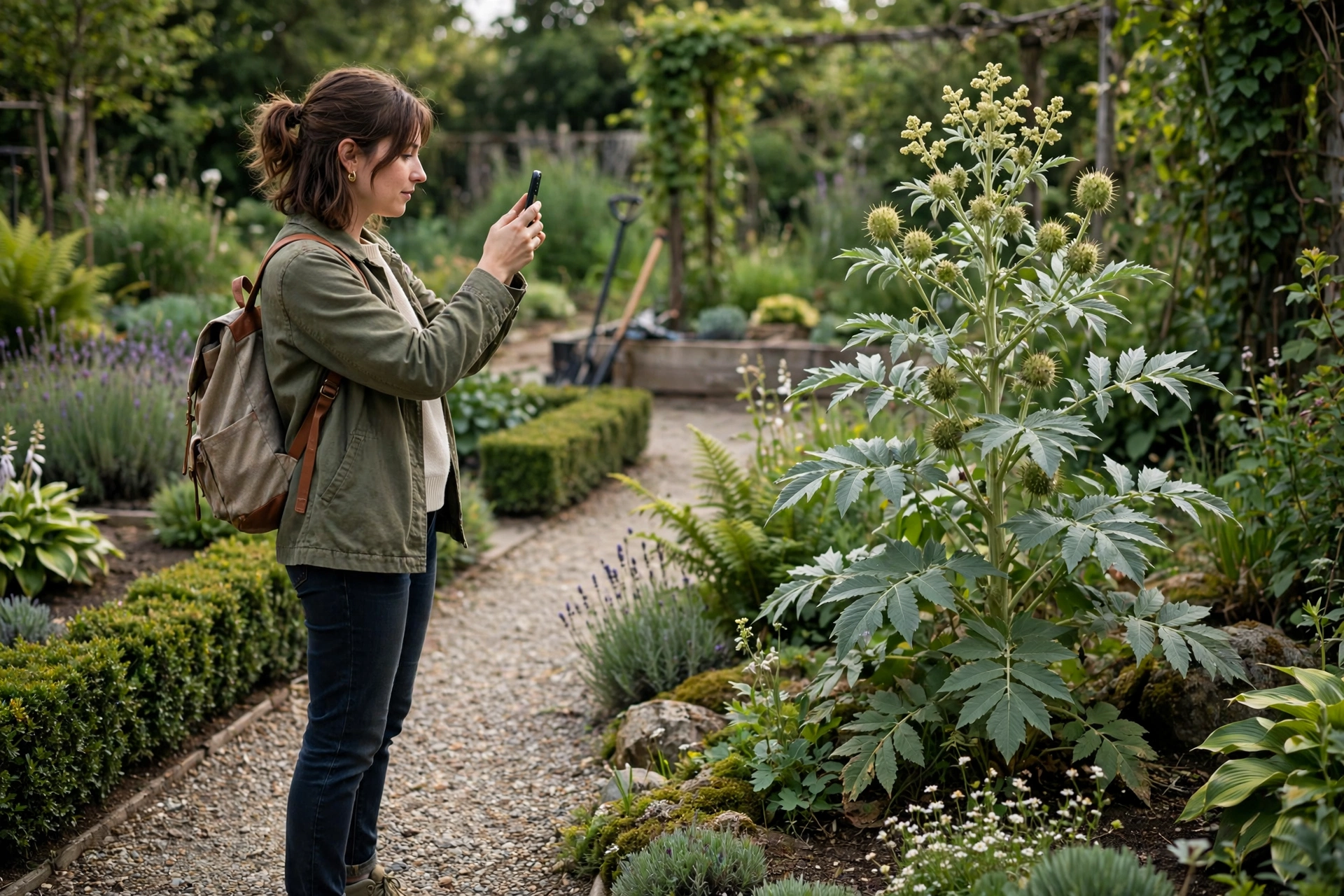
You find a plant you do not recognise. It might be in your garden, on a walk, in a new house, or in a pot with no label. Curiosity is natural, but the safest way to satisfy it is to look first and touch later — and never to taste. Many people get into trouble not because they are careless, but because they handle a plant before they know what it is, or they trust a single guess.
An unknown plant is not automatically dangerous, and curiosity about it is a good thing — it is how people learn. The problem is only the order of events. Touching, picking, or tasting a plant before you know what it is puts the test before the answer. This guide reverses that order: observe first, identify second, and only then decide whether the plant is one you want to touch, grow, or leave alone.
Try it: Try the free Plant Identifier on aitreeidentier.site — photograph an unknown plant and get a first clue for learning, before you touch or pick it.
Why Touching or Tasting First Is Risky
Some plants irritate skin through sap, hairs, or thorns. Others are harmful only if eaten, but a taste test still exposes you to that risk. Children are especially likely to copy an adult who tastes a leaf, so modelling safe behaviour matters. Even picking a leaf can spread sap to your hands, face, or eyes if you are not careful.
A photo, by contrast, costs nothing and risks nothing. You can capture the plant's key features from a safe distance, check them at home, and share them with someone who knows the local flora. That is why the first rule of unknown plants is simple: photograph first, handle second, and never taste to identify.
The Safe Identification Method, Step by Step
Step 1: Stop and observe from a distance. Note where the plant is growing — garden, woodland, wetland, roadside, or pot — and how large it is. Look for flowers, fruit, berries, thorns, and any distinctive smell, without leaning in close.
Step 2: Photograph the whole plant. Take a wide shot that shows its shape, height, and surroundings. This helps experts understand its habitat and growth habit.
Step 3: Photograph key details. Take close-ups of a leaf from above and below, the leaf arrangement on the stem, the stem itself, any flowers or fruit, and the base of the plant. Use daylight and keep the camera steady.
Step 4: Note what you see in words. Write down leaf shape, leaf edge, flower colour and number of petals, fruit colour and shape, stem colour, and whether sap, hairs, or thorns are visible. Written notes help you compare species later.
Step 5: Use an identification tool for a first clue. Upload your photos to the Plant Identifier on aitreeidentier.site and note the top suggestions. Do not accept the first result as final — read the descriptions and check whether the details match your notes.
Step 6: Compare with a trusted guide. Use a field guide or reputable local resource for your region. Check the suggested species and its lookalikes, and look for differences in leaves, flowers, fruit, and habitat.
Step 7: Confirm with a local expert. Share your photos and notes with a nursery, botanical garden, local plant group, or extension service. Ask them to confirm the name, especially if you plan to touch, move, eat, or remove the plant.
Step 8: Decide what to do next. Only after confirmation should you handle the plant with appropriate protection, move it, or decide it is safe to keep. If you cannot confirm it, leave it alone and keep children and pets away.
Common Mistakes to Avoid
Tasting or chewing a leaf. Never taste an unknown plant. Tasting is not an identification method and can be harmful even in a small amount.
Handling a plant before identifying it. Wear gloves if you must handle an unknown plant, and wash your hands afterwards. Better still, photograph it first and wait for confirmation.
Using one blurry photo. A single blurry photo of a leaf is rarely enough. Take several clear photos from different angles and include the whole plant.
Trusting a common name alone. Common names vary by place and can refer to different species. Use the scientific name when you confirm a plant, and check it against a local guide.
Assuming a plant is safe because animals eat it. Animals can eat plants that are toxic to people, and vice versa. Do not use wildlife behaviour as a safety test.
Photographing a Plant for a Reliable Identification
A good set of photos is the difference between a confident identification and a guess. Take a wide photo of the whole plant and where it is growing, then close-ups of the leaves from above and below, the stem, any flowers or fruit, and the base of the plant. Include something for scale, such as your hand or a coin, but without touching the plant. Sharp, well-lit photos in daylight are far more useful than a single blurry close-up.
Note the details a photo cannot show: the smell of a crushed leaf is one you should only check after identification, but you can note the habitat, the soil, nearby plants, and the date. A plant in flower in May may look very different by August, so the date matters. Keep your photos together in one album with the location and date, and you will build a personal reference that gets more useful every year.
Teaching Children the Look-Don't-Touch Rule
Children are naturally curious about plants, and a simple rule works better than a long list of plant names they will forget. Teach them to look, photograph, and ask an adult before touching any plant they do not know. Make it a game: who can spot the most different leaf shapes, or photograph five plants without touching any of them? Praise the careful observation, not just the correct name.
At home, walk the garden together and agree on which plants are safe to touch and which are look-only plants, marking the boundary clearly. Explain in simple terms that some plants can sting, irritate skin, or make a stomach ill, without frightening them away from nature altogether. Children who learn to observe first become the adults who identify plants carefully — and they are far safer on walks, in parks, and in other people's gardens.
- Photograph the whole plant, leaves, stem, flowers, and habitat.
- Note the date, location, and nearby plants with every photo.
- Teach children to look, photograph, and ask before touching.
- Agree on look-only plants in your own garden together.
FAQ
How can I identify a plant without touching it? Photograph it from a safe distance, note its leaves, flowers, fruit, stem, and habitat, use an identification tool for a first clue, and confirm the name with a local expert or field guide.
What if I have already touched an unknown plant? Wash your hands with soap and water, avoid touching your face or eyes, and watch for irritation. If you develop a rash, swelling, or feel unwell, seek medical advice and share photos of the plant.
Can I identify a plant from a leaf alone? Sometimes, but it is much harder. Leaves alone can be misleading. Photos of the whole plant, flowers, fruit, stem, and habitat give a far more reliable identification.
How long should I wait for expert confirmation? Wait until you have a clear answer before you handle, move, eat, or remove the plant. If a child or pet has eaten it, do not wait — seek advice from poison control or a veterinarian straight away.
Is it safe to smell an unknown plant? Smelling a flower from a short distance is usually low risk, but do not crush leaves or hold a plant close to your face, and never inhale deeply from an unknown plant. Some plants release irritating sap or particles, and a strong smell is not a sign that a plant is safe.
What if I have already touched an unknown plant? Wash your hands with soap and water, avoid touching your face or eyes, and photograph the plant. Watch for redness, itching, or a rash over the next day, and seek medical advice if symptoms spread, blister, or affect breathing.
Conclusion
Safe identification starts with distance and a camera, not with your hands or mouth. Observe, photograph in detail, note what you see, get a first clue from an identification tool, compare it with a trusted guide, and confirm it with a local expert. That patient method protects you, your family, and the plant itself — and it builds real knowledge you can use again next time.
Safety Disclaimer: Never eat or use a plant, mushroom, or fruit based on AI identification alone. AI results can be wrong. Always consult a local expert before touching, tasting, or using an unknown plant. This article is general information only and is not medical advice.