
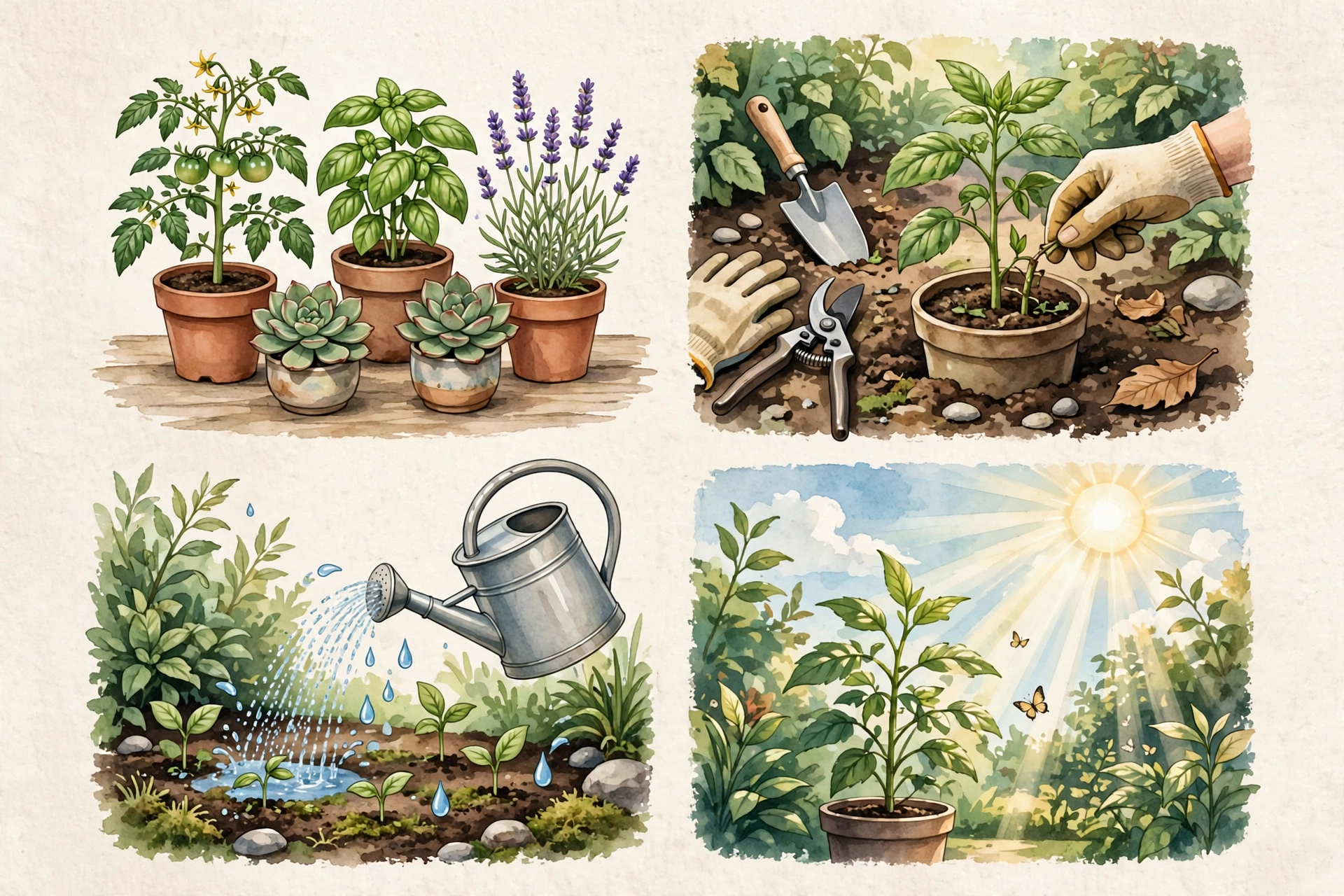
Every gardener has faced the same problem: a plant in a new garden, a gift with no label, or a seedling that has grown into something unfamiliar. Knowing what it is matters, because care needs differ widely. One plant may need full sun and little water, while another needs shade and moist soil, and giving the wrong care can weaken or kill a healthy plant.
This guide explains how to identify garden plants and work out their likely care needs — watering, sunlight, soil, and general care — from a photo and a few simple observations. You will learn what to photograph, how to read leaves and growth habit, how to use location in the garden as a clue, and how to avoid common mistakes. Identification is the first step; good care follows from understanding what the plant needs.
It helps to think of a garden plant as a clue in itself. Where it is growing — in a sunny border, a shady corner, a damp spot, or a pot on a windowsill — tells you something about what it tolerates, because it was either planted there deliberately or it survived there on its own. Combine that location clue with leaf shape, growth habit, and flowers, and you will often identify a garden plant faster than you expect.
What to Look for in a Garden Plant
Leaves and Stem
Leaves and stem are the most reliable features for garden plants. Note leaf shape, edge, size, and arrangement, whether leaves are glossy, hairy, or dull, and whether the stem is woody, soft, square, or round. Thick, fleshy leaves often belong to plants that store water and prefer sun and good drainage, while large, thin, dark green leaves often belong to shade-loving plants that need moist soil. Photograph a mature leaf flat and in focus, and a stem with several leaves so the arrangement is visible.
Growth Habit and Size
Note whether the plant is upright, spreading, climbing, trailing, or forming a rosette, and how tall and wide it is. Growth habit helps separate similar plants: a climbing plant needs support, a spreading plant needs space, and a rosette plant often needs good drainage and protection from wet winters. Note whether the plant is woody, with a permanent stem, or herbaceous, dying back in winter.
Flowers and Fruit
Flowers and fruit, when present, are strong identification clues and also give care hints. A plant in flower may need different watering from a dormant plant, and fruiting plants often need more water and feeding. Note flower colour, shape, petal number, scent, and season, and photograph flowers and leaves together.
Step-by-Step: Identify a Garden Plant and Its Care Needs
Step 1: Photograph the Whole Plant
Photograph the whole plant in its pot or border, showing size, shape, and growth habit. Then photograph a leaf close up, a stem, and any flowers or fruit. Use natural light and a plain background where possible, and include a hand for scale if the plant is small.
Step 2: Note Leaves, Stem, and Soil
Describe the leaves, stem, and growing conditions in your own words. Is the soil dry or moist? Is the plant in sun or shade? Is it in a pot with drainage holes or in open ground? These notes help you compare suggestions and think about care.
Step 3: Upload and Compare
Upload your clearest photos and compare the top suggestions against leaf shape, growth habit, flowers, and size. The best match should agree on several features. If the plant is a garden cultivar, the suggestions may be broader, and you may need to compare leaf colour, variegation, and flower form to narrow them down.
Step 4: Work Out Its Care Needs
Once you have a likely identification, look up the species' general needs: how much sun it prefers, how much water it needs, and what soil it likes. Use your own observations as a guide too — a plant thriving in a sunny, dry spot probably likes sun and drainage, while one thriving in shade probably does not. Start with the most likely needs, change one thing at a time, and watch how the plant responds over a few weeks.
Step 5: Observe and Adjust
Watch the plant for a few weeks after identification. Are leaves drooping, yellowing, scorching, or growing well? Adjust watering and light gradually, one change at a time, and note what helps. A plant that improves after a change is telling you what it needs, and observation is often more useful than a rigid watering schedule.
Common Mistakes to Avoid
One common mistake is identifying a garden plant from a single leaf without checking growth habit, flowers, or location. Garden cultivars can have unusual leaf colours or shapes that confuse identification. Another mistake is watering on a fixed schedule rather than checking soil moisture. Most plants prefer watering when the soil is dry to the touch, not on a set day. A third mistake is placing a shade plant in full sun, or a sun plant in deep shade, based on a guess. Identification helps you choose the right position. Finally, do not repot, prune, feed, or move a plant drastically based on a photo alone. Make small changes, observe, and seek local advice for valuable or unusual plants.
Another mistake is assuming that a plant that looks healthy needs no change. A plant can survive in the wrong position for months while slowly weakening, so check its growth each season: is it growing, flowering, and producing new leaves, or is it standing still and losing leaves? A plant that is not growing is telling you something is wrong, even if it still looks green. Also be careful with feeding: more fertiliser is not better, and overfeeding can burn roots and damage a plant that was otherwise healthy.
Frequently Asked Questions
Can I identify a garden plant from one photo?
Often, yes, if the photo is clear and shows a distinctive leaf, flower, or growth habit. For many garden plants, a whole-plant photo plus a leaf close-up gives the best result. Cultivars and young plants may need extra photos.
How do I know how much water a plant needs?
As a general guide, check the soil: water when the top few centimetres feel dry, and avoid leaving the plant sitting in water. Succulents and Mediterranean plants usually need less water, while large-leafed and moisture-loving plants need more. Always confirm for the specific species once identified.
How much sunlight does my plant need?
Look at where it was thriving before, and at leaf type. Plants with thick, fleshy, or silvery leaves often tolerate sun, while plants with large, thin, dark green leaves often prefer shade or partial shade. Use identification to check the species' usual preference, then adjust gradually.
What should I do if my plant is losing leaves after I move it?
Some leaf drop is normal after a move, as the plant adjusts to new light and humidity. Give it a few weeks, keep watering steady, and avoid moving it again or feeding it straight away. If leaf loss continues or new growth is weak, check the light, drainage, and soil moisture against the species' usual needs.
How can I tell if a garden plant is a weed or a wanted plant?
Check where it is growing and how it grows. Weeds often appear in disturbed soil, paths, and bare patches, and many grow very fast. If you did not plant it and it is spreading quickly, mark it and wait for true leaves or flowers before deciding. When in doubt, ask a local gardener or photograph it for identification before pulling it out.
Conclusion
Identifying a garden plant is the first step to caring for it well. Photograph the whole plant and its leaves clearly, note where it grows and how the soil feels, compare several features, and use the identification to learn its general sunlight, watering, and soil needs. Observe the plant, adjust gradually, and enjoy learning what helps it thrive. With practice, you will recognise common garden plants quickly and care for them with more confidence.
Try it: Try the free Plant Identifier on aitreeidentier.site — photograph your garden plant for instant guidance.
Safety disclaimer: Never eat, use, or apply any garden plant, mushroom, or fruit based on AI identification alone. Some garden plants are toxic or easily confused with lookalikes. Consult a local expert before any use.