
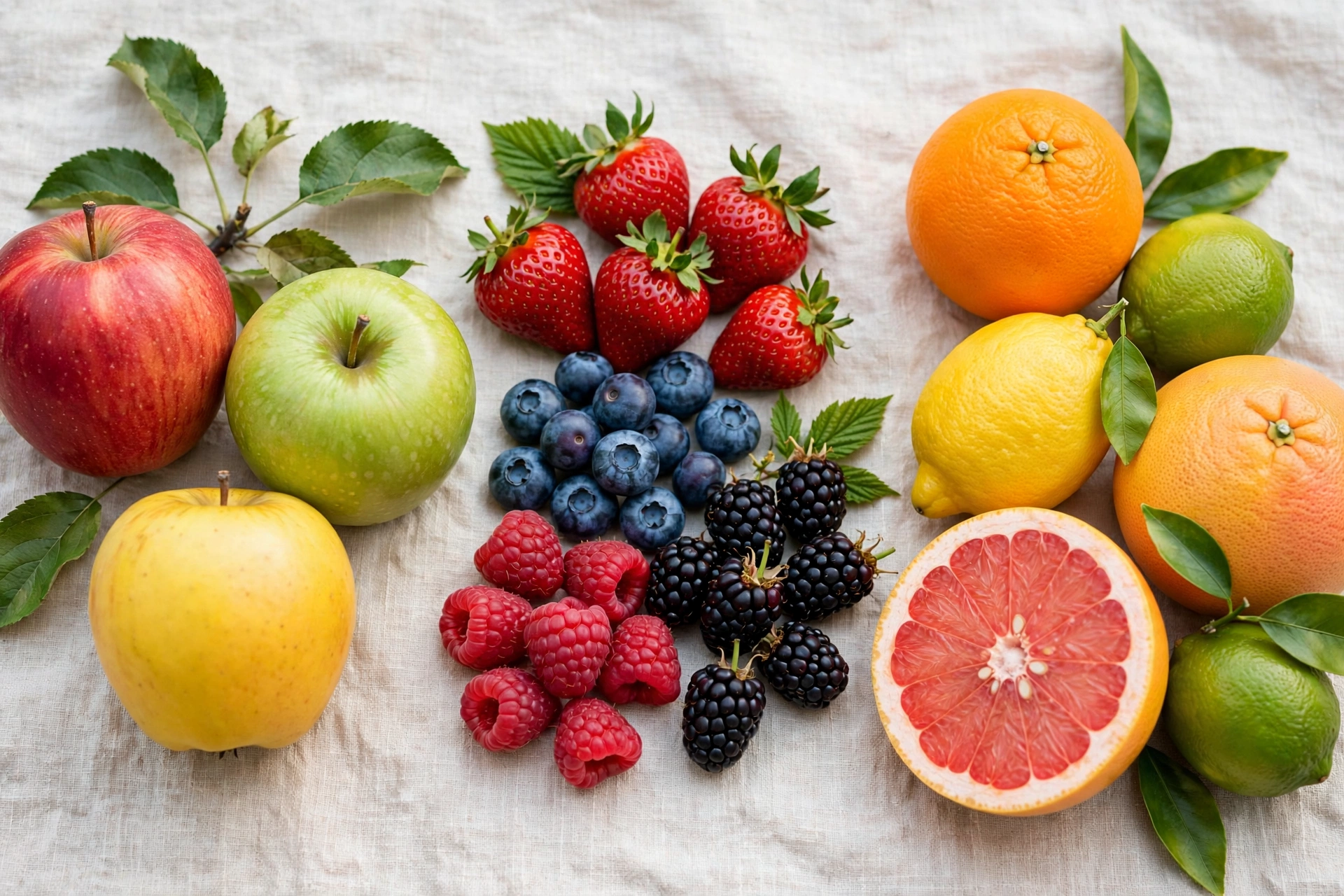
Fruits are among the most photographed foods in the world, yet many look alike at a glance. A small round red fruit could be a cherry, a plum, a crab apple, or a berry, and the difference matters if you want to know whether it is ripe, how to store it, or whether it is safe to eat. Identifying fruit from a photo is a practical skill for shoppers, gardeners, cooks, foragers, and anyone curious about what is growing on a tree or in a market stall.
This guide explains how to identify fruit using shape, size, colour, skin, flesh, seeds, and the plant it came from. You will learn how ripeness changes appearance, why family traits help, how to photograph fruit clearly, and which mistakes most often lead to wrong identifications. The method is simple, but it works best when you check several features together rather than trusting colour alone.
Fruit identification is also a useful way to learn about plant families, because fruits follow family patterns. Once you know that citrus fruits have segmented flesh, stone fruits have a single stone, and pome fruits have a core with seeds, you can place an unfamiliar fruit into its family in seconds — and from there, the list of possible species becomes much shorter.
What to Look for in a Fruit
Shape and Size
Note the overall shape — round, oval, elongated, heart-shaped, or flattened — and the size, using a coin or your hand for scale. Shape and size are more stable than colour, so they are good first clues. A cherry is small and round with a long stem, a plum is larger and oval with a seam down one side, and a crab apple is round with a short stalk and a persistent flower end. Always record size, because a photo without scale can make a small fruit and a large fruit look identical.
Skin and Flesh
Note the skin: is it smooth, waxy, rough, fuzzy, or ridged? Is it thin or thick, and does it peel easily? If the fruit is a familiar shop or garden fruit, a cut view showing the flesh colour, texture, and juiciness adds strong evidence. Citrus flesh is segmented and juicy, stone fruit flesh is soft around a single stone, and pome fruit flesh is firm around a core. Photograph the cut surface in good light, and keep it clean.
Seeds and Stones
Seeds and stones are often the most decisive feature of all. Note whether the fruit has one large stone, several small seeds, or many tiny seeds, and whether the seeds are arranged in a star, a ring, or scattered through the flesh. A single stone points to the stone fruit family, a core with pips points to pome fruits, and many small seeds point to berries and similar fruits. Photograph the seeds or stone alongside the whole fruit for a complete record.
Ripeness
Ripeness changes colour, firmness, aroma, and sometimes size. An unripe fruit may be hard, green, and sour-looking, while the same fruit when ripe is soft, colourful, and fragrant. Note whether the fruit is unripe, ripe, or overripe, and photograph both unripe and ripe fruit if both are present. Identification tools work best with ripe, typical-looking fruit in good light.
Step-by-Step: Identify a Fruit from a Photo
Step 1: Photograph the Whole Fruit
Photograph the fruit from the side and from above, in natural light, against a plain background. Include the stem if it is still attached, and place a coin or your hand beside it for scale. Avoid shadows and flash, which can distort colour. If the fruit is still on the plant, photograph it in place first, then a picked fruit if it is safe and permitted to do so.
Step 2: Photograph a Cut Fruit and the Leaves
If the fruit is a familiar shop or garden fruit, a cut view showing flesh, seeds, or stone can confirm the identification. Photograph the leaves and branch as well, because many fruits from different families have similar shapes but very different leaves. Keep the cut surface clean and well lit.
Step 3: Note Colour, Texture, and Aroma
Describe the fruit in your own words before you upload it. What is the shape, colour, skin texture, and size? Does it have a noticeable scent? Is it firm or soft? These notes help you compare suggestions and spot when a suggestion does not fit.
Step 4: Consider the Family
Think in families. Citrus fruits share segmented flesh and aromatic peel, stone fruits share a single stone, pome fruits share a core, and berries share many small seeds. Knowing the family narrows the search and helps you spot when a suggestion belongs to the wrong family entirely.
Step 5: Compare and Confirm
Upload your clearest photo and compare the top suggestions against shape, size, skin, seeds, leaves, and season. The best match should agree on several features. If you are identifying a wild fruit, be extra cautious: many wild fruits have toxic lookalikes, and a photo alone is never enough to decide edibility.
Common Mistakes to Avoid
The most common mistake is identifying an unripe fruit as a different species. Unripe fruit often looks green, hard, and smaller than the ripe form, and its colour may not yet have developed. Another mistake is relying on colour alone, especially in markets where fruit is waxed, polished, or photographed under artificial light. A third mistake is photographing a single fruit without scale, so a cherry and a plum can look the same size. Always include a hand or coin for scale. Finally, do not assume a fruit is edible because it looks like a shop fruit. Wild and ornamental fruits can look very similar to edible ones but be toxic.
Another common error is photographing fruit in a bowl or a bag with other fruit, where the tool cannot tell which fruit you mean. Always photograph one fruit at a time, on a plain background, with its stem and scale visible. Also be careful with fruit that has been cut and left to sit: the flesh can brown and change colour within minutes, so photograph a cut fruit immediately, and note the fresh colour in your description before it changes.
Frequently Asked Questions
Can I identify a fruit from a photo alone?
Often, yes, for common shop and garden fruits photographed clearly and ripe. For wild, unusual, or unripe fruit, a photo is a starting point only. Leaves, seeds, and the whole plant help confirm the identification.
What is the best photo for fruit identification?
A clear side view of a ripe, whole fruit in natural light, with the stem visible and something for scale, plus a photo of the leaves and plant if available. A cut view showing flesh and seeds is a useful extra.
How does ripeness affect identification?
Ripeness affects colour, firmness, size, and aroma. Unripe fruit can look like a different species, so photograph ripe fruit when possible and note whether the fruit you photographed was unripe, ripe, or overripe.
How do I tell a cherry from a plum?
Cherries are smaller, usually round, with a long slender stem, and they grow on trees with distinctive bark and leaves. Plums are larger, often oval with a seam, and have a shorter stalk. When in doubt, check the stone: both have a single stone, but the size and the leaf shape of the parent tree usually separate them clearly.
Can I identify a fruit from its leaves alone?
Often you can narrow it to a family, because fruit trees have distinctive leaves — citrus leaves are glossy and aromatic, stone fruit leaves are pointed and toothed, and fig leaves are large and lobed. For a confident identification, though, you still need the fruit itself, its seeds, and the season.
Conclusion
Identifying fruit from a photo works best when you combine shape, size, colour, skin, seeds, and the plant it came from, and when you take ripeness into account. Photograph ripe fruit clearly, include scale and leaves, compare several features, and treat the result as a starting point. With practice, you will recognise common fruit families quickly — and you will know when to pause, check again, and ask an expert before you eat anything unfamiliar.
Try it: Try the free Plant Identifier on aitreeidentier.site — photograph a ripe fruit with its leaves for instant guidance.
Safety disclaimer: Never eat, use, or apply any fruit, plant, or mushroom based on AI identification alone. Some fruits are toxic or easily confused with lookalikes. Consult a local expert before any use.