
Try it: Not sure what seed you have? Try the free Tree Seed Identifier on aitreeidentier.site — upload a photo and get a likely match in seconds.
Introduction
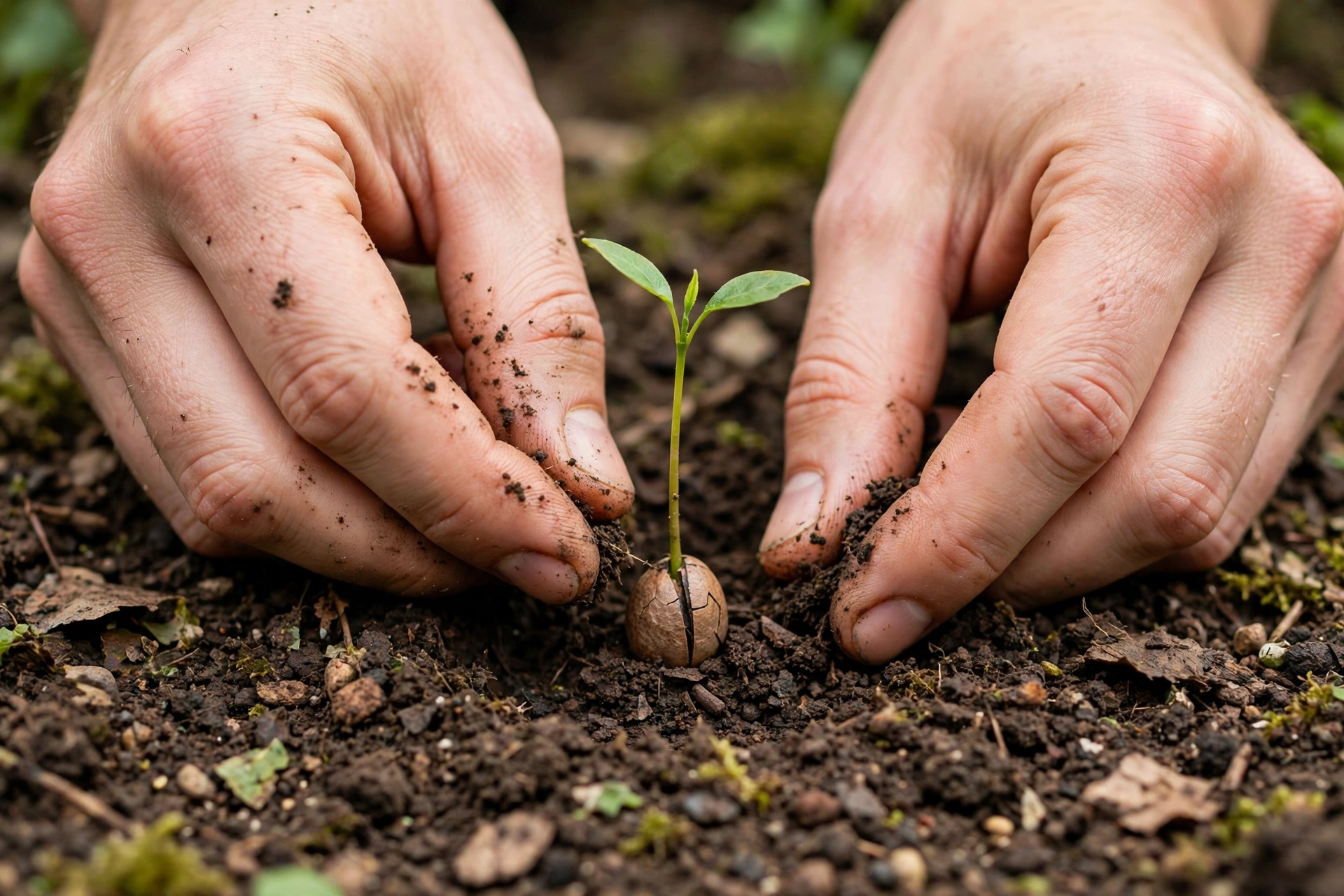
Growing a tree from seed is one of the most rewarding things a gardener can do. It costs almost nothing, teaches patience, and gives you a tree with a story. Unlike a nursery sapling, a seed-grown tree starts life in your soil and climate, and often develops a stronger, more natural root system. The trade-off is time: most trees take years to reach a useful size, and not every seed will germinate.
Step 1: Collect and Identify Your Seeds
Collect seeds when they are ripe, usually in autumn, when cones open, pods dry, nuts fall, or fruits soften. Choose seeds from a healthy parent tree with good shape and no obvious disease. Avoid seeds that are shrivelled, mouldy, cracked, or holed by insects. Take a clear photo of the seed, cone, or fruit, and of the parent tree's leaves and bark if you can. Identification is much easier with several clues together.
Step 2: Check Whether Seeds Need Special Treatment
Many tree seeds will not germinate straight away, even in perfect soil. This is a survival strategy: a seed that sprouted in autumn would be killed by winter frost, so many species build in a delay. Two treatments matter most. Stratification is a period of cold, damp conditions that mimics winter.
Stratification and Scarification Explained
Stratification means giving seeds a period of cold, damp conditions before sowing, usually four to twelve weeks in a bag of moist compost or sand in a fridge, or simply sown outdoors in autumn and left to experience winter naturally. Species that need it include oak, beech, maple, ash, hawthorn, and many conifers. Without this cold period, the seed stays dormant and may not germinate for a year or more, if at all. Always check the needs of your species before sowing, because the length of cold required varies widely: some seeds need only a month, while others need three months or two winters.
Scarification is different: it means weakening a hard seed coat so water can get in. Large, hard seeds such as honey locust, laburnum, and some acacias benefit from nicking the coat with a file, or pouring hot water over them and leaving them to soak overnight. A seed that swells after soaking is ready to sow; one that stays hard may need another treatment. Never scarify soft seeds such as acorns or beech mast, which have no hard coat and can be damaged. When in doubt, sow some seeds with treatment and some without, and compare the results. That small experiment teaches you more about your species than any book can.
Choosing Seeds Worth Growing
Not every seed is worth the years of waiting. Before you collect, ask yourself what the tree will become. A seed from a street tree may grow into a 20-metre giant that will never suit your garden, while a seed from a small garden variety may be just right. Check the parent tree's health, shape, and fruit: a parent with a strong, balanced crown and a heavy crop is a better bet than a weak or diseased one. Collect from several parent trees if you can, because genetic diversity gives you stronger seedlings to choose from. Label everything as you collect it — species, location, and date — because seeds of different species can look confusingly similar in a bag a month later, and a label costs nothing.
Step 3: Sow at the Right Depth and Time
Use free-draining seed compost, or a mix of compost and sharp sand or perlite. Ordinary garden soil is often too heavy and can stay wet and airless in a pot. Fill small pots or a seed tray, water the compost first, then sow. As a general rule, sow a seed at a depth about twice its own width. Tiny seeds should sit almost on the surface, covered with only a dusting of compost.
Step 4: Care for Seedlings in Their First Year
Keep compost damp, never soaking wet and never completely dry. Water gently with a fine rose so you do not wash seeds out or flatten young stems. Good airflow matters: seedlings in a stuffy, damp place are prone to damping off, a fungal problem that makes stems collapse at soil level. A bright, sheltered spot outdoors, a cold frame, or a ventilated greenhouse is usually better than a warm windowsill.
Step 5: Plant Out and Protect Your Young Tree
Most seed-grown trees are ready to plant out after one or two years, when they are sturdy, well-rooted, and at least 30–60 cm tall. Choose the site carefully, thinking about the tree's mature size, not its current size. A tree that will reach 15 metres should not be planted two metres from a house, wall, or drain. Plant in autumn or early spring, when the tree is dormant and the soil is moist.
Common Mistakes to Avoid
- Sowing too few seeds: Germination is never 100%. Sow several and keep the strongest.
- Skipping cold treatment: Many temperate seeds need winter before they sprout.
- Sowing too deep: Small seeds buried deeply may never emerge.
- Overwatering: Constantly wet compost rots seeds and seedlings.
- Planting too close to buildings: Always plan for the mature tree, not the seedling.
- Expecting fruit to match the parent: Seed-grown fruit trees often differ from the parent. For a guaranteed variety, grafting is needed.
FAQ
How long does it take to grow a tree from seed? It depends on the species. Fast growers such as willow or alder may reach a metre in their first year. Oaks, beeches, and many conifers grow more slowly and may take five to ten years to make a real impact.
Can I grow a tree from a shop-bought fruit seed? Yes, but the resulting tree may produce different, sometimes poorer, fruit than the parent. It is still a fun experiment, and the tree itself can be beautiful.
Do I need to soak seeds before planting? Many hard-coated seeds benefit from a 12–24 hour soak in warm water. Soft seeds, such as acorns, do not need it. If a seed floats after soaking and feels light or hollow, it is probably not viable.
Why did my seeds not germinate? The most likely reasons are missing cold treatment, old or non-viable seed, sowing too deep, or compost that dried out or stayed waterlogged. Try again with fresh seed and sow more than you need.
Can I grow a tree from seed indoors all year? You can start seeds indoors, but most temperate trees need a cold period and then outdoor light to grow strongly. A cold frame or sheltered outdoor spot usually produces sturdier seedlings than a warm windowsill, where seedlings often grow tall, pale, and weak.
Should I use fertiliser on seedlings? Seedlings rarely need feeding in their first year, because seed compost contains enough nutrients to get them started. If growth is very pale or slow after a few months, a half-strength liquid feed once or twice is enough. Overfeeding young seedlings can burn their roots.
Conclusion
Growing a tree from seed is slow, simple, and deeply satisfying. Identify your seed, give it the treatment it needs, sow at the right depth, and keep seedlings moist, bright, and protected. Most failures come from rushing or guessing, not from lack of skill. Start with a handful of seeds this season, keep notes on what works, and in a few years you will have a tree that you grew from almost nothing.
Safety note: Never eat or use any seed, nut, or plant part based on an AI identification alone. Some seeds are toxic. If you are unsure about edibility or safety, consult a local expert before handling or consuming anything.