
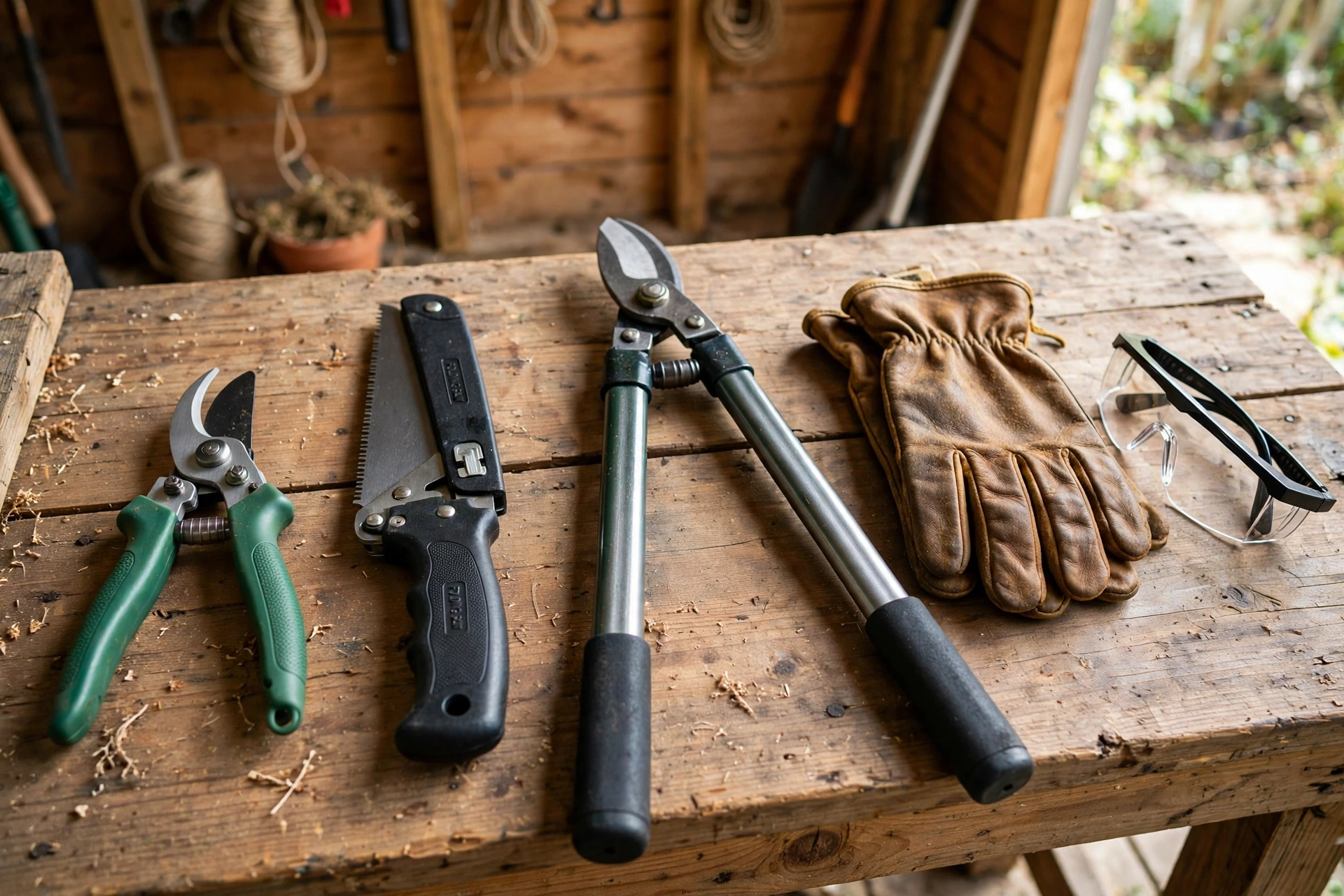
Pruners, saws and loppers are the tools most gardeners reach for every week, and they are also the tools most likely to cause a cut. They are sharp by design, they store a lot of force in their springs and long handles, and they are often used above shoulder height, close to the face, or in thick branches where a blade can slip. Most garden tool injuries are small, ordinary moments: a hand slipping onto a blade, a branch springing back, or a saw binding and jumping. This guide covers how to use pruners, saws and loppers safely, how to choose and maintain them, and what to do when something goes wrong, so you can prune with confidence and keep all ten fingers.
Know Your Three Tools
Secateurs, usually called hand pruners, are for stems up to about two centimetres thick. Bypass pruners have two curved blades that pass each other like scissors and make a clean cut that heals well. Anvil pruners have one straight blade that presses the stem against a flat plate, which is good for dead wood but crushes living stems, so use them only on dead branches. A folding pruning saw cuts branches from about three to fifteen centimetres thick. Its teeth cut on the pull stroke, and the blade folds away for safe carrying. Loppers are long-handled pruners for branches up to about five centimetres thick. Their long handles give great leverage, which is also why they can cut a finger badly if your hand is in the wrong place. Each tool has a job, and using the wrong tool for a branch is a common cause of accidents, because a tool forced beyond its capacity slips, binds or breaks.
Before You Start: Check and Prepare
Before any pruning session, inspect your tools. Check that blades are sharp, clean and undamaged, that the spring works, that the locking catch closes, and that handles are not cracked or loose. A blunt blade is more dangerous than a sharp one, because you have to force it, and a forced blade slips. Clean off sap and dirt with a cloth and a little oil, and sharpen the blade if it tears rather than cuts. Put on gloves that fit well and still let you grip, and wear safety glasses, especially when cutting above your head or in dense shrubs where twigs can flick into your eyes. Wear sturdy shoes and long sleeves, and tie back long hair. Tell someone where you are working if you are alone, and keep a phone and a basic first aid kit nearby. Plan your cuts before you start, and clear the ground under the tree so you do not trip while looking up.
Safe Cutting Technique
Good technique is the heart of tool safety. Always cut away from your body, and never put your free hand in the path of a blade. When you hold a branch steady, hold it well away from the cut, or better still, let the branch fall free once it is cut. Keep your fingers behind the blades of pruners and loppers at all times, and never use your hand to push a branch into the blades. With a pruning saw, start with a light pull stroke to make a groove, then use long, steady strokes, letting the teeth do the work. Do not force the saw, and do not twist it in the cut, because a bound saw can jump out suddenly. For a heavy branch, use the three-cut method: cut part way through from underneath, a few centimetres out from the final cut, then cut from above until the branch falls, then remove the stub with a clean final cut. This stops the branch tearing the bark as it falls. Never cut above shoulder height with a saw, and never reach so far that you lose your balance.
Working at Height and With Loppers
Loppers and saws are often used above head height, and that is where the risk rises. A branch cut above your head can fall on you, and sawdust and small twigs can fall into your eyes, which is why safety glasses matter so much. Do not stand on a chair, a box or an upturned bucket to reach higher branches. Use a stable ladder on flat ground, keep three points of contact, and never lean out sideways. Better still, use long-handled loppers or a pole pruner from the ground, and leave high branches to a professional arborist. With loppers, keep both hands on the handles and your body behind the tool. Long handles store a lot of force, so keep your fingers clear of the jaws, and close the loppers slowly when the branch is almost cut, so the handles do not snap together on your hand. Never use loppers one-handed, and never use them to cut wire, metal or anything other than wood.
Carrying, Storing and Locking Tools
Many injuries happen when tools are not being used at all. Always close pruners and engage the locking catch before you put them down or carry them. Fold a pruning saw closed before walking with it, and carry it with the blade pointing down and away from your body. Carry loppers with the jaws closed and pointing down. Never carry tools in your pocket, and never hand a tool to someone else blade first. Offer the handle, and wait until they have a firm grip before you let go. Store tools in a dry place, out of reach of children, with blades closed or covered. Hang them up rather than leaving them on the ground, where they can be stepped on or picked up by the blade. Clean and oil the blades after use, and store them dry, because a rusty blade is harder to control and more likely to slip. Keep the first aid kit where you can reach it, not locked in a shed.
When Something Goes Wrong
Even careful gardeners get cut sometimes, so know what to do. For a small cut, stop work, wash the wound with clean water, press a clean cloth against it until the bleeding stops, and cover it with a plaster or dressing. If the cut is deep, the bleeding does not stop after ten minutes of pressure, or you cannot move a finger, seek medical help straight away and take the tool's details with you. Wash any cut from a dirty or rusty tool carefully, and check that your tetanus vaccination is up to date. If a branch falls on you, check for head, neck or back pain before moving, and call for help if you feel dizzy or cannot move normally. Do not try to finish the job after an injury. Put the tools away, treat the wound properly, and rest. A small cut that is cleaned and covered heals quickly. A cut that is ignored can become infected and cause far more trouble than the pruning was worth.
Frequently Asked Questions
Should I wear gloves when pruning? Yes, wear well-fitting gloves that protect against thorns and blisters but still let you grip the tool. Take them off for very fine work only if you can do it safely, and put them back on for thorny branches.
How do I know if my pruners are sharp enough? A sharp blade cuts cleanly with little force and leaves a smooth cut surface. If it tears, crushes or needs a lot of force, sharpen it or have it sharpened.
Can I use loppers on a branch thicker than five centimetres? No, use a pruning saw instead. Forcing loppers onto a thick branch can damage the tool and cause it to slip.
What should I do with a rusty saw? Clean off the rust, oil the blade, and check the teeth. If the blade is pitted, bent or cracked, replace it rather than using it.
Is it safe to prune in wet weather? Wet branches are slippery and tools are harder to grip, so wait for dry weather when you can. Wet leaves also hide thorns and the shape of the branch.
Conclusion
Garden tool safety is mostly about slowing down and thinking before each cut. Check your tools, wear gloves and glasses, cut away from your body, keep your free hand clear, and never force a tool beyond its job. Use the three-cut method for heavy branches, stay on the ground when you can, and keep children and pets away while you work. Pruning should be enjoyable, and with these habits it will be.
Safety disclaimer: This guide is general information, not professional safety training. If a tree is large, damaged, near power lines, or needs work above head height, hire a qualified arborist. If you are injured, seek medical help promptly.
Try it: not sure which tree or shrub you are pruning? Upload a photo to the Tree Identifier on aitreeidentier before you cut, so you know what you are working with.