
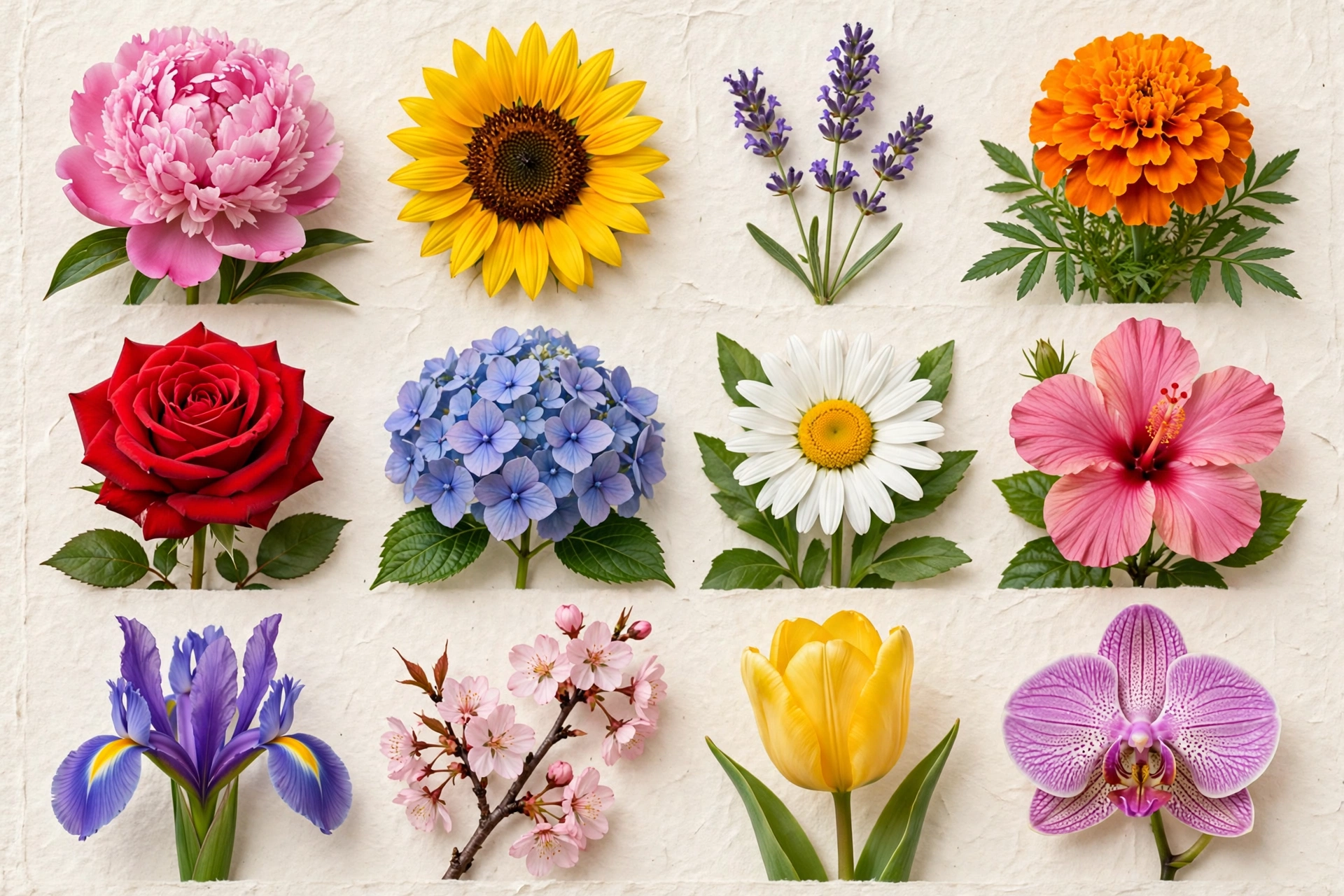
Flowers are often the easiest part of a plant to notice, and they are also one of the most useful for identification. Colour catches the eye first, but petal number, flower shape, arrangement, scent, leaves, and blooming season matter just as much. A small white flower in spring, a tall purple spike in summer, and a large yellow bloom in autumn are unlikely to be the same plant, even if the colour is similar.
This guide explains how to identify flowers in a practical, step-by-step way. It covers what to photograph, which features to record, how to use blooming season and habitat as clues, and how to avoid the common mistakes that lead to confident but wrong identifications. Whether you are identifying a garden flower, a wildflower, or a flower in a bouquet, the same method applies.
Flowers are also a good place to start learning plant identification in general, because they reward careful looking quickly. Once you can count petals, recognise a tubular flower from a flat one, and tell a cluster from a spike, you have learned skills that transfer to almost every other plant group. Keep a small notebook or a photo album of the flowers you identify, and you will soon have a personal reference that grows more useful every season.
What to Look for in a Flower
Petal Number and Flower Shape
Start by counting the petals and studying the flower's shape. Many plant families follow a pattern: members of the rose family often have five petals, brassicas usually have four, and lilies often have six petal-like parts. Note whether the petals are separate or joined into a tube, bell, or trumpet, whether they are rounded or pointed, and whether the flower is flat, cup-shaped, or star-shaped. A tubular flower with a long spur, for example, is a very different candidate from a flat flower with five separate petals, even if both are the same colour.
Flower Arrangement
Note whether flowers grow singly, in pairs, in clusters, in spikes, or in flat-topped heads. A single large flower on a tall stem is different from a cluster of tiny flowers, even if individual flowers look similar. Also note whether flowers face upwards, sideways, or hang downwards, and whether buds, open flowers, and seed heads are present at the same time.
Leaves and Stem
Always photograph the leaves and stem as well as the flower. Leaf shape, arrangement, and texture, stem colour and hairiness, and overall plant height are often decisive when flowers look alike. A flower without its leaves is much harder to identify, so include a photo that shows flower, leaves, and stem together.
Colour, Markings, and Scent
Note the exact colour and any markings, such as spots, stripes, or a differently coloured centre, because these details often separate close relatives. Scent can also help — some flowers are strongly scented while their lookalikes have almost no scent — but treat it as a supporting clue, since scent varies with the weather and the time of day. Never pick or crush a flower to test its scent if you are unsure what it is.
Step-by-Step: Identify a Flower from a Photo
Step 1: Photograph the Flower Close Up
Photograph the flower from the front, in natural light, filling the frame. Then take a side view that shows the petals, centre, and the stem behind it. Avoid using flash, which can wash out colour, and avoid photographing through glass or in deep shade. If the flower is small, move closer rather than zooming from a distance.
Step 2: Photograph the Whole Plant
Step back and photograph the whole plant, including leaves, stem, height, and any buds or seed heads. This context photo is often the one that confirms or overturns an identification based on the flower alone. Include something for scale, such as your hand, if the plant is small.
Step 3: Count Petals and Note the Centre
Count the petals, note their shape and arrangement, and look closely at the centre. How many stamens are visible? Is there a prominent disc, tube, or spur? These details are small, but they are often the difference between two similar flowers. Take a second close-up of the centre if your camera allows it.
Step 4: Record Colour, Scent, and Season
Note the exact colour, any markings, whether the flower is scented, and the date and location. Scent can be a useful clue for some flowers, but do not pick or crush a flower to test it if you are unsure what it is, and do not taste it.
Step 5: Compare Several Features
Upload your best photo and compare the suggestions against petal number, flower shape, leaf shape, plant height, season, and habitat. The correct identification should match on several points. If only the colour matches, keep looking. Check the next few suggestions as well — the right answer is sometimes second or third on the list.
Step 6: Confirm with the Plant Later in the Season
If you can, return to the same plant a few weeks later and photograph its seed heads or fruit, which often confirm a flower-based identification. Many flowers that look alike produce very different seeds — a feathery seed head, a pod, or a capsule — and that second visit turns a likely identification into a confident one. Keep a note of the location so you can find the plant again.
Common Mistakes to Avoid
The most common mistake is relying on colour alone. Colour varies within a species and across cultivars, and many unrelated flowers share the same colour. Another mistake is photographing only the flower and ignoring the leaves, which are often more distinctive than the bloom. A third mistake is using a faded, damaged, or partly closed flower. Fresh, fully open flowers in good light give the clearest features. Finally, do not assume a garden flower is wild, or a wildflower is a garden escape, without checking the context. Gardens contain many cultivated varieties that look like wild species but differ in petal number, size, or colour.
Another common error is photographing a flower in a bouquet or a vase and forgetting that it was cut and arranged. Cut flowers have lost their leaves, stem, and habitat, so identification from a bouquet is much harder than from a plant in the ground. If you can, ask where the flowers came from, and photograph any leaves or stems that remain. Similarly, a flower bought at a market may be a cultivar bred for size or colour, and it may not match wild forms exactly, so treat market flowers as a starting point and check cultivar varieties as well.
Frequently Asked Questions
Can I identify a flower by colour alone?
Rarely with confidence. Colour narrows the possibilities, but petal number, flower shape, leaves, season, and habitat are needed to distinguish similar flowers. Always use at least two or three features together.
What is the best photo for flower identification?
A clear front view of a fresh, fully open flower in natural light, plus a second photo showing the whole plant with leaves and stem. Together, these give the most complete information.
Why do flowers of the same species look different?
Flowers vary with cultivar, soil, light, age, and pollination. Garden varieties may have extra petals, different colours, or larger blooms than wild forms. Compare the basic structure — petal number, shape, and centre — rather than colour alone.
How do I identify a flower that is not fully open yet?
Buds are harder to identify than open flowers, because petal number and the centre are hidden. Photograph the bud, the leaves, and the stem, and note the date and habitat. If you can, return in a few days when the flower has opened, and photograph it again for a much more reliable identification.
What does blooming season tell me about a flower?
Blooming season is a strong clue, because most flowers bloom within a fairly narrow window each year. A flower seen in April is unlikely to be a species that normally blooms in August. Always record the date, and use it to rule out species that flower at a different time of year.
Conclusion
Flower identification is most reliable when you look beyond colour. Count the petals, study the centre and flower shape, photograph the leaves and whole plant, and use blooming season and habitat as extra clues. With clear photos and a step-by-step check, you can identify many flowers quickly and enjoyably — and you will start to notice the small structural details that make each species distinctive.
Try it: Try the free Flower Identifier on aitreeidentier.site — photograph a fresh flower and its leaves for instant guidance.
Safety disclaimer: Never eat, use, or apply any part of a flower or plant based on AI identification alone. Some flowers are toxic or easily confused with lookalikes. Consult a local expert before any use.