
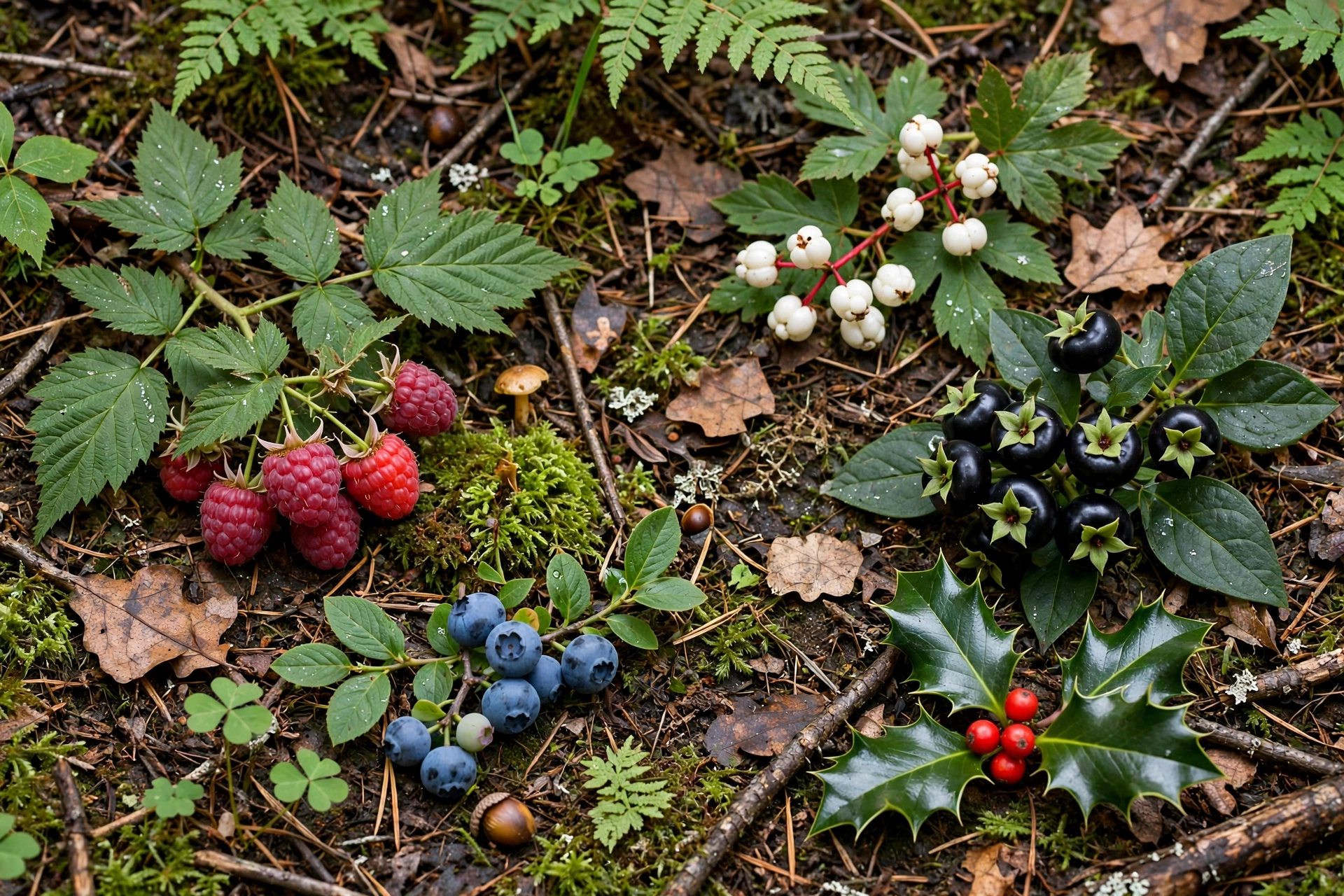
Wild plants can look very similar, even when one is edible and the other is toxic. A leaf shape, a berry colour, or a flower that looks familiar can be misleading. That is why telling edible and toxic plants apart is not a matter of a single clue, a photo, or a memory of a similar plant. It is a matter of checking many features together, learning in your local area, and getting confirmation from someone who knows the plants where you live.
The hardest cases are the ones that look almost right. A plant may match an edible species in leaf shape and flower colour, yet differ in a single detail — the smell of a crushed leaf, the shape of a seed, or the way the stem branches. Experienced foragers treat that one difference as a warning, not as a detail to explain away. If a plant does not match in every feature, it is not the plant you think it is.
Try it: Try the free Wildflower Identifier on aitreeidentier.site — use it as a study aid to learn a plant's name and its lookalikes, never as a decision about whether it is safe to eat.
Why Lookalikes Are So Dangerous
Edible and toxic species often grow in the same place, at the same time, and with similar leaves or berries. Young plants can look different from mature plants, and a plant's appearance can change with soil, light, and season. A berry that is safe when ripe may be toxic when unripe. A leaf that looks like a familiar herb may belong to a completely different family.
The risk is not just a stomach upset. Some toxic wild plants can cause serious illness even in small amounts, and symptoms can be delayed. That is why experienced foragers never rely on a single feature, a single photo, or a single memory. They check the whole plant, its habitat, its season, and its lookalikes — and they still ask a local expert to confirm it in person before they consider eating it.
How to Compare Plants Safely, Step by Step
Step 1: Photograph the whole plant and its details. Take wide and close-up photos of leaves, stem, flowers, and fruit, and note the habitat and date.
Step 2: Get a first clue for learning. Use the Wildflower Identifier on aitreeidentier.site to see suggested names. Treat the result as a study aid, not a decision about edibility.
Step 3: Compare with a trusted field guide. Look up the suggested species and its known lookalikes in a guide for your region. Make a list of the exact differences.
Step 4: Learn the lookalikes at the same time. For every plant you study, learn the toxic species it is most often confused with. Note the differences in leaf, flower, fruit, stem, and habitat.
Step 5: Ask a local expert in person. Show the fresh plant, not just a photo, to a botanist, foraging mentor, or local plant group. Ask them to point out the key features in person.
Step 6: Do not eat it. Even after study and confirmation, eating wild plants carries risk and needs careful, local, expert guidance about preparation, amount, and individual health. If you have any doubt, leave the plant alone.
Common Mistakes to Avoid
Identifying by one feature. Colour, leaf shape, or berry shape alone is not enough. Always check several features together.
Trusting a photo match. AI and online photos can be wrong, especially with similar species and different regions. Use them for learning, not for eating decisions.
Tasting to test. Never taste an unknown wild plant to see if it is safe. Some toxins work in tiny amounts or with a delay.
Assuming a plant is edible because it looks like a garden plant. Wild relatives of garden herbs and vegetables can be toxic. A similar look does not mean the same species.
Foraging in contaminated places. Avoid plants near roads, sprayed fields, or polluted soil, even if the species is known. Contamination is a separate risk from identification.
A Field Comparison Routine You Can Repeat Every Time
A repeatable routine is safer than memory. Start with the whole plant: its height, growth habit, and where it is growing. Then work through the parts in the same order every time — leaves, stem, flowers or fruit, roots if visible, and smell. Write down what you see, or record a short voice note, before you check any guide. That record stops you from quietly adjusting what you saw to fit the plant you hoped it was.
Next, compare your notes against at least two trusted sources for your region, and pay special attention to the lookalikes section. Ask yourself which features rule the toxic lookalike out, not which features make your plant look edible. If you cannot name the feature that separates the two species, you have not finished the comparison. Take the plant, or clear photos of every part, to a local expert and let them check your reasoning in person.
What to Do If You Are Not 100 Percent Sure
Uncertainty is the normal state when learning wild plants, and the correct response is simple: leave the plant alone. Do not taste a tiny piece to test it, do not cook it to make it safe, and do not rely on a rule of thumb such as whether animals eat it or whether it smells pleasant. Animals tolerate plants that people cannot, cooking does not destroy every toxin, and some of the most dangerous plants smell and taste unremarkable.
Instead, treat the uncertain plant as a learning opportunity. Photograph it from several angles, note the habitat and date, and try to identify it at home with a field guide. Bring your photos to a local plant walk and ask the leader to go through the differences with you. Over a season, those uncertain plants become the ones you know best — because you studied them carefully instead of guessing.
- Never taste, cook, or test an uncertain plant.
- Photograph leaves, stem, flowers, fruit, and habitat.
- Compare against two local sources, not one photo online.
- Ask a local expert to confirm the plant in person.
FAQ
How can I tell an edible wild plant from a toxic one? By checking many features together — leaves, stem, flowers, fruit, habitat, and season — comparing it with its lookalikes in a local field guide, and getting confirmation in person from a local expert. No single feature is enough.
Can an app tell me if a wild plant is safe to eat? No. An app can suggest a possible name for learning, but it cannot confirm edibility. Toxic lookalikes, regional differences, and photo quality make app-only decisions unsafe.
What should I do if I eat a wild plant and feel unwell? Save a sample or clear photos, note what and when you ate, and call poison control or seek urgent medical care. Bring your photos or sample with you.
Is it safe to learn foraging from books alone? Books are a good start, but they are not enough on their own. Learn with a local mentor who can show you plants in person, correct mistakes, and teach you about local lookalikes and laws.
How long does it take to learn to tell edible and toxic plants apart? Longer than most beginners expect. Most mentors suggest at least a full growing season of guided walks before you rely on your own identification, and even then only for a small number of species you have studied repeatedly in your own area.
Are there any plants that are safe for everyone to eat wild? No wild plant is safe for everyone. Individual allergies, medication, pregnancy, and health conditions all matter, and even a correctly identified edible plant can be unsafe for some people or if prepared the wrong way.
Conclusion
Telling edible and toxic wild plants apart safely takes time, patience, and local knowledge. Learn the whole plant, study its lookalikes, use identification tools for learning only, and always get expert confirmation in person before you consider any use. The most important skill in foraging is not finding food — it is knowing when to leave a plant alone.
Safety Disclaimer: Never eat or use a plant, mushroom, or fruit based on AI identification alone. AI results can be wrong, and toxic lookalikes are common. Always consult a local expert before eating any wild plant. This article is general information only and is not medical advice.