
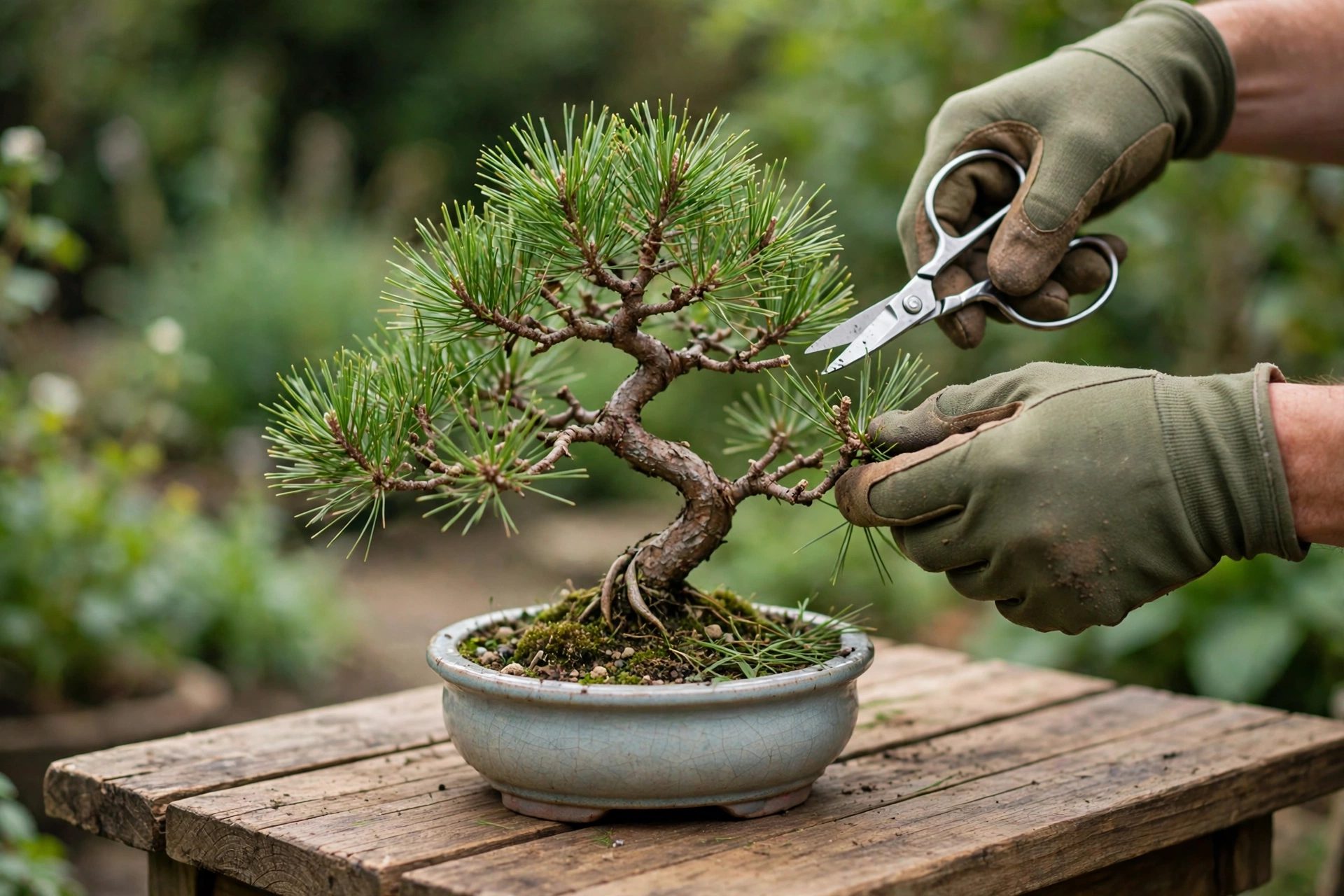
A bonsai tree looks like a tiny, ancient tree growing in a small pot, and that is exactly what it is meant to be. Bonsai is the art of growing a normal tree in miniature, shaping it slowly over years so that it keeps the character of a full-sized tree while staying small enough to sit on a table. For a beginner, that sounds difficult, and it is true that bonsai needs regular attention. But it is not only for experts. With the right tree, the right spot, and a simple routine for watering, feeding, pruning and repotting, most beginners can keep a bonsai alive and healthy for many years.
What Is Bonsai, Really?
Bonsai is not a special kind of tree. Almost any tree or shrub with small leaves and woody stems can become a bonsai, including juniper, pine, maple, elm, ficus and olive. The word bonsai comes from Japanese, and it means a tree planted in a shallow container. The tree is kept small by pruning its roots and branches and by growing it in a small pot with little soil. It still grows, flowers and changes with the seasons, just like a normal tree, only on a much smaller scale. A bonsai is therefore a living tree, not a decoration, and it needs light, water, air and food like any other plant. The main difference is that its small pot dries out quickly, so the owner has to check it far more often than a garden tree.
Choosing Your First Bonsai Tree
Your first bonsai matters more than any tool you buy. Start with a hardy, forgiving species that suits where you live and where you will keep it. If you want an outdoor bonsai, a juniper or a Chinese elm is a good choice, because both tolerate a range of weather and recover well from small mistakes. If you want an indoor bonsai, a ficus is usually the safest option, because it copes with warm rooms and lower light better than most trees. Avoid buying a very cheap, tiny bonsai from a supermarket shelf unless you know its species and its needs, because many of those trees are sold without proper care instructions and are already stressed. Look for a tree with healthy green leaves, no yellow or brown patches, firm branches, and soil that is damp but not soaking wet. The trunk should feel solid, and the pot should have drainage holes. A healthy starter tree costs a little more, but it gives you a much better chance of success, and you will learn far more from a tree that stays alive.
Where to Keep Your Bonsai
Light is the first thing to get right. Most bonsai trees need several hours of bright light every day, and outdoor species need direct sun for at least part of the day. Put an outdoor bonsai in a spot that gets morning sun and some shade in the hottest part of the afternoon, and protect it from strong, drying winds. Indoor bonsai need the brightest windowsill you have, ideally facing south or west, and they still benefit from a few hours outside in mild weather. A tree kept in a dark corner will slowly weaken, drop leaves and grow long, pale shoots as it reaches for light. Temperature matters too. Outdoor bonsai need the seasons, including a cold winter rest, so do not bring them indoors for the winter unless the species is tropical. Indoor bonsai dislike cold draughts, radiators and sudden changes, so keep them away from heating vents and cold windows in winter. Good air movement helps prevent disease, so do not crowd your bonsai among other plants in a still, damp corner.
Watering: The Most Important Skill
Watering is where most beginners lose their first bonsai. The small pot holds very little water, so the soil can dry out in a single hot day, and a tree that dries out completely may not recover. At the same time, soil that stays wet all the time will rot the roots. The rule is simple: check the soil every day, and water when the top of the soil feels slightly dry, not before. Push your finger about a centimetre into the soil. If it feels damp, wait. If it feels dry, water thoroughly until water runs out of the drainage holes, then let the pot drain and do not leave it standing in water. In summer you may need to water once or twice a day, while in winter once every few days may be enough. Rainwater is best if you have it, because tap water can leave salts in the soil over time. Water in the morning when you can, so the leaves dry during the day. Never water on a fixed schedule without checking the soil first, because the weather, the season and the size of the pot change how quickly the soil dries.
Soil, Feeding and Repotting
Bonsai soil is different from ordinary garden soil. It must drain freely, hold some moisture, and let air reach the roots. Most growers use a mix of akadama, pumice and lava rock, or a ready-made bonsai soil from a garden centre. Ordinary potting compost holds too much water and compacts around the roots, so avoid it unless you mix in plenty of grit. Feed your bonsai in the growing season, from spring to early autumn, with a balanced liquid fertiliser at half strength, roughly every two weeks. Do not feed a sick, newly repotted or dormant tree. Repot every one to three years, in early spring, trimming back about a third of the roots and replanting in fresh bonsai soil.
Pruning and Shaping
Pruning keeps a bonsai small and gives it its shape. Maintenance pruning is done through the growing season: pinch or cut back new shoots that grow too long, so the tree keeps its shape and the branches stay dense. Structural pruning is done in late winter or early spring, when you can see the branch structure clearly, and it removes branches that cross, grow straight up, or spoil the shape. Always use sharp, clean bonsai scissors, and cut just above a leaf or bud that points in the direction you want the new growth to go. Wiring is another shaping tool: wire is wrapped gently around a branch and used to bend it into a new position. Check wire every few weeks and remove it after a few months, because a growing branch will be scarred by wire left on too long.
Common Mistakes Beginners Make
The most common mistake is watering too little or too much, and the second is keeping an outdoor tree indoors, or an indoor tree in a dark room. Beginners also prune too much at once, feed a sick tree in the hope of saving it, or leave wire on so long that it scars the bark. Repotting in the middle of summer can also shock a tree. Finally, many beginners give up too soon. A bonsai may drop leaves after a move or a repot, and that does not always mean it is dying. Give it steady care, good light and time, and it will often recover.
Frequently Asked Questions
How often should I water a bonsai? Check the soil every day and water when the top feels slightly dry. In summer that may be daily, in winter far less often. There is no fixed schedule that works for every tree.
Can I keep a bonsai indoors? Only tropical species like ficus do well indoors all year. Outdoor species like juniper and pine need to live outside and need a cold winter.
Why are my bonsai leaves turning yellow? Yellow leaves can mean overwatering, underwatering, too little light, or a recent move. Check the soil moisture and light first, and do not feed a stressed tree.
How long do bonsai trees live? With good care, a bonsai can live for decades, and some famous bonsai are hundreds of years old. A beginner's tree can easily live for many years.
Do I need special tools? A pair of sharp bonsai scissors, a small watering can with a fine rose, and good soil are enough to start. You can add cutters and wire later.
Conclusion
Caring for a bonsai tree is a slow, rewarding habit. Choose a hardy species, give it bright light, check the soil every day, feed it in the growing season, prune a little and often, and repot it in spring when it needs it. You will make mistakes, and your tree will forgive most of them if you notice them early and return to steady care. Over time you will learn to read your tree: the colour of its leaves and the way its soil dries will tell you what it needs.
Try it: not sure which tree your bonsai is? Upload a photo to the Tree Identifier on aitreeidentier and check the species before you prune, feed or repot it.