
Introduction
Autumn is when trees prepare for winter, and the best time for you to help them. As days shorten, trees slow their growth, shed leaves, and store energy in their roots. The care you give now can decide how well a tree survives frost, wind, and snow. Most of the work is simple, low-cost, and takes only an afternoon — just finish it before the ground freezes.
Why Autumn Care Matters
A tree enters winter in the condition you leave it in autumn. A dry, stressed, or damaged tree in October will struggle far more in January than a healthy, well-watered one. Cold wind dries out branches, frozen soil stops roots from taking up water, and heavy snow can snap weak limbs. Cracks, dead wood, and leaning trunks are also easier to see once the canopy thins, so finding them now gives you time to act.
Step-by-Step: Your Autumn Tree Care Checklist
Step 1: Identify each tree and note its needs
Start by knowing what you are caring for. Evergreens keep losing water through their needles all winter, young trees need more protection than established ones, and fruit trees often need extra attention after harvest. If you are unsure what a tree is, photograph its leaves and bark and use an identification tool to check.
Step 2: Inspect the trunk, branches, and roots
Walk around each tree slowly and look closely. Check for dead or hanging branches, cracks in the trunk, peeling bark, mushrooms at the base, or a trunk that leans more than it did last year. Remove small dead branches you can reach safely, but leave large or high work to a qualified arborist.
Step 3: Water deeply before the ground freezes
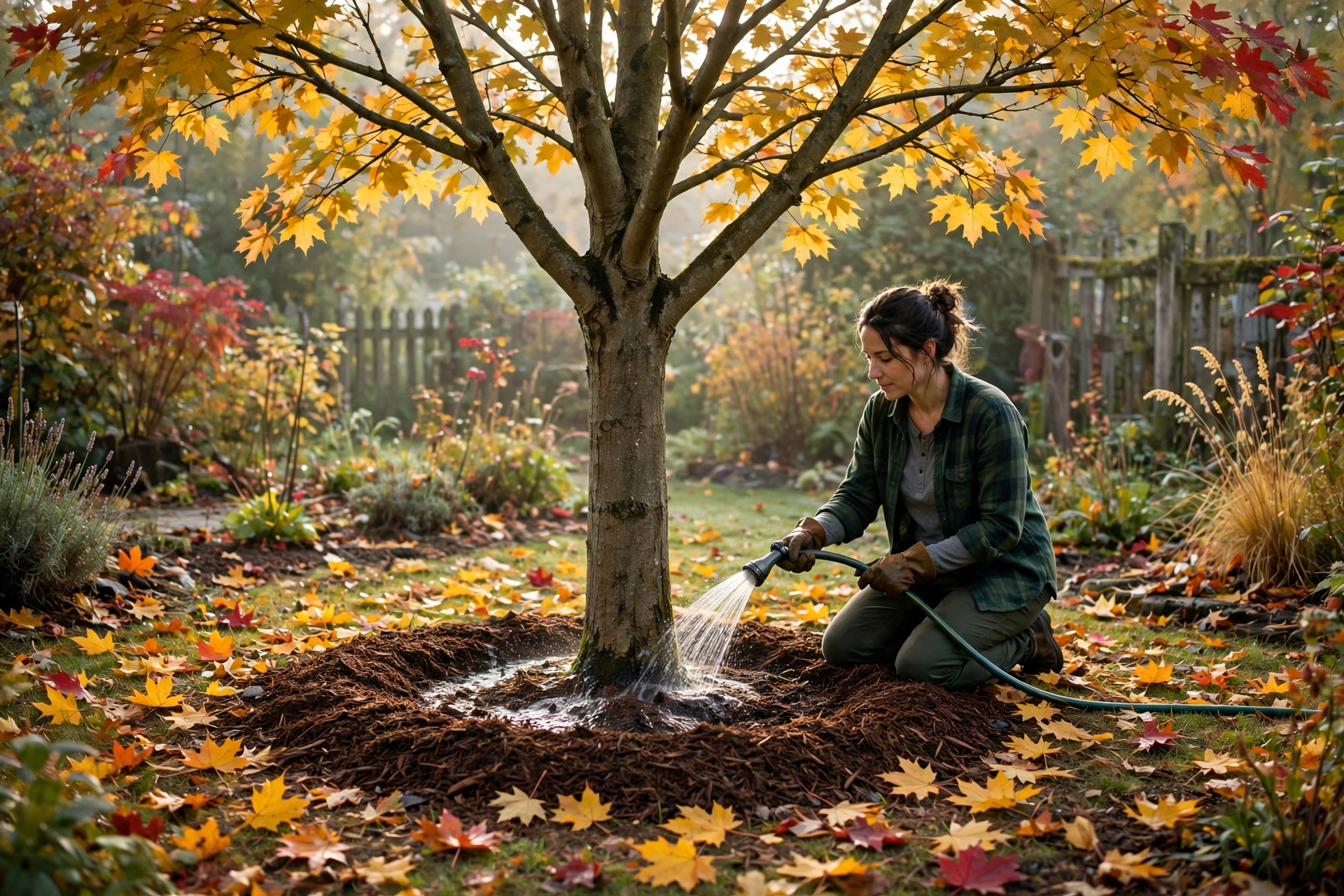
Trees need water in autumn, even as leaves fall. Dry roots are far more vulnerable to frost than moist ones, and evergreens can suffer winter drying if they enter the cold season thirsty. Water slowly and deeply, under the canopy and out to the drip line, and stop once the ground is frozen.
Step 4: Mulch to protect roots and hold moisture
A layer of mulch insulates the soil, keeps moisture in, and reduces the freeze-and-thaw cycles that damage shallow roots. Spread bark, wood chips, or leaf mould in a wide ring around the tree, about 5 to 10 centimetres deep. Keep the mulch a few centimetres away from the trunk, because mulch piled against bark encourages rot and pests.
Step 5: Prune only dead wood and protect young trees
Autumn is a good time to remove dead, broken, or diseased wood, because it is easier to see and less likely to break under snow. Cut back to healthy wood, make clean cuts just outside the branch collar, and disinfect your tools between trees. Do not do heavy pruning in autumn: major cuts stimulate soft new growth that frost will kill. Save structural pruning for late winter. Young, thin-barked trees also benefit from a breathable trunk wrap, removed in spring, and from clearing diseased fallen leaves that could carry infection into next spring.
What Not to Do in Autumn
Do not feed trees in late autumn. Fertiliser encourages tender new growth at exactly the time a tree should be hardening off for winter, and frost easily kills it. Wait until early spring instead. Keep de-icing salt well away from trees, since salt damages roots and soil, and do not prune frost-damaged growth straight away — wait until spring, when you can see what is dead.
Common Mistakes Beginners Make
- Pruning too heavily in autumn. Major cuts invite frost damage; remove only dead wood and save structural work for late winter.
- Piling mulch against the trunk. A mulch volcano traps moisture against the bark, encourages rot, and gives pests a hiding place.
- Forgetting to water in autumn. Trees still need water before the ground freezes, especially evergreens and newly planted trees.
- Feeding trees in late autumn. Fertiliser pushes soft new growth that frost will kill; wait until spring.
- Leaving diseased leaves on the ground. Infected leaves can carry disease into the next season, so clear them up.
FAQ
When should I start autumn tree care?
Start once leaves begin to fall, and finish watering, mulching, and removing dead wood before the ground freezes or the first hard frost is expected.
Should I wrap every tree for winter?
No. Established, hardy trees usually need no wrapping. Focus on young, newly planted, and thin-barked trees, and remove breathable wraps in spring.
Can I plant a tree in autumn?
Yes, autumn is often a good time to plant, because the soil is still warm and roots can establish before winter. Water the new tree well and mulch it.
Is it too late to help a tree after the first frost?
No, it is rarely too late. You can still mulch, water if the soil is not frozen, and remove hazardous dead wood. Avoid heavy pruning and fertilising until spring.
Conclusion
Preparing trees for winter is mostly good timing and simple habits: identify your trees, inspect them, water deeply, mulch properly, prune only dead wood, and protect the young and vulnerable. Done in autumn, these small jobs give roots, bark, and branches the best chance of coming through frost, wind, and snow in good shape.
Try it: Try the free Tree Identifier on aitreeidentier.site — upload a clear photo of your tree if you are unsure what species it is before you start autumn care.
Safety disclaimer: Never eat or use any part of a tree, or treat a tree problem, based on AI identification alone. AI results are guidance only — consult a local arborist or plant expert before pruning large limbs, applying treatments, or working at height, especially near people, pets, power lines, or buildings.