
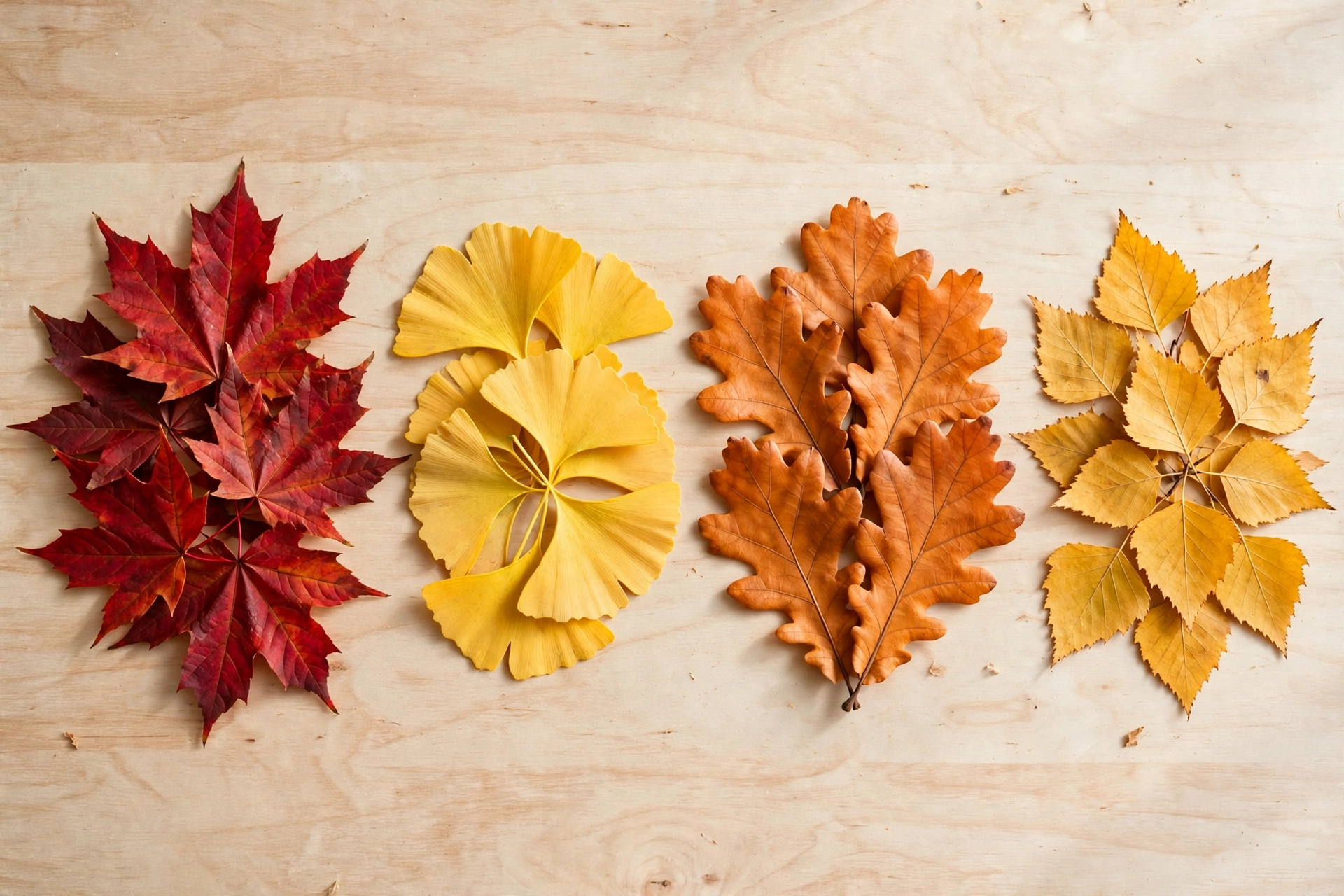
Autumn transforms tree identification into a colour puzzle. Greens give way to gold, red, orange, and purple, and for a few weeks each species shows its most distinctive palette. But colour alone is not enough — the same tree can look different in sun and shade, in a wet year versus a dry one, and at the start versus the end of the season. The trick is to combine colour with leaf shape, arrangement, and the tree it fell from.
This guide shows you how to use autumn leaves to identify trees, what to collect, and how to avoid the most common mistakes.
Try it: Use the Leaf Identifier on aitreeidentier.site — photograph a single fallen leaf on a plain background for the clearest result.
Why Leaves Change Colour in Autumn
As days shorten and temperatures drop, trees stop producing green chlorophyll and prepare for winter. Other pigments that were hidden all summer — yellows, oranges, and reds — become visible. Some trees produce extra red pigments in autumn, especially in sunny, cool weather, which is why the same species can look brighter in one year than the next.
Step-by-Step: Identifying a Tree From an Autumn Leaf
Step 1: Pick a fresh, complete leaf
Choose a leaf that has recently fallen and is still mostly intact. Avoid leaves that are torn, mouldy, or faded to brown, as key details may be lost. If possible, pick a leaf still on the tree as well — it shows the true colour before fading on the ground.
Step 2: Note the shape and edge
Is the leaf simple — one blade — or compound, made of leaflets? Is the edge smooth, toothed, or lobed? Maple leaves are famously lobed and palmate. Oak leaves have rounded or pointed lobes. Birch leaves are small, triangular, and toothed. Ash leaves are compound, with paired leaflets along a central stalk.
Photograph the leaf flat, with the stalk visible, on a plain light background.
Step 3: Record the colour and pattern
Note the main colour and whether it is even or patchy. Some trees turn a single clear colour — ginkgo turns bright yellow, sweetgum turns a mix of red, orange, and purple. Others turn brown quickly and are less useful for colour identification. Record whether the leaf changes colour from the edge inward or from the veins outward.
Step 4: Look up at the tree
The most reliable identification comes from matching the fallen leaf to its tree. Look at the bark, branch pattern, and other leaves still on the tree. Take a photo of the whole tree as well as the leaf — together they give a much stronger result.
Step 5: Check the leaf arrangement and fruit
If leaves are still on the tree, note whether they grow opposite each other or alternately along the twig. Look for fruits, seeds, or nuts on the ground: acorns under an oak, winged seeds under a maple, or conkers under a horse chestnut all confirm the identification.
Common Autumn Colours and What They Suggest
- Bright yellow: Ginkgo, birch, poplar, and many ash trees.
- Orange and gold: Sugar maple, hickory, and beech in a good year.
- Red and crimson: Red maple, sweetgum, dogwood, and sumac.
- Purple and burgundy: Some maples, sweetgum, and ornamental cherries.
- Brown and russet: Oak and beech, whose leaves often turn brown and may stay on the tree into winter.
Remember that these are tendencies, not rules. Soil, weather, and sunlight shift colours, so always confirm with shape.
Common Mistakes in Autumn Leaf Identification
Using colour alone. Two species can share the same red or yellow. Shape, size, and arrangement separate them.
Identifying from a single faded leaf. A brown, crumpled leaf has lost most of its clues. Find a fresher one.
Forgetting that leaves change as they fall. A leaf on the ground may have faded in a day of sun and rain. Compare it with leaves still on the tree.
Mixing up leaves under a tree. Wind blows leaves from nearby trees into one pile. Always check which tree the leaf actually came from.
Frequently Asked Questions
Can I identify a tree from one autumn leaf? Often, yes, if the leaf is fresh and distinctive — maple, oak, ginkgo, and sweetgum are good examples. Less distinctive leaves may need bark and branch clues as well.
Why do some trees not change colour much? Some species, especially evergreens, keep their leaves, while others turn brown quickly. Weather also matters: warm, cloudy autumns produce duller colours than cool, sunny ones.
What is the best way to photograph an autumn leaf? Place it flat on a plain, light surface in soft daylight, with the stalk and full outline visible. Avoid shadows and busy backgrounds.
Should I collect leaves to identify later? Photograph it the same day for the best record, as colour fades quickly.
Conclusion
Autumn leaf identification is at its best when you treat colour as a starting point, not the answer. Shape, edge, size, arrangement, and the tree itself all matter. Take your time, photograph leaves flat and in good light, and compare what you find with the tree above. After a few autumn walks, you will start recognising familiar species by colour alone — and you will know exactly which extra clues to check when you are unsure.
Safety note: Never eat or use any part of a tree or plant based on AI identification alone. Always consult a local expert for confirmation.