
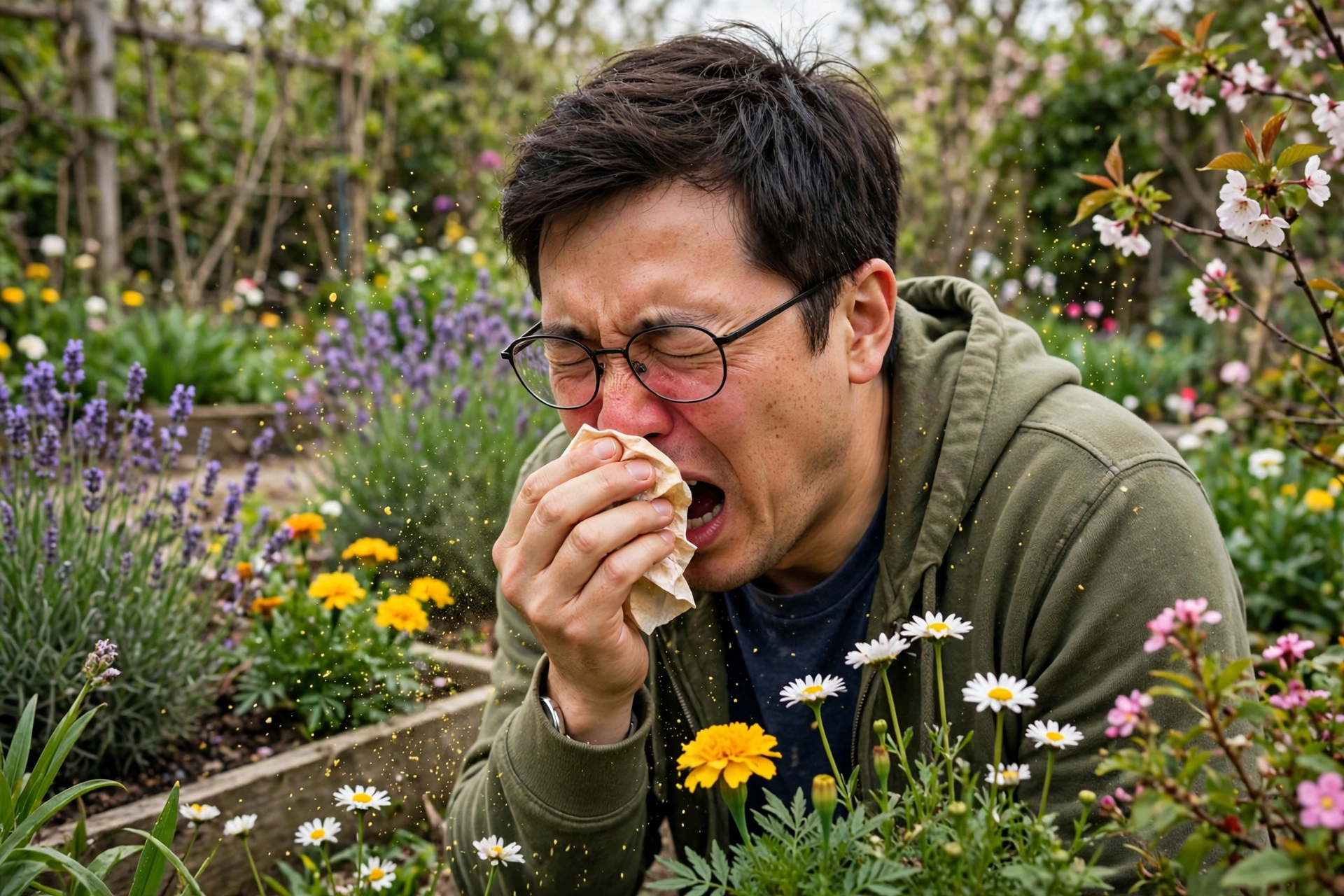
Plants bring colour, shade, and food to our lives, but for some people they also bring sneezing, itchy eyes, or an irritated rash. Pollen in the air, sap on the skin, and tiny hairs on leaves can all trigger reactions. You do not need to avoid plants altogether, but it helps to know which plants are more likely to cause problems, how reactions happen, and what simple steps can reduce exposure.
Reactions also vary a great deal from person to person. One gardener may handle a plant for years without a problem, while another develops a rash after a single afternoon of pruning. Age, skin condition, medication, and even a small cut can change how your skin responds on a given day. That is why a plant that felt harmless last summer is not guaranteed to be harmless this summer, and why paying attention to your own pattern matters more than any general list of safe and unsafe plants.
Try it: Try the free Plant Identifier on aitreeidentier.site — identify a plant before you handle it, so you can check whether it is known for pollen, sap, or skin reactions first.
How Plants Trigger Allergies and Skin Reactions
Pollen is the most familiar trigger. Wind-pollinated trees, grasses, and weeds release large amounts of lightweight pollen that can travel far. When it lands on eyes, nose, or airways, it can cause sneezing, a runny nose, itchy eyes, and, for some people, asthma symptoms. Pollen levels are often higher on warm, dry, windy days and in the morning.
Sap and plant juices can irritate skin directly, especially when combined with sunlight. Some plants contain chemicals that make skin more sensitive to sun, leading to redness or blistering after outdoor work. Thorns, spines, and fine hairs can cause mechanical irritation or introduce sap into small scratches. Some people also react to certain plant foods, latex in sap, or fragrances from flowers, but those reactions vary widely and need individual medical advice.
Practical Steps to Reduce Exposure
Step 1: Check pollen counts and timing. On high-pollen days, keep windows closed where possible, shower and change clothes after being outdoors, and avoid drying laundry outside if pollen is a trigger for you.
Step 2: Garden with protection. Wear gloves, long sleeves, long trousers, closed shoes, and eye protection when pruning, weeding, or handling sap. Wash skin with soap and water after gardening, and avoid touching your face while you work.
Step 3: Choose lower-pollen planting where you can. In a garden you control, consider plants that are less likely to release large amounts of wind-borne pollen, and place high-pollen trees and shrubs away from windows, patios, and play areas. A local nursery can suggest options for your region.
Step 4: Handle sap carefully. If a plant has milky or sticky sap, avoid getting it on skin, wash tools after use, and keep sap away from eyes. If sap touches skin, rinse with water and soap and avoid sunlight on that area until you know how your skin reacts.
Step 5: Keep indoor air cleaner. Wipe leaves gently to reduce dust, avoid overwatering houseplants, and keep plants out of bedrooms if they seem to worsen symptoms. Ventilate rooms when pollen counts are low.
Step 6: Know when to seek medical advice. If you have difficulty breathing, swelling of lips or tongue, widespread hives, or a rash that spreads, blisters, or does not improve, seek medical care promptly. Bring information about the plant you handled if you can.
Common Mistakes to Avoid
Testing a plant on your skin. Do not rub a leaf on your skin to see if you react. That can cause a painful reaction and is not a safe test.
Gardening without gloves after a reaction. Even a plant that caused only mild irritation before can cause a stronger reaction next time. Protect your skin every time you garden.
Assuming all reactions are allergies. Some skin reactions are simple irritation from sap, thorns, or sun, not an allergy. A doctor can help tell the difference and advise on care.
Ignoring pollen seasons. Symptoms that appear every spring or summer may be linked to seasonal pollen. Tracking dates helps you plan outdoor time and talk to a doctor.
Using home remedies for a severe reaction. Mild irritation may settle with washing and time, but a severe or spreading reaction needs medical advice, not a home remedy.
Pollen Seasons and Timing: When Reactions Peak
Pollen is not the same all year. Tree pollen is often highest in late winter and spring, grass pollen peaks in late spring and summer, and weed pollen tends to rise in late summer and autumn. Knowing your local pattern helps you plan: you can do heavy pruning or weeding on low-pollen days, and save indoor tasks for days when counts are high. Local pollen forecasts, usually published daily in spring and summer, are a practical tool, not just background information.
Weather matters too. Warm, dry, windy days usually carry more pollen than cool, damp days, and pollen often rises in the morning and falls after rain. If you notice symptoms on the same kind of day again and again, note the date, the weather, and what you were doing. A short diary over two or three weeks often reveals a pattern that a single bad day cannot, and it gives a doctor something concrete to work with.
Building a Low-Reaction Garden and Daily Routine
A few routine habits reduce exposure more than any single product. Shower and change clothes after a long gardening session, rather than sitting indoors in pollen-covered clothes. Wash gardening gloves and sleeves regularly, and keep a separate pair of shoes for the garden so pollen and sap are not tracked through the house. If you wear glasses, rinse them after outdoor work, since pollen settles on lenses and frames close to your eyes.
In the garden itself, small choices add up. Keep seating and play areas away from the windward side of high-pollen trees, and prune or deadhead plants before they shed large amounts of pollen where you can do so safely. Choose insect-pollinated flowers, whose heavier pollen stays close to the flower, for beds near windows and doors. None of this removes pollen entirely, but together these habits can turn a miserable afternoon into a manageable one.
- Check the pollen forecast before a long outdoor session.
- Garden in the late afternoon or after rain when counts are often lower.
- Keep a simple diary of symptoms, dates, and plants handled.
- Wash hands, face, and gardening clothes after every session.
FAQ
Can a plant cause a rash even if I have touched it before? Yes. Sensitivity can develop over time, and a reaction can be stronger on a later exposure. Protect your skin and wash after handling plants that have irritated you before.
What should I do if plant sap gets on my skin? Rinse the area with plenty of water and wash with soap, avoid sunlight on that skin for a while, and watch for redness or blistering. Seek medical advice if the reaction is painful, spreads, or blisters.
Are some plants more likely to cause pollen allergies? Wind-pollinated trees, grasses, and weeds often produce more airborne pollen than insect-pollinated flowers. Local pollen counts and a doctor or allergist can help you identify your personal triggers.
Can I still garden if I have plant allergies? Many people can, with protection, timing, and plant choices that suit them. Wear gloves and long sleeves, garden when pollen is lower, wash up afterwards, and ask your doctor for advice specific to you.
Can pollen from my own garden affect me indoors? Yes. Pollen travels on clothes, hair, shoes, and pets, and through open windows. Changing clothes and showering after gardening, and keeping windows closed on high-pollen days, helps keep indoor levels lower.
Should I get tested for plant allergies? If reactions keep coming back, interfere with sleep or work, or involve breathing problems, ask a doctor about allergy testing. A test can identify your main triggers, which makes choosing plants and planning outdoor time much easier.
Conclusion
Allergies and plant reactions are common, but they do not have to stop you enjoying nature. Learn which plants affect you, protect your skin when you garden, watch pollen timing, and seek medical advice for anything severe or persistent. With a little planning, you can keep plants in your life and keep reactions to a minimum.
Safety Disclaimer: Never eat or use a plant, mushroom, or fruit based on AI identification alone. AI results can be wrong. Always consult a local expert or medical professional before handling a plant that may cause a reaction. This article is general information only and is not medical advice.